Sunday, December 14, 2008

Dead White Man. No 1

I don't have White guilt and have always preferred civilization to savagery, light to darkness. Other civilizations have had their achievements, however I will maintain, no assert, that European culture, particularly Western European culture, has had a profound and beneficial effect on the rest of the world.

With that in mind, I hope to put up a few biographies of Dead White men over the next few months. These were the type of men that traditional European society produced in abundance and who so are despised by modern Lefties, because they are ashamed of their cultural inheritance. I introduce to you a man who was tough, courageous, resourceful and loved both God and country. Introducing:

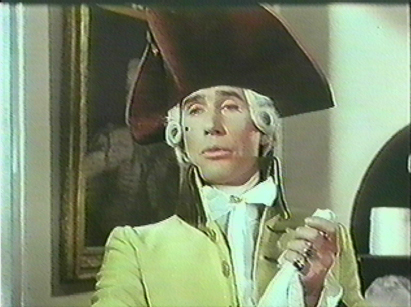
Charles James Napier.


All round tough bastard, and the type of man you want with you in the jungle.

The wikipaedia entry pretty much covers his life, but I thought I would like to jot down some of his thoughts as applied to contemporary issues.

On tolerating foreign customs within his jurisdiction:
"You say that it is your custom to burn widows. Very well. We also have a custom: when men burn a woman alive, we tie a rope around their necks and we hang them. Build your funeral pyre; beside it, my carpenters will build a gallows. You may follow your custom. And then we will follow ours."
On Counterinsurgency:
"The best way to quiet a country is a good thrashing, followed by great kindness afterwards. Even the wildest chaps are thus tamed"
On negotiating with the natives:
"Come here instantly. Come here at once and make your submission, or I will in a week tear you from the midst of your village and hang you""
On local self government:
...so perverse is mankind that every nationality prefers to misgoverned by its own people than to be well ruled by another.
And how tough a bastard was he:
He Commanded the force employed in Scinde, and on 17th February, with only 2800 British troops, he attacked and defeated, after a desparate action of three hours duration, 22000 of the enemy strongly posted at Meeanee. On the 21st February, Hydrabad surrendered to him, and on the 24th March, with 5000 men he attacked and signally defeated 20,000 of the enemy posted in a very strong and difficult position at Dubba, near Hydrabad, thus completing the entire subjugation of Scinde.

Early in 1815, with a force consisting of about 5000 men of all arms, he took the field against the mountain and desert tribes, situated at the right bank of the Indus to the North of Skihapore, and after an arduous campaign, he effected the total destruction of the hill robbers.
Check out the odds, he was no metrosexual. There would be no place for him in today's modern Britain. The country to whom he bequeathed so much glory has dishonoured his legacy. But he lives in the Pantheon of Honour; three cheers for the Dead White Man.

Monday, December 08, 2008

The Darkness.

Some of the luminaries of the "Secular Conservative" fold have started a new blog site. Predictably religion was dissed almost immediately and rather vehemently, I might add. Which is a bit of a surprise as the Right was always seen as the natural home of religion.

For what it's worth, I think the term Secular Conservative is an oxymoron. Clearly the majority of the important Dead White men, or Hindu's for that matter, believed in some sort of supernatural existence, even though they disagreed--sometimes violently--about the composition of "the other world". God and religion get bandied about quite a bit in conservative thought, and the link with the dead through tradition is a mainstay of the conservative mindset.

Edward Feser, wrote what I think is quite a definitive piece on what in the end, separates Left from Right; a view with which I agree with. You see, in the end its all about epistemology; what we consider is valid knowledge. The secularists seem to believe that Empiricism is all that matters, and what cannot be empirically verified does not really matter. From their point of view, non empirically derived propositions are certainly not something to build one's society on. Furthermore-- and it's quite disappointing that supposed intelligent people hold these views--religious conservatives are painted as sort of nut jobs, who believe any fairy story uncritically and as people who would subordinate any scientific fact to a religious belief.

Now it is true, that there are quite a few conservative religious nuts, but every movement has its idiot adherents. But serious conservatism has never dismissed rationality or empirical evidence, it has however been open to the acceptance of truths which cannot be empirically verified such as religious teachings. I think it was St Thomas who back in the thirteenth century, stated that where faith and science are in conflict, our understanding of faith is probably wrong and needs to be modified, as the truth is indivisible and the two cannot contradict each other. Please note, thirteenth Century people.

The question to ask then is it rational to believe in things which are empirically unprovable?

Consider the following: A blind man is told of the existence of the colour red. There is no way he can empirically "prove" the existence of the colour since he cannot see, but clearly the colour exists. What should he do? If he is a Secular Conservative, he will deny that the colour red exists since he cannot empirically verify it's existence. Empiricism would have lead him to a false conclusion. The only way our blind friend can believe in the colour red is through an act of faith. He can't experience the colour red, through he can believe in it from the testimony of others. Clearly in this instance his faith leads to a belief which is congruent with reality. Empiricism on the other hand leads to an absurd result. Faith has its problems as well. It's also possible through faith to believe in things which are non congruent with reality, to believe in fairy tales.

The key issue of any knowledge is it's congruence with reality. That is, how do beliefs square up with reality. Empiricism is pretty powerful but it does have its faults. It doesn't deal well with non repeatable events and it's limits are defined by the perceptual abilities of the observer.

We can't for instance, scientifically repeat a murder in order to determine who caused it. If our courts demanded empirical proof of guilt, we would never be able to convict anyone. But we can, through a combination of science and rationalism, come to some form of conclusion about the nature of the killer. Sometimes they confess, and more often than not we're right. The point here being that valid knowledge that is congruent with reality may be obtained through non empirical methods. Sticking to empiricism is a bit like deliberately trying to live life with your eyes closed while overcompensating with your hearing.

The next question to ask then: Is there "stuff" in the Universe which we cannot perceive? I mean, are we capable of perceiving all that is out there? Just like our blind man who cannot see the light, is there other matter in the universe which we cannot sense and therefore not subject to empirical verification? I don't just mean religious things, I mean things like forces, dark matter etc. Because if there are, empiricism is not going to help us understand the phenomena. More importantly if there are such "things", the strict claims of empiricism may lead us to the wrong conclusions. Certainly at the subatomic and intergalactic levels, weird stuff happens. No one's seen dark matter.

The secular rejection of the mode of traditional conservative thought, by necessity undercuts the foundations of conservatism itself. Morals can't be derived from scientific facts, and hence conservatism becomes a "lifestyle"preference based on the hedonistic predispositions of the secular conservative; should his pleasures change so should his conservatism. The Dead White Men that made up conservatism in the past, lived that way because they thought it was the Tao of life; it was the truth.

But back to our secular blind man. His empirical enquiries have not been able to demonstrate the phenomena of colour. So when offered corrective surgery to cure his blindness, he angrily chases us away, because his method has taught him that there is no light.

(Cross Posted at The Forvm)

Monday, December 01, 2008

The paradox of extravagance.

John Maynard Keynes was profoundly influential in the field of economics, which is a bit of a shame because some of what he said needed to be thought out more. But while his unthinking acolytes continue to practice his solutions to the current economic crisis, it is worthwhile exploring one of his ideas further.

The paradox of thrift was one of those ideas of Keynes which explain the current government policy of "stimulus". It is assumed that in a normal household there is a balance between savings and spending. And tets take a hypothetical fellow who has a thousand dollars a week to spend, and let's suppose in normal times this fellow saves two hundred dollars and spends eight hundred dollars on stuff and services. That eight hundred dollars of expenditure, keeps business of all kinds profitable and in operation. On the other hand, the money that he has saved is put in a bank which then lends it out to other businesses which need it. There is both consumer demand and capital availability.

Now if our friend decides to save three hundred dollars a week, the amount left over to spend is seven hundred, a reduction of one hundred dollars. There is less consumer demand to go around and business is poor. Likewise if our friend saves only one hundred dollars, then there is more consumer demand and hence business prospers. Therefore the way to stimulate businesses is to increase consumption. However for a given income, more spending will mean less saving.

Should savings become scarce, in a natural market, the demand for savings would push up the rates of interest which would encourage more saving and decrease consumption. In a normal situation this would happen continuously so that the market would quietly hum along. Now Keynes's paradox always assumed that there would be savings to trade for consumption.


Keynes assumed wrongly. From the above chart, the U.S is spent. There are no more savings to trade for consumption. It also means that the U.S has no savings for investment. This is the paradox of extravagance. If an economy spends at its limit, then there are no savings for investment, and eventually the economy starts to contract due to capital starvation. Stimulating an economy to its maximum, eventually leads to a an economic contraction. And this contraction is going to start occurring during a period of economic boom, just as what is happening now.


Of course, one can argue that there is capital from overseas, which one can use to stimulate the economy. The logic being, that we should borrow more to get ourselves out of debt. If you can't see the flaws in the argument, then you should be the Treasury Secretary. The problem with Anglo influenced economies is that they continue to consume more than they produce, stimulating them will perpetuate the same and drive them further into debt. Over consumption is probably worse state of affairs than under consumption, since there are at least savings to invest in the latter situation.

Furthermore, this state of affairs puts a country's economy at the mercy of the providers of capital. If the Chinese and Arabs were to switch off the spigots; it's all over. If I were a Taiwanese I would be extremely nervous; the U.S. is not exactly going to bite the hand that feeds it. On the other hand, should the U.S default on its debt either explicitly or through inflation, the spigots will be closed for non-political reasons as well and U.S interest rates will go through the roof at a time of high indebtedness.

Oh just as I was about to post this, I noticed that Martin Wolf, of the Financial Times, was thinking along similar lines. His article is worth a read.

The economy needs to be restored to a point where there is approximately a 5-10% personal savings rate. This is what constitutes a healthy economy and economic policy should be geared to that goal. However given the fact that most Anglo economies have the same personal savings chart as above, trying to increase the amount of consumer savings is going to result in a contraction of consumer demand. Business is going to shrink, in the Anglo countries by a lot.
There is a lot of pain coming.

Sunday, November 30, 2008

Sculptor of flesh, healer of souls.

It's been a rather unsettling week, meditating on ugliness and disfigurement. I would like to end it on some thoughts with regard to plastic surgery. I must admit to having a strong approval of the show Extreme Makeover. The change in a persons life after corrective plastic surgery is truly transformative. It would appear that healing the imperfections of the flesh, eases the sorrows of the soul.

Modern Plastic surgery has it's origin in the carnage of the First World War. Horrific head wounds left individuals grotesquely disfigured. The survivors were shunned and separated from society. In England, park benches were painted blue in order to warn people that the facially mangled might be sitting there, in France they had their own special train carriages. Struck down in the prime of their youth, one can only imagine the terrible and isolated lives these individuals must have had. Suicide, drunkenness, endless depression and despair. Repulsive to women and yet still a man. Wilfred Owen captured the torment in his poem, Disabled.
He sat in a wheeled chair, waiting for dark,
And shivered in his ghastly suit of grey,
Legless, sewn short at elbow. Through the park
Voices of boys rang saddening like a hymn,
Voices of play and pleasure after day,
Till gathering sleep had mothered them from him.

About this time Town used to swing so gay
When glow-lamps budded in the light-blue trees
And girls glanced lovelier as the air grew dim,
-- In the old times, before he threw away his knees.
Now he will never feel again how slim
Girls' waists are, or how warm their subtle hands,
All of them touch him like some queer disease.
.........

Some cheered him home, but not as crowds cheer Goal.
Only a solemn man who brought him fruits
Thanked him; and then inquired about his soul.
Now, he will spend a few sick years in Institutes,
And do what things the rules consider wise,
And take whatever pity they may dole.
To-night he noticed how the women's eyes
Passed from him to the strong men that were whole.
How cold and late it is! Why don't they come
And put him into bed? Why don't they come?


In an effort to heal the ravages of war a young New Zealand surgeon, Harold Gilles begins to operate on the terribly wounded soldiers and modern plastic surgery is born. There was recently an exhibition of his work, called the Faces of battle, it details his WW1 work and the men on whom he operated on. Warning it is quite graphic. It can be found here and here. Gille's aim was to restore these individuals to some form or normality so that they could return to society. He had some spectacular successes and for some there was no help. Looking at their faces, one wonders what sort of life they must have had. Although Gilles later pioneered aesthetic surgery techniques, he always felt that this was a distraction , his job was to restore the disfigured to normalcy.

It seems somewhat perverse, that modern cosmetic surgery, so often subordinated to the desires of the vain and superficial, had its origins in the noble ideal of restoring people to physical normality.

Harold Gilles, a Dead White Man. Healer of Mankind.

The truly disfigured.

Here's a link to a rather revolting You Tube video. For our more delicate readers, caution, it contains I suppose you could say sexual references.

As a follow up to the previous post on disfigurement, I thought I would comment on this video. The ugly are sorrowed by their ugliness, but not the character in our video. He seems to revel in his deformity. A bit like a greedy man singing the praises of his greed or a cruel man boasting about his cruelty. It's a disfigurement of his character, very hard to remedy.


Thursday, November 27, 2008

Elephant Men


Its not very often that I read something that sends me into a bit of a rage. But anyway, this week I did. I will not link to the piece, since I feel that I will in someway, perpetuate the notoriety of the author and possibly contribute to the misery of his victims.

In a nutshell, the article viciously mocks the love of two unattractive people for each other. Furthermore, the author viciously mocks the unattractive for being so. It would have to be one of the most cruel and vicious pieces of writing I have ever read.

Normal human beings have a need to be loved. Even the vilest and most disfigured individual still seeks love. What gives The Elephant Man it's tragic pathos, is that locked underneath that hideous deformity, is an individual who feels and desires to be loved. As Joseph Merrick's friend, Sir Fredrick Treaves said:

...... Merrick always wanted, even after living at the hospital, to go to a hospital for the blind where he might find a woman who would not be repelled by his appearance.

Indeed, the characters in the movie, and in real life, who befriend and and saw the individual beneath the hideous visage, are ennobled by their actions. Likewise, those who exploit the individual for their advantage are seen as the corrupt demons that they are, tormenting the unfortunate for profit and compounding their misery.

But our author does "better".

Not only does he mock their unattractiveness, he mocks the love that they have for each other. He besmirches the little bit of joy they have in each other. He takes from the poor what little they have.

This author is not a sentimentalist. Beauty is to be preferred to ugliness, but to despise the unattractive for being so, is vile, especially if genetic misfortune is their lot. Nature is cruel. Good men are not. Loneliness is a curse, the unloved suffer, and though we may not be moved to erotically love the unattractive, we should not add to their pain or take what joy they have. Their little joys are worth far more to them than to the undeserving fortunate, who by the Grace of God, do not suffer as they do. As one commentator said, we're all a step away from a disfiguring illness.

The final word should go to Joseph Merrick.

"Tis true my form is something odd,
But blaming me is blaming God.
Could I create myself anew,
I would not fail in pleasing you.

If I could reach from pole to pole,
Or grasp the ocean with a span,
I would be measured by the soul,
The mind's the standard of the man."

Wednesday, November 19, 2008

Form without function.


Farnsworth house is truly beautiful architecture. Designed by Mies van der Rohe for a prominent urologist, Dr. Edith Farnsworth. The house is a triumph of aesthetic design. Architecture books sing the house's praises and the architect's vision. And who can argue? It's complimentary relationship with the environment, the way the structure is approached, how it sits above the ground, its clean lines all validate the greatness of its design. So I suppose it should not be to impolite to ask, what was it like to live in this triumph of modernism?

Crap actually.

According to Dr Farnsworth:
The truth is that in this house with its four walls of glass I feel like a prowling animal, always on the alert. I am always restless. Even in the evening. I feel like a sentinel on guard day and night. I can rarely stretch out and relax…What else? I don’t keep garbage under my sink. Do you know why? Because you can see the whole “kitchen” from the road on the way in here and the can would spoil the appearance of the whole house. So I hide it in the closet further down from the sink. Mies talks about “free space”: but his space is very fixed. I can’t even put a clothes hanger in my house without considering how it affects everything from outside. Any arrangement of furniture becomes a major problem, because the house is transparent, like an X-ray

A night, lit up like a lantern and situated as it was in a forest, the house was a beacon to insects from miles around. Fly screens were not designed for the house, as it would have spoiled the purity of the design, so you couldn't open a window. In winter it was freezing, in summer a furnace. The personally selected marble on the entry steps needed to be scrubbed regularly since the falling leaves tended to stain it. It was unlivable.

A house's primary reason for being is to provide us with shelter and comfort. If a house is unable to do this it has failed in its function. As a machine for living in, it is broken. Yet architects continue to praise this house lavishly. A beautiful house that cannot be lived in; a triumph of form over function. The triumph of Modernism, the failure of modern Architecture.

Tuesday, November 18, 2008

Form follows function.

No it doesn't.

Engineering is one of those fields where economy and efficiency of materials are highly prized. It, perhaps more than architecture, lives to the credo of "form follows function". Buildings and other engineering works, must satisfy the need that that willed their creation. A bridge that doesn't carry the load is useless.

However this philosophy places form subservient to function which I feel is not its proper place. By this same philosophy, if form does not contribute to function, it is deemed useless and wasteful. The architects agreed, ornament is a crime declared Adolf Loos. In a world of scarce resources, putting more into a structure than what is needed is a waste, and perhaps morally wrong. Accountants and economists would heartily agree. Efficiency uber alles.

Now lets take a look at this from a real world view. From an engineering point of view, both these women are the same. Both are capable of reproducing, performing useful work and both are capable of holding a conversation. The fact that the fatter one will probably die earlier than the thinner one--it's not a given-- is irrelevant if the "design life" is calculated at 60 years. From a functional point of view, both these women are the same. Their form is irrelevant.


And yet they're not. Clearly, though both satisfy the engineering criteria, one is preferable to the other. Likewise consider two bridges.


Both fulfill the same function of carrying traffic over a road, yet clearly they have different form. Most normal people would see one the more desirable than the other. Function alone is clearly not enough.

In an age where life expectancy was so much less than today due to poverty, disease and famine, our forefathers still felt it was worthy to ornament a structure in such a way as to make it both beautiful and functional. Our society baulks at the the cost, we are indeed mean and miserable men

Form should complement function. To hell with the modernists.

Tuesday, October 28, 2008

Deals structured by cows.

Imagine a wealthy landowner (A) who has a herd of 1000 cows. Suppose this landowner was old and pre-occupied and found it difficult to look after his herd. A fellow landowner (B) hearing of his plight offers to borrow and look after his cows and give A 5% of their milk production.

A considers B’s proposition, he is old and tired and can’t look after the cows, by lending the cows out to B he still owns the cows and gets 5% of their milk production without any effort, upon consideration and agrees, except that he wants to be able to slaughter the occasional cow as needs arise and wants B to be able to give it to him on demand, B considers this and they agree.
B is an enterprising fellow. He has no real intention in looking after the cows at all. He is interest in making a buck. The word on the street is that milk is quite profitable and that people are prepared to borrow cows for 9%. Earn 9%, pay 5%, live off the spread. The 4% of the milk is his to sell at the market, its easy money. Now he knows that C is keen on looking after cattle at market rates B however realizes that A may want some of his cattle back on demand, so B lets C borrow 80% of the cattle, keeping 20% in reserve in case A comes a calling. It’s his fractional reserve.
C accepts 9% terms. C however never intended to milk the cattle, rather he wanted to trade them for some farm equipment which he wanted to grow crops with. He thought, if I grow crops I can sell them at market, buy some milk to pay back B and still make a profit. So C swaps his cows for farm equipment which D makes.
D doesn’t know what to do with cows. But he knows that B is paying 5% milk production for the use of cows. He can live off that quite comfortably and still slaughter a few cattle as required. He gives his cows to B by agreement and on the same terms as B is offering to A. B is an enterprising fellow, he realizes lending at 9% and paying at 5% is the path prosperity so he must keep pushing this good thing. B runs around looking for other people interested in borrowing cattle. At the market B finds E, who is willing to accept the same terms at C and so on. After 5 iterations of this scenario, B’s balance sheet looks like this:

Person Liabilities Assets Reserves
A 1000 cows @5% 800 cows @9% 200 Cows
C 800 cows @5% 640 cows @9% 160 Cows
D 640 cows @5% 512 cows @9% 128 Cows
E 512 cows @5% 410 cows @9% 102 Cows
F 410 cows @5% 328 cows @9% 82 Cows

Total: 3362 cows@5% 2690 cows @9% 672 Cows

Questions for budding economists:

1) Does decreasing the amount of amount of cows left in reserve, increase cow supply?
2) What is the cow multiplier when a reserve ratio of 8% is stipulated?
3) Does varying the rates of return, alter the supply of cows?
4) Does fractional reserve cattle banking, increase the number of cows?
5) Are borrowed cows destroyed when loans are paid back?
6) Are cows created by fiat when loans are made?

Thursday, October 16, 2008

Wednesday, October 15, 2008

The cause and prospective duration of the current economic crisis.

Net household savings.

It wont get any better till savings rates are between 5-10%. Australia and the U.S. will need all the help they can get, but God help New Zealand.

Wednesday, October 01, 2008

Postmodern accounting.

H.L Mencken was right, democracy is the greatest show on earth. Yours truly has been following the financial meltdown and political process as a spectacle to behold. This is better than the West Wing.

However the most depressing thing that strikes me about this spectacle, is the intellectual shallowness of most of the leading participants. From the President down to Joe Average, the level of economic idiocy is truly astounding. What is so distressing is that the aforesaid morons, through our political process, determine the economic course of state. Is it any wonder that we are having a meltdown.

I suppose its no suprise, that one of the most 'stupid' solutions to the current crisis should come from the very orginisations that distinguished themselves so well in the regulation of the idiot bankers. Apparently the FASB has now decided that the troubled assets don't have to be marked to market. The wise public servants have determined that we are having a firesale--it's been going on for eighteen months--and the prices that the market is paying for the "troubled securities" are under what they are truly worth. According to wise at the FASB, the current accounting rules significantly understate the value of these assets and hence adversely affect the capital position of the banks. As I understand it, the FASB has implicitly said that the assets should be marked at a value that they would represent in an "orderly market".

What the hell is an orderly market?

I presume it means a market that gives me the price that I want for my asset.

Now Suppose I have a Milli Vanilli Cd which I would like to sell, and that currently, the CD is selling on the open market for 5 cents. I actually think in a few weeks people will be looking back nostalgically at the Eighties and that there will be a demand for Milli Vanilli songs, therefore true value of the CD will be about 30 dollars.

How do I price the value of my asset? What is fair market value? Clearly what the FASB allows is for the holder of an asset to determine the market value of the asset independent of what it has been trading for on the open market. This is just plain dumb and they type of stuff that frightens off intelligent capital. More opacity at a time when no one trusts each other in the banking system.

How the hell do you read a balance sheet when the value of assets is determine by what management thinks is a fair value, as opposed to what the asset is trading for in the open market? Do think there is likely to be a conflict of interest?

I suppose with march of postmodernism through the humanities, it was only a matter of time till it crossed over into the weakest of the "sciences"; economics and its handmaiden, accounting. If various and conflicting readings of the "text" are equally valid, and truth is a construct devoid of any metaphysical basis, it should be no suprise that when reading a balance sheet the numbers put down can mean anything we want them to mean.

It certainly makes investing in this kind of market a very interesting proposition.

Monday, August 18, 2008

How to get a holiday in American Samoa.

Recently I've been reading about the Katyn Forest massacre. For those of you who aren't up to date with your World War Two history, the massacre was perpetrated by the Soviets(Allies) against the Poles(Allies) during the early stages of World War 2. Lots of people seemingly forget that the both the Nazis and the Soviets started the second world war by invading Poland. Russia is still a bit embarrassed about the Ribbentrop-Molotov pact. The Polish didn't have a chance.

After taking charge of the eastern half of Poland, those champions of the new world, the Soviets, murdered about 25,000 Polish military officers and intellectuals burying most of them in the Katyn Forrest. It was all hushed up and forgotten. However when the two branchs of socialism (National and Soviet) had their falling out, the graves were discovered by the advancing Nazis. This proved a godsend for Goebbels who used the communist atrocity for Nazi Propaganda advantage. The Nazi's even organised an international commission to verify that the Russians had killed the Poles. The international commission pretty much confirmed that the Russians had done it.

Things changed however when the fortunes of war changed, When they recaptured the area from the Germans they had their own commission set up, however in the interests of "objectivity" only Russians were allowed to be part of the investigative orginisation: can't trust those foreigners. Their commission determined conclusively that the Nazi's did it. The useful idiots on the Left believed them, no one else did.

The political winds by this stage had changed, the Soviet Union previously and enemy, was now an ally and as everyone knows, only Germans did bad things during the Second World War. However the American people were concerned about their Soviet Allies and felt a bit uncomfortable about having a friend who so recently supped with the Nazi's, so FDR sent a certain Naval Commander Earle to investigate the matter. Now Earle it appears, was not your usual fellow. Apparently he personally insulted Hitler by saying:

I have nothing against the Germans, I just don’t like you.”

Earle had been the Ambassador for Bulgaria, and using his contacts, he was able to determine that the Soviets had committed the crime. Now FDR did not like the conclusion he thought that the Soviets were nice. It appears that a lot of negative publicity with regard to the Soviets was hushed up by the Roosevelt Administration; if your an ally of FDR, you can do no wrong. Earle was reassigned to American Samoa for the duration of the war.

The Russians fessed up in 1990.

May the victims rest in peace.

Thursday, May 29, 2008

Human Shields.

I think that many of the moral problems that confound the average person have at their core a confusion between innocence and in culpability. Inculpability is not innocence; one can do wrong and not be deserving of punishment for it.

For there to be culpability there must be an evil act of the will(intent) or evil act; that is, a person's deserts are dependent on their acts An evil act in the absence of an evil will may render that person inculpable of desert evens though not innocent of the act. When we say a person "meant well", it usually means that they did something wrong but that their intent was good. In many cases it is as defence for actions which in themselves were deserving of punishment.

Consider a human shield. How do we evaluate the actions of a such a person even though they may be involuntary? Clearly a human shield is shielding a combatant, the human shield is performing a function even though it may not have been deliberately chosen. In the case of a terrorist advancing behind a human shield, the shield is "protecting" the terrorist and hence is complicit in evil albeit involuntarily. The shield is not innocent, it is inculpable. Armchair moralists please take note.

Now suppose a person is being coerced into an action which is morally wrong, what is the right course of action to take, given that failing to take that action will cost them their life? Traditional moralists have argued that we must not do wrong even at the expense of our careers or our life, we must love the good more than we love life. The proper action of a person finding himself as a human shield is to oppose being one, even if it costs them their life. Now I'm not saying that this is what I would have the courage to do, rather it is what should be done.

From the point of view of the person defending themselves from an attacker hiding behind a human shield, it would appear to be morally permissible to defend oneself from the attacker even though it may injure the human shield. In fact it would appear to be justified to directly attack the human shield in order to get to the attacker. The shield is an involuntary accomplice.
The problem of course is that in attacking the shield, we may be inflicting grievous injury on one that is undeserving and that in itself is an evil.

In choosing the correct course of action we must return back to the principles of double effect. Namely :
1) That our action(defence) is just.
2) That on balance the action will result in more good than evil.

Number (2) of course is the fly in the ointment as it is a prudential judgement and hence open to a wide variety of opinion. Sometimes there are no clear answers and we have to make the best of a bad choice in the fog of war.

Tuesday, May 20, 2008

The innocence of evil.

Several months ago there was a case over here which raised profoundly disturbing questions.

A local convenience store attendant was attacked by a knife wielding schizophrenic. The attacker was in a psychotic state and proceeded to grab the man in a headlock, soon a hostage type of situation ensued. Local bystanders called the police who arrived quickly. Upon their arrival the attacker became more agitated and started to stab the attendant in the neck, the police yelled at him to stop, which he did not do. At risk to themselves from the knife and under pressure to act immediately, the police shot the schizophrenic man who died at the scene. The attendant survived.

How does one morally evaluate the actions of the policemen and the schizophrenic man?

The schizophrenic man was clearly causing evil, He was actuating it. If innocence or guilt refers to responsibility of causation, then the man was guilty. But clearly the man's mind was diseased, so doesn't it offend reason to say that this poor fellow was as guilty of evil in the same sense that a murderer is? Many people would say that the schizophrenic man was an innocent victim. I would disagree.

Traditional morality would have separated guilt from desert. That is, it recognised that a person may not have been totally free to choose the action taken. Traditional moralists would have argued that while the person was guilty of evil he was inculpable. While he did cause harm, he did not know what he was doing, and therefore this person did not deserve to be shot. Causing death to an undeserving man is evil.

The police on the the other hand had an obligation to protect the life of the service station attendant and their own with the practical means available. They were trying to stop the schizophrenic man from stabbing the attendant, their intent was good. Furthermore one is morally justified in using deadly force if the circumstances permit. This was such a circumstance so the actions the police took were morally justifiable. The police performed a good moral action which had a double effect. It saved the life of an innocent service station attendant while it caused the death of an inculpable schizophrenic.

The bottom line is that situations can arise in which we are forced to do good, but that good may result in evil effects to undeserving people. More on this in the next post.

Monday, May 19, 2008

The wrong stuff.

I like to visit Alias Clio's blog from time to time. Recently she has been running a series of "Nice Guy" posts. There well worth a visit and worthy of some contemplation. As I understand it, she was writing about the "nice guy" from the feminine perspective.

I thought I would like to write my own nice guy story.

Several months ago a young man in his 20's--engaged in a creative profession--presented himself to my rooms with his mother.
He was having difficulty sleeping and had lost his appetite and weight His mother stated that he was moody and irritable, and would lock himself up in his room for hours at a time. She was concerned about his behaviour and was concerned that he may have been taking drugs. She was aware that he has was having problems with his long term girlfriend and that their relationship had recently been shaky. I asked him what the matter was:

"My girlfriend wants to break up"

He started sobbing. "It all began after she went to Europe. When she came back she had changed. She started wanting to go out more by herself. She wouldn't call as often and has been cold. I can't live without her(Gasping sobs), I bought her presents, roses and have done everything she wants me to do. I've even written poetry for her. If she leaves I don't know what I'll do". I asked him if he thought about suicide. He nodded his head and sobbed loudly. His mother looked at me grimly.

"How do I get her back? I'll do anything. I've tried talking to her mother to convince her to stay. Her mother is upset at her because she feels we are a good couple. "

Tears were rolling down his cheeks in a small torrent. I empathised with his situation. I too knew of spurned love and how deeply it hurt. But staring at him I felt nothing but contempt. Here was a man who was in his early 20's and had to be bought in by his mother because he was not coping, he was crying in a whining sort of way because his girl was leaving him, here was a man who was prepared to sacrifice his dignity for the affections of a woman who lost affection for him. In short, crying before me was a mummy's boy who had lost out in love. My response was calculated and said in low growling voice;

"Grow some Balls"

My words struck him as if slapped on his cheek, his mother nodded approvingly. I continued;

"You've have lost her already, she's staying with you because she feels guilty about dumping you but wants to break up the relationship without feeling bad about herself. She's not comfortable about hurting you, but she has lost all respect for you. She has probably got the hots for another man. If she calls you up, you respond in a measured tone. No anger, but let her know that she has let you down, do not whine. Find yourself another woman. If you get the chance, flirt with other women in front of her. Act like a man." His mother continued nodding approvingly.

I counseled him for a while and suggested that the best strategy to deal with his sorrows would be to find a new object for his affections. At the end of the consultation his mood improved considerably. As he was leaving my room he pulled a reflective expression and said:

" You know Doc, You're right. Just before she went to Europe she kept complaining that I was too nice to her and that she wanted me to be a bit rougher with her, I didn't know what she meant then but I guess I now understand."

I have seen him again. He has another girlfriend. He is happier and is now going to the gym.

Breaking up is hard to do.

A former Greenpeace founder gives his opinion on some of his former mates and thir policy ideas. I especially like the comment about policy being made by people who have no idea about what they are talking about. Makes for good reading.

Here.

(Hat tip. Climate Debate Daily)

Wednesday, May 14, 2008

How to come second in line for the Nobel Peace Prize

See this little old lady. I bet you don't know who she is.


Her name is Irena Sendlerowa. She has just recently passed away, but back in the Second World War she helped rescue over 2500 Jewish Children from the Warsaw Ghetto. To put this into perspective Oscar Schindler managed to save about 1200 people all up. She was captured by the Gestapo,had her legs broken in an effort to betray her cause but she stood firm. She even managed to escape the death sentence. After the war she returned to an ordinary life. You can read more about her here and here. She was nominated by the Polish Government for the Nobel Peace prize. The Nobel Committee awarded it to an environmental windbag, Al Gore.

The Nobel Committee is without honour.

Monday, May 12, 2008

Blessed are the Engineers.

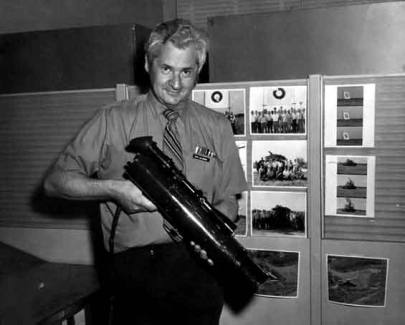
Not many people know who this man is.


His name is David Salonimer, an engineer who worked at the U.S army's Redstone proving ground. He is the father of the modern laser guided bomb. You have probably never heard of him.

His idea, with the collaboration of others has probably done more to reduce human suffering in warfare than any of the peace treaties or political gestures at disarmament since the Second World War. By improving the accuracy of weapons by several orders of magnitude he has spared countless people from becoming collateral damage. He has also probably spared many soldiers and airmen from death and massively increased the military power of his country. In this age of military barbarism he has probably done the most to lessen the miseries of war.

Part of the reason that that area bombing was implemented was because the accuracy of bombing was so low that an inordinate number of large high explosive bombs had to be dropped on a target in order to achieve a probable hit. Given that pinpoint precision is now a real ability of armed forces, military forces have now begun to use the weapon of David, albeit in a smart form. The smart rock.

This guy is an all out legend, yet no one knows of him. As far as I understand it he has won a few engineering awards but that is it. Al Gore gets to win the Nobel peace prize for being an environmental windbag while the man who actually save lives gets passed over. I personally feel he comes second to Henry Dunant in reducing the suffering in war. The world honours its sinners and passes over its saints.

Monday, April 28, 2008

Imprecise precision.

I wish to apologise to all. I have been away rather longer than I expected and I feel I have let duty slip. I will try to post more in the next few weeks.

Carrying on with the theme of double effect, here are a few facts worth pondering. A the end of the Second World War the U.S. conducted a review of the effectiveness of its bombing campaign. The report can be found
here.

During most of the Second World War the U.S pursued a policy of daylight bombing of specific targets of military value. Unlike the British who early on instigated area bombing due to their inability to hit a specific target at all. One of the interesting facts that it presents is that overall only 20% of bombs when aimed at a clear and specific target fell within a 1000 ft radius of the target. Where did the other 80% go?

In fact the average CEP of bombers in the WW2 was approximately 3000 ft.

Now, how do we morally evaluate the actions of the bombardier, who while aiming at a specific target, exposes approximately 5 square miles around the target to the possibility of being bombed? Clearly an attempt at discrimination is being made even if the effects are indiscriminate.

Tuesday, October 16, 2007

Keeping in touch.

I've been really busy the past few weeks and have also had some writer's block. I hope to have a few posts up in the next week.

Sunday, September 23, 2007

Imperfect acting

Before a person performs an action, they must have something in mind--the objective--which they intend to perform. The purpose of acting is to realise the objective. When we perform an act, we set out to achieve what our will wanted us to do. Now this might sound like stating the obvious and in one way it is, the problem is that when we try to achieve our objective we may cause other effects to come into being incidental to the realisation of our immediate objective.

Example: A man is involved in a motor vehicle accident. He has been flung out of his car onto the road in the path of oncoming traffic. He has also broken quite a few bones in his body. We happen upon the accident scene and try to move the man out of the path of oncoming traffic. Now in moving the man we cause him suffering and distress as every movement jostles his broken bones.

Now our objective is to move the man out of the path of danger, however in trying to perform this act we manage to move him out of danger while at the same time causing him considerable amount of pain. In actuating our objective we have also actuated this man’s pain. Now if we are aware that the man has broken bones we clearly foresee that the action of moving the man is going to cause him pain. How do you evaluate the determine the morality of an act when clearly both good and evil is happening at the same time as a result of a specific action?

Now our capacity to actuate our objective is limited to our means and circumstances. A elderly man may want to help our injured motorist but not have the strength to do it. A young lady may drag our motorist across the road, causing more pain than if he was gently lifted by paramedics yet both people have tried to actuate a morally good objective with various degrees of evil resulting as a result of their circumstantial limitations.

The prevalent view amongst a group of quite a few Christians--who should know better--is that the act is evaluated on the consequences, if one of the consequences is a foreseen grave evil then the act’s nature must be intrinsically evil and hence prohibited. The act is judged by its effects. By their reasoning, if a man performs an action in which he foresees his own death he must have intended suicide. If a pilot of a plane bombs a building in which terrorists have used hostages as shields he must have intended to kill the hostages. It is the doctrine of immaculate actuation.

They will of course deny that this is their reasoning and this is because they cannot see their error. All of them can state the principles of double effect and list examples of how they support it; up to a certain point. Once a certain psychological threshold is crossed, double effect is negated. While it is never OK to deliberately actuate pain or maiming to an individual as in torture they will quite happily accept it as a side effect of medical treatment. However once the unintended evil effects of an otherwise morally permissible action include injury to children or death to innocents then the principle of double effect usually is switched off: Double effect is applicable up to a certain threshold of unintended evil after which it is not on.

Now this is basically a repudiation of Veritatis Splendor. The document states that the morality of an act is determined by a moral analysis of the actors corporeal objective, not the effects of the realisation of the objective. The question to be asked is what was the actor trying to achieve by the action which resulted in both good and evil effects? The fact that a good action may have a bad effect does not automatically disqualify the action. St Thomas will back me up on that one.

Veritatis Splendor did not deal with the doctrine of double effect explicitly but its principles are easily applicable to the doctrine. In order for an action to be licit under the principle of double effect:

The actor must have a good moral objective and
A proportional analysis of the effects of actualisation of the action must on balance be good in order for the action to be permitted: The doctrine of double effect is the doctrine of conditional proportionalism.

The doctrine of double effect does not permit an actions which have a morally good objective but which on balance has bad consequences. Likewise double effect does not justify a morally bad objective if the consequences are good. Double effect also implicitly demands that we chose actions which minimise the bad consequences where that choice is available.

Monday, September 03, 2007

Moral Object Solutions.

Apparently My Blog is being read in heaven; no seriously. I got two replies to the Double Effect post from John Paul II (check the comments on the post) I do get an impressive audience. I wonder if it is a wireless link?

I’d thought I’d have another go thinking about moral objects.

What is a moral object?

One of the big problems in understanding morality is an understanding of the concept of the “moral object“. I’ve gone looking around on the web and have been mulling over Veritatis Splendor and most explanations seem to go give a partial understanding of the subject. I also feel that Veritatis Splendor may confuse the terminology a bit. Thinking about the matter a bit more, I feel that the military may have some useful ideas in helping us understand the moral object a bit easier.

The target of a military endeavour is called the objective. The objective is the thing to which military activities are directed. Military endeavours are usually divided into two different types of objectives: The strategic and the tactical.

The strategic objective is the purpose to which all military operations are directed. Principally they are the defeat of the enemy or a lessening of its power. Broadly speaking it is why military operations are constituted in the first place. The tactical objectives and the targets which have to be achieved--either in the form of possession, neutralisation or destruction--that have to be achieved in order to achieve the strategic objective. Now the strategic objective can be thought of analogous to the idea of intent while the tactical objective can be thought of as the objective of an act.

Notice that there are two different types of objectives. Intended objectives and objectives of acts. Both acts and intents have objectives but they are fundamentally different in their natures. The intended objective is a state we wish to achieve, this state may come about passively without us doing anything while an the objective of an act is a state we wish to achieve by our active participation.

This objective can be considered from many different perspective but when considered against a moral standard the objective can be thought of as a moral objective. The moral object can therefore be thought of as the classification of an object with respect to its relation to God’s moral law. Example: Let’s say A wants to murder B. The object of A’s intent is the unjust death of B. As it is never licit to murder, the object of A’s intent can be thought of as contrary to God’s law and therefore is categorically evil. A’s intent has an evil moral object. Broadly speaking bad intentions and bad acts have are bad moral objects, while good intentions and acts have the opposite. Moral theologians have also made the distinction in the following terminology:

The finis operis: the end of the operation , similar to the concept of the tactical objective,
The finis operantis: the end of the agent similar in concept to the strategic objective.

Personally, I think that the terminology doesn’t emphasise the distinction enough, so I ‘m suggesting a different terminology be used. (I’m open to suggestions of a better terminology).

Finis operis: Corporeal object.
Finis operandis: Intended object.

I want to be clear that by corporeal object, I mean human acts including thoughts; for thinking is a human action even though it is not strictly corporeal.

Now human acts can be considered as being directed towards a specific corporeal object. Human action is the ontic realisation of the corporeal object: The thing willed is made real by the act.

Now why does all this matter?

At any given point or place the universe as we know it exists in a certain ontic state. By ontic state I mean the bits and pieces that make up our universe have a specific relation to one another. The universe as it was on June 22nd 3.05pm exactly was in a different ontic state to what it was on Feb 12 1987 at 11.37 am.

Now the intent concerns itself with the nature of the ontic state, or the type of state the particular individual would like to see exist. The object of intent is a particular ontic state; while the corporeal object realised, is an active alteration of the ontic state: the act generates a particular ontic state. The important point being is that the corporeal object and the intended object are not the same. Sometimes the corporeal object is congruent with the intended object sometimes it is not: the corporeal object--with the contingent assistance of circumstance--is a means of attaining the intended object.

I think a change in terminology is important because ill will in discussions on moral matters frequently hinge on definitions, the current definitions are not precise enough. More tomorrow.

Friday, August 24, 2007

Thinking about Hiroshima.

“What guided me in my thinking and guided all our efforts—The reason the 21st Bomber Command worked like no other command during the war and kept us going—was the million men we were going to loose if we had to invade Japan. That says nothing of the Japanese losses, although we didn’t give a damn about them at the time. We were primarily worried about our own people”

Curtis Le May.

I’ve been watching with dismay the two opposite lines of reasoning evidenced at VFR and WWWtW.

It would appear to me that Laurence Auster is putting forward an argument that the ends justify the means. The Japanese were wicked, tenacious and determined not to give in no matter what the price. The dropping of the bomb instituted events which stopped the war quickly and saved many lives, Japanese and American; this interpretation is consistent with the facts.

The position of WWWtW is that the attack on Hiroshima is wicked because innocent civilians were killed. As I have argued previously the position of the main protagonists on WWWtW leads to functional pacifism. The criteria that they set up for the fighting of just war make it effectively impossible to fight. Furthermore their thinking opens a line of tactical exploitation by wicked people. Tie up an innocent to your tank, plane or whatever and it is immune from attack on the basis of the moral argument put forward by WWWtW.

Both approaches are wrong and both are wicked.

Following my line of reasoning from yesterdays post I would like to make an analysis of the atomic bombings within the Christian tradition.

Auster's argument is quickly dismissed. Christian tradition has always condemned the line of reasoning that wicked means justify good ends. That ends that argument.

Now I feel that the atomic bombings were wrong but not for the reason the people over at WWWtW do.

Firstly the state has authority to bear the sword in defence of the common interest. However the state is allowed only to attack the unjust (aggressors) and their means, it is not allowed to attack the innocent. Now any enemy city is going to contain a mixed bag of the innocent and combatants, the concept of deliberately targeting a city itself, is morally wrong since by definition it would be an intended attack on both the innocent and the guilty.

However, we are allowed to attack the unjust and if in the process, innocent civilians are killed unavoidably, then the action is permitted according to Christian tradition. It would appear therefore that the attack on Hiroshima was justified, as Hiroshima was a major military base as well as Nagasaki.

However double effect is a two edged sword and the mechanism that permits collateral losses also obligates their minimization. The question to be asked then is, did the U.S. have a capacity to destroy the military installations of Hiroshima without using the atomic bomb? The answer to that is unfortunately yes.

The Twentieth Air Force had the capacity to destroy whatever it wanted on the Japanese mainland. Towards the end of the war it was safer in a B-29 flying over Japan than in a training mission over the United States. General Curtis Le May felt at the time that the action--dropping the bomb--was unnecessary, as did Admiral Arleigh Burke; the two men who were putting most of the hurt on Japan. Had the 20th Air Force gone in to firebomb Hiroshima, perhaps twenty to forty thousand would have been killed, but that means that the sixty thousand extra who died as a result of the atomic bomb would not have been. The option to minimize civilian losses was available and it was not chosen, therein lays the evil.

Had the U.S. no other way of defending itself against attack except by nuclear weapons then I believe it would have been justified in using them, provided they were targeted at military targets only and with an eye to minimizing civilian casualties. The problem was that no one cared about the Japanese, no one gave a damn. In fact Hiroshima was also seen as an experiment, the fact that it had remained deliberately unscathed with a view of it being a test city for nuclear experiments shows just how degraded the concern for the Japanese had become, the citizens of Hiroshima were to be the guinea pigs of atomic warfare.

Truman did agonise over the civilian losses that the bombs were going to produce; I do not stand in judgment of him. He was a fundamentally decent man and I believe that when he made the decision to drop the atomic bomb, he did so with a good and hence binding conscience. I live in a different time and benefit from the freedom his actions provided. Free from the pressures, sorrows and anxiety of war, I and others can dispassionately reflect on the situation with the benefit of hindsight; which by its nature is always crystal clear. Truman did not enjoy that privilege.

Every society should make a moral accounting of its conduct and if it finds itself wanting, ask for forgiveness from the Almighty and determine not to repeat the same mistakes again. Our Christian tradition reasserts that we should choose to suffer death rather than perform evil. Death before dishonour is not just the motto of some fanatical Japanese; it is also the motto of the Christian soldier.

Thursday, August 23, 2007

Double trouble with double effect.

I’ve been pondering double effect for a while and thanks to the moral definitions in the previous post, I feel I have a better understanding of the phenomena.

Firstly when one acts one brings something into being: Something is made real through the act of the will. By running I make my intention of going for a run real. The things that are actualized in this world can be good, bad or indifferent.

When one performs a good act one wants to bring something good into the world. When one an evil act they causes an evil in this world. But what happens when one brings about an action which brings about both good and evil at the same time?

How does one form a moral assessment of surgery, in the days prior to anaesthetic? When the knife is put into the flesh, curing the patient (good) begins at the same time pain(evil) and mutilation(evil) is actuated. To deliberately cure someone is good, to deliberately hurt someone is evil, then how do we evaluate the morality of surgery if intrinsic to its actuation, good and evil result?

The Christian tradition stated that the moral species of the act is determined through its moral object: what was the moral quality of the “thing” realized through the act. Example; putting a dent in a brand new car--as in an act of vandalism--is evil, since by denting a car, it is privated in some way. The moral object of an act concerns itself with the moral quality of what is bought about by the act, not why the act was done.

Now according to Aquinas one does good when one actualizes a good, and one sins (peccatum) when one actualizes an evil; now sin in this context is non-pejorative. A man sins and does good when he performs an action with a double effect. So how to determine its permissibility or not?

Christianity has stated that acts which bring about a state with a mixed moral quality are permitted provided:
  • That a person may choose to act in a way which results in mixed moral objects provided that the person is choosing the good moral object.
  • The mixed moral quality of the act must on balance be good. A proportional assessment of the act has to be made and the result must be in favor of the good. In sum, a net good is achieved by the act.

Now a man is culpable for the things he has control over not for the things he doesn’t. In choosing an act which actuates mixed moral objects, one cannot be blamed if the evil moral object is bought about, not through any choice of the agent. He is inculpable. However if the evil moral object could be avoided in some way then the agent becomes culpable because he has some choice in what type of evil is bought about. No choice, no culpability. There is a double imperative in Christianity: do good and avoid evil.

Sunday, August 19, 2007

The Good Conscience

I thought I would post a link to an interesting speech delivered by Bishop Anthony Fisher of the Catholic Church here in Australia. Bishop Fisher is one of the most conservative Catholic bishops out there and a strong defender of orthodoxy. His comments on conscience are quite nuanced. They can be found here.

Monday, August 13, 2007

An Inconvenient truth

The local paper for right thinking people; The Age, frequently berates outer suburban types for living in high energy consuming McMansions in the outer suburbs. It’s quite funny then that the paper ran an article in its Sunday edition which showed some “surprising results’. It would appear that our affluent inner city environmental types leave the largest eco-footprint in the country. Those berating the community about their inconsiderate use of water and fossil fuels tend are its worst offenders. Reminds me a bit about Al Gore’s energy Bills. Who would have ever thought the Left a bunch of hypocrites?

Yours truly lives in an area that is quite conservative and also has a very low eco footprint. Right wing and environmentally sensitive; now there’s an inconvenient truth. Anyway you can see how much damage you’re doing-in Australia at least-by clicking here.

The Damned.

One of the blogs I like to visit is David Apatoff's, Illustration art. His latest posting deals with Mr James Montgomery Flagg, the illustrator who painted this famous poster.


The fellow's story is tragic; Mr Flagg you see loved beauty, but for the wrong reason. To him the beautiful was something that was valued because of the pleasure it gave to Mr Flagg, but not of the object it represented. The consequences were predictable. Read on.
(Caution, some risque art)

Sunday, August 12, 2007

The Verdict.

I've been waiting for my "higher authority" to get back to me, they haven't officially as yet, but Annoymous of 5.58 pm sent me a very interesting post which I think settles the matter.

"I don't know if a Jesuit qualifies as "higher authority" but he's probably more likely to be right than a bunch of guys yakking on the web. One of the instances Father Hardon gives below (in his Pocket Catholic Dictionary), is almost exactly analogous to the discussion at WWWtW...

(Father Hardon then goes on to discuss the principle of double effect and gives the following example)

...the commander of a submarine in wartime who torpedoes an armed merchant vessel of the enemy., although he foresees that several innocent children on board will be killed.

(Father Hardon then states that the action is licit if) All four conditions are fulfilled :
  • he intends to merely lessen the power of the enemy by destroying an armed merchant ship. He does not wish to kill the innocent children;
  • his action of torpedoing the ship is not evil in itself;
  • the evil effect (the death of the children) is not the cause of the good effect (the lessening of the enemy's strength);
  • there is sufficient reason for permitting the evil effect to follow, and this reason is administering a damaging blow to those who are unjustly attacking his country.
You were right, at least according to Father Hardon, S.J...

Oh, and who was Father Hardon S.J. ?

Click here


The defence rests.


We praise God and not our strength for it.

Btw, Annonymous; good wine shall be drunk in your honour.

Sunday, August 05, 2007

Legal terminolgy.

Janet E Smith, of conservative orthodox Roman Catholic fame, gives a little run down on moral terminology. Some people may find it helpful. It can be found here.

The right call

I’ve been away for a while, posting on other blogs. Apparently I can get into trouble anywhere I go so I guess in order to keep the peace, I am staying at home.

Recently I was involved in a rather engaging struggle over at the What’s Wrong with the World site. The site is definitely worth a visit and the topics raised there are treated intelligently and with conviction.

The matter under contention was titled The Right Call? The thread can be found here:

The moral question in essence was: Is it morally permissible to shoot down an civilian aircraft, commandeered by terrorists in flight and intending to use the aircraft as a weapon? Essentially a moral judgment was to be made on Dick Cheney’s decision to shoot down Flight 89 during the September 11 attacks.

Yours truly, took up position as counsel for the defence; arguing that the act was morally permissible under the principle of double effect for the following reasons.

1) The intention was to defend the United States.
2) Shooting down the aircraft was a morally legitimate form of defence.
3) The shooting down of the aircraft would have a double effect:
a. Stopping the attack. (good)
b. Death of the innocent civilian passengers(Evil)
4) Death of the civilians was not wished/intended.
5) A proportionate analysis of the double effect weighed heavily on the side of good.

The action of the Vice President conformed to the principle of double effect and hence was morally licit.

The prosecution argued that the VP’s actions were morally illicit. It was agreed that:

1) The intention was to defend the United States
2) The Vice President did not wish the civilians any harm
3) A proportionate analysis favoured the action but;

4) The action of shooting down the aircraft was morally impermissible since innocent civilians were going to be killed. It was argued that as the death of the innocent civilians was foreseen, and hence must have been intended. As deliberately causing the death of innocent civilians is intrinsically evil, the action was morally forbidden.
5) The principle of double effect is negated if evil means are chosen for good ends.

The Prosecution argued that the defence were proportionalists, justifying any evil act provided good could come of it. The Prosecution argued that the killing of the innocent was always and everywhere a deliberate evil and any other such act in which a deliberate evil was chosen was always and everywhere wrong.

The Defence argued that firstly, the Prosecution's understanding of intention was deficient; just actions could have deliberately foreseen evil consequences which were unintended. What defined the goodness or badness of an act depended on its moral object. The Prosecution argued that a deliberately chosen behaviour which resulted in intrinsic evil was always a sign of an evil moral object, the Defence rejected this proposition. Furthermore the Defence argued that the Prosecution's understand of double effect was flawed, since apparently some intrinsic evils were permissible and others were not. Cutting the flesh is intrinsically evil, yet is permitted for surgery. The Prosecution agreed that surgery was permitted but because cutting the flesh was not intrinsically evil.

At stake for the Defence was more than the question under consideration: At stake was everything.

If the Prosecution’s line of reasoning was correct, then any action in which an intrinsic evil was deliberately bought about would be not permitted. Killing one’s self is an intrinsic evil. One can step in front of fast moving train and afterwards claim that the train killed him, but one cannot say that he did not foresee his death. The Prosecution's line of reasoning would lead to the conclusion that the death was suicide; their early argument illustrated this position. The Defence insisted that why a person did what they did was vitally important. If stepping in front of a train to push a young child off the tracks resulted in the foreseen death of the rescuer, then the act was self sacrifice; not suicide: the highest of motives, as our Master taught.

Indeed; the Defence feels that the line of reasoning pursued is a most evil attack on Christianity, veiled as a defence. It was mentioned in opening argument, that had the passengers of flight 89 deliberately crashed the aircraft to save other Americans on the ground, it would have been collective suicide. Yet; our master would have taught that no greater love man hath, and would have such men supp with him in paradise. Indeed in choosing to have himself killed, Christ would have, by the prosecutions reasoning: committed suicide: The Son of God becomes the Devil himself. It is this foreseen consequence of the Prosecution’s reasoning, that drove the Defence’s vigorous crusade, but as usual argument drew to a stalemate.

The Defence as such has deferred the matter to higher authority and will publish the findings of this authority when it becomes available.

It remains to be seen whether the Prosecution or the Defence made the right call.

Tuesday, April 03, 2007

Eating your greenies makes you healthier.

I love nuclear power and this article in the Australian is priceless.

http://www.theaustralian.news.com.au/story/0,20867,21495572-23289,00.html

Sunday, April 01, 2007

Doublethink

Orwell was right; Many on the left have a remarkable capacity for doublethink. For those of you who don’t know what doublethink is a definition is in order: Doublethink is the capacity to hold two mutually contradictory thoughts in ones head and not notice the contradiction. It’s almost a prerequisite capacity in order to belong to the Left.
The latest cloning bill bought before the Victorian Parliament would support genetic manipulation of the embryo. But here’s the rub, why are they against genetically modified crops but for genetically modified humans? Beats me.

Friday, March 30, 2007

A McDonalds culture.

I personally don’t mind McDonalds. No body forces you to go there. The food is appropriate if you’re on the run, ravenous and need something to eat. It’s cheap and the kids love it. It’s a bit like chocolate, fine as a treat but unhealthy eaten all the time. One of the things I don’t like about McDonalds is its ubiquity. I am not very traveled. But in New Zealand they are everywhere as they are in Europe. I don’t have a problem with McDonalds chasing economic opportunity rather it’s the cultural damage that it brings with it that bothers me

The last thing I wanted to do in Europe was to eat at a McDonalds, because I can eat at one at home. The whole point of traveling is to experience other cultures; not to relive what is at home. But that was the problem, to my mind Europe was too much like home. Standing in Vienna, it struck me that the faces were the same, the scenery was a bit different: I had traveled around the world to experience another backdrop. The injury that a business like McDonalds does to a country such as France is that it makes the place a bit less French and bit more American. Is it such a great idea that France becomes less French when multinationals set their businesses there?

Now most of my friends on the Left would agree that it’s a bad thing. However I feel that they are being hypocritical, for why is the destruction of economic diversity so much worse than the destruction of cultural diversity? Yet my friends on the left have no problems with multiculturalism. In my mind economic multi-nationalism is just as bad as demographic multi-nationalism; in other words multi-culturalism. Our friends on the left are very keen on keeping biological diversity; they are not so keen on cultural diversity. When cultural diversity becomes universal it simultaneously becomes extinct. Japan is the nature it is because it is full of Japanese. If we were to put large minorities of Europeans, Indians and Africans in Japan it would cease to be Japanese, it would become multicultural.

And that’s the problem, traveling will become pointless because of the world will be the same. It will be one big melting pot; its individual flavours indistinguishable from each other.

Thursday, March 29, 2007

Greenies

“The Earth has a skin and that skin has diseases, one of its diseases is called man.”
Friedrich Nietzsche

My mother ran a spotless house and I suppose I have inherited a legacy of enmity towards dirt and mess: I like things clean. I grew up in an industrial part of town and I can still remember as a child, my disgust at dirty walls, industrial rubbish, polluted creeks and smelly air. I always thought that the men who allowed this to happen were somehow deficient in manners. I always imagined their homes as being grubby, with piles of dishes and washing lying around. Little did I realize that the men who owned these factories, left them, to go to nice tree lined streets, in areas zoned to prevent industrial activities when the evening came.

I think it was Chesterton who once remarked that every movement starts with some disputed truth and invariably ends in error. The environmental movement is one such movement.

I have much sympathy to the environmental movement. The way that many of our ancestors treated the environment was simply abysmal. They poured pollutants down the rivers which we drank from, poisoned the air we breathed and generally left their trash out of site. Many of the great capitalists in the past would think nothing of cutting down a whole forest, fouling a river or wiping out a species in the ever relentless pursuit of greater profit. Afterwards retiring to great estates that would maintain nature in its most pristine if not sometimes contrived forms. Hence it was right that this total disregard of our common environment should have been opposed. But what started out as a noble cause has morphed into an ignoble philosophy.

What irks me with regard to the environmental movement is its quasi religious overtone. Walking on elevated bridges through forest canopy is meant to inspire the same religious awe that the relics of the saints were meant to arouse: A trip to Amazon, equivalent to a pilgrimage to Mecca. Somehow, any disturbance of the way things are is the equivalent of sin. Indeed it is this undertone; that mans presence is sacrilegious to the environment, that rubs me the wrong man. In Christianity man was cast out of the Garden of Eden when he ate from the tree of knowledge. In the environmental movement, paradise was lost when God created man. I suppose Nietzsche could be considered a proto-Greenie.

I take the biblical view that man was put in the Garden of Eden to tend it, not worship it. This means that we have a responsibility towards it and not veneration. We are free to use the resources of nature, provided we do so with good husbandry; for we are the stewards of this Earth and not its owners.

Sunday, March 18, 2007

Starting out.

The Sunday Age is always good for a laugh. The story that got me thinking, dealt with the tribulations of a young couple who were having difficulty purchasing a first home. Our aspirant homeowners were having difficulty finding a affordable property in their first choice suburbs of East Melbourne and Richmond. Now for those of you who don’t know Melbourne, East Melbourne is one of the most affluent and expensive inner city suburbs. Richmond has its dingy bits, but it too has quite a bit of very expensive housing and amongst our inner city types carries a bit of prestige.

Now in days of Yore, a young couple would scrimp and save and move into a modest home in a modest suburb and slowly move up. But not our young couple; they were starting at the top.

What got me down about this article was the way these young people felt that there was some sense of injustice in their not being able to afford luxury immediately. This sentiment is not isolated and seems to be a growing contagion, especially amongst the younger generation. I was bought up old school: if you wanted luxuries you saved up till you had enough to purchase them, not the current generation though: Luxury and prestige are a “right” and their inability to afford them a “problem”.

Likewise, there has been much talk of rapidly rising rents. I have quite a few real estate agents as patients; they’re finding it difficult to fill vacancies in rental properties. However the suburbs that I serve don’t carry high status. The “problem” our “progressive paper” harps on about is the high expense of high status housing: Big deal.

There is plenty of cheap housing if one is prepared to accept compromises; the problem is that most of our trendy, eco-friendly inner city types are not. With champagne tastes and beer budgets, the bastards are complaining about the price of caviar. Excuse me for not being sympathetic.

Monday, March 12, 2007

The value of tradition

I am at variance with the mainstream conservative movement when it comes to tradition. Most conservatives seem to have a soft spot for tradition. Many conservatives see it as part of the “continuity of life” or a link with their ancestors. American and British conservatives tend to think of the conservative mission as a project to preserve the “old ideas”: The conservative movement as a sort of intellectual ossuary.
I am convinced that there are others though, who are conservative for aesthetic reasons. Fussiness, traditional modes of conduct, titles and formality give them much pleasure. Recently there was an interesting debate on Right Reason on this very matter;

http://rightreason.ektopos.com/archives/2007/01/objectlevel_and.html

I value tradition simply because the dead sometimes have quite intelligent things to say. The men and women who lived before us were not all stupid. Their circumstances may have been different, but in their dealings with human nature, things have not changed. So when it comes to issues on how we should live I am quite prepared to give a respectful ear to the opinions of my forefathers. I recognize that they were men and prone to the failings of men: They were not infallible. However where I differ from a significant portion of my conservative colleagues is that where as I give them a respectful ear, they worship them; and Idolatry is a sin.
This worshiping of the old I think has done the conservative cause a lot of damage. The old world was full of problems, the modernist approach was to try to fix them up—usually the wrong way—while the conservative approach was either not fix them up at all or to turn the clock back. Traditionalism is the process of allowing dead people to do your thinking for you, hence I believe that it was justified that the conservatives were called the stupid mans party.

http://www.amconmag.com/2007/2007_02_12/cover.html

For what it’s worth, my conservatism is rooted in a metaphysical view that was until quite recently, common opinion: That there is a right and wrong which is quite independent of my perception of them. My imperative as a conservative is to live the right way, not the old way. The fact that my forefathers were right on so many issues means that I give them a respectful ear, not a bended knee.

Monday, March 05, 2007

Why not pay the protestors to beat the police up?

Several years ago I had the unfortunate experience of treating an ambulance officer who was injured at the S20 protests approximately 7 years ago. The poor fellow had metal objects—nuts and ball bearings—and had urine thrown at him which had splashed him in the eye. He came in anxious with regard to risk of catching certain diseases. The risk was small I explained but still there. While organising his tests we chatted about the days protests and in no uncertain terms he convinced me that the rioters were at fault and the police remarkably restrained.
Several hours later to my surprise one of the rioters came in, wanting me to document his injuries, which consisted of some minor bruising. He regaled me at length of how the police had attacked the innocent rioters, later on that night when I got home and saw the TV news, the pictures on television seemed to support the paramedics’ view.
Today this in the paper;

http://www.news.com.au/sundayheraldsun/story/0,21985,21322057-661,00.html.

Why do the police bother?

Monday, February 26, 2007

Poverty 101

A lot of my professional career has been spent in dealing with the problems of poor people. Indeed for most of my life prior to graduating from university, I shared a practical solidarity with the poor by being one of them. My parents were working class people, who migrated to this country because quite simply, there was nothing for them to eat at home. So when I speak of poverty I feel that I can make statements safely and with some authority, I therefore propose a taxonomy of poverty.


Firstly: the nature of poverty.


There is absolute poverty; this is quite simply not having enough to eat or drink, lacking a roof over your head, clothes to cover yourself with and the like. This is the nature of poverty in third world countries.


Relative poverty; this is quite simply not having as much as the man next door. It used to be called by the old name of envy, though in these politically correct times it could mean living in a society with a high Gini coefficient. This forms the bulk of poverty in modern western countries.


The causes of poverty.


Resource deprivation: This is when one has lack of access to resources to alleviate their predicament. This can happen through theft, denial of work,lack of capital or income. Poverty of this kind is alleviated by directing resources to the deprived. Most kind hearted people feel that the way to fix poverty is through resource access.

This however poses problems, because by and far in Western countries the biggest cause of poverty is:


Resource misallocation: This is where resources are available but are used in ways that maintain relative deprivation. Charity directed towards the poor of this type, tends to buy them little luxuries, which once used, leave the individual in the same state that they were in before. Poverty of this kind is only temporarily ameliorated, it is never cured at all.


It is this-- resource misallocation—type of poverty, that forms the bulk of the Western World's poor. It is indeed the most fascinating type of poverty. I have as one of my patients, a person who won more than $600,000 in the local lottery, and who after two years, and orgy of consumption, is back on social security. Indeed, it seems to be a reasonably common phenomenon. Approximately one third of lottery winners are in the same predicament as my patient. Now if a one off gratuity of $600,000 cannot relieve poverty, how much will?

Sunday, February 25, 2007

Rude behaviour

Over coffee this morning, my wife asked if people interrupt their consultations with me when their mobile phone rings. She had been reading an article in the paper about the general level of rudeness in society. She was quite aghast when I replied that it happens all of the time. Most people excuse themselves before answering the phone, however a significant bulk don’t, expecting me to stop the consultation so that they can carry on with their personal life: In a nutshell they are rude.

The point of the newspaper article was that there is a growing problem of rudeness in society, a point which I totally agree with. Rudeness if considered is really a lack of consideration to others. Whereas tolerance aims to put up with disagreeable behaviors, courtesy aims to make one tolerable. In other words, courtesy is an effort to please society.

However pleasing society otherwise known as social conformity has been under cultural attack in the West for most of the last century. Amongst our “creative types” the escape from social conformity has been the hallmark of personal maturity and growth in authenticity of the person. Hollywood and most contemporary literature idolises the rebel and scorns the conformist.

So is it any surprise then that people who have been conditioned to do their own thing without regard to others, do. Also as we keep being reminded standards are arbitrary and who are we to impose standards on others? Good modern multicultural man is tolerant.

In our current society we have reached a situation where we have a synergy between broad tolerance and self assertion which I believe is contributing to the expansion of boorish and rude behaviour. Whereas previously this behaviour was confined to the lower classes--with the better behaved affluent, insulating themselves by postcode and employment type-- now, through the rising level of affluence, these people are increasingly coming in contact with each other.

What this means for the genteel is that their interaction with society is less pleasant. While I do not think that there will be a “war” between the classes on this matter life will become rather less pleasant. The rude and the obnoxious abound.