Wednesday, September 05, 2012
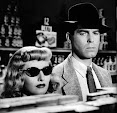
How to Screen the Good Girls from the Bad.
It's not foolproof but a pretty good rule of thumb. Roughly 3% of women with 0-1 sexual partners have a tattoo. From this study.
It called a tramp stamp for good reason.
(Hat tip, Roosh V)
Glad to see my Australian colleagues doing their share of the heavy lifting.
Thursday, August 23, 2012
More Promiscuity Data.
Back in 2010 Anthony Paik published a study which received widespread media attention at the time. The findings were "spun" in such a way to show that casual hookups could lead to successful long term relationships. Susan Walsh had a look at it and found that the media reporting was quite biased, but this is to be expected, as selective reading of the findings were supportive of the liberal social script.
He did manage to get another study published in 2011, however, the findings in this one could not be spun so easily and hence the media gave it only a nominal amount of coverage.
Titled, Adolescent Sexuality and The Risk of Marital Dissolution, the study attempted to find out whether adolescent sex was a risk factor working against long term marital stability, and if it was, whether the effect was causal or selective. The paper is available from here. (You can get the .pdf at the site)
The science of Slutology is still in its infant stages and Paik acknowledges that there have been very few studies done. He lists the previous work in the area and some of the mentioned papers have been presented on this blog previously.
Only four nationally representative studies have examined whether premarital sexual experiences are linked to divorce (Heaton, 2002; Kahn & London, 1991; Laumann et al., 1994; Teachman, 2003). Nevertheless, the core finding—the association between premarital sex and increased risks of divorce—is robust[Ed]. Teachman (2003) found that women who had sex only with their future husbands did not have higher risks of marital dissolution, which suggests that the premarital-sex effect on divorce is related primarily to having sex with multiple partnersNow the question that Paik wanted to answer is whether premarital sex made a good woman risk or whether risky women engaged in premarital sex.
Despite the many contributions of prior research, there is a need for an approach that distinguishes between selection and causation explanations and that focuses attention on whether the timing and unwantedness of adolescent sexuality are linked to divorce.He looked at the sexual histories of approximately 3,800 women taken from the 2002 U.S. National Survey of Family Growth and crunched the numbers. You can read about the methodology in the paper but the important findings are as follows:
- Women who had unwanted first sex were at increased risk of divorce.
- Women who had sex prior to 16 years of age were at increased risk of divorce, regardless of whether the sex was wanted or not.
- Women who had sex after 16 were not at greater risk of divorce if they had only ever slept with one man. Once they had slept with more than one they were at increased risk of divorce.
- He was able to pretty much replicate Teachman's findings that the increased rate of divorce amongst co-habitors is due to their multiple partner count. Note: He also replicated guest commentator Intrepid's finding that virgin brides are the safest bet of all.
- Finally, his findings support the hypothesis that having multiple partners exerts some sort of effect on a woman that increases her risk of divorce. Women who are prone to divorce are not born but are made that way:
My results support the argument that observed linkages between adolescent sexual debut and marital disruption is one not of selectivity but of changes in beliefs and attitudes about marriage and relationships that result directly and indirectly from these [Ed: Multiple Sexual]experiences.
and
Now Paik cautiously advocates that this is only a tentative conclusion and that more work needs to be done. I personally think that Paik wasn't too happy with the findings either. Throughout the work there appears to be a grudging acknowledgment of the effect of multiple sexual partners on divorce risk. Most sociology professors are liberal but he is to be commended on letting the chips fall where they may.I have argued that these formative sexual experiences directly change attitudes toward marriage and sex or lead to these changes indirectly through later life-course transitions, such as the accumulation of sexual histories or
experiencing premarital fertility.
No one, of course, has yet been able to explain the rock solid association between premarital virginity and decreased risk of divorce. These women, either through partner choice or personal quality have "something" which protects them against life's vicissitudes. No "scientific" explanation is yet forthcoming. Yet for the non-virginal, the bulk of data available seems to indicate a positive correlation between partner count and divorce. I can't but help but think of GBFM, and wonder if promiscuity is a mechanism of desoulment . It's a good an explanation as any.
Note. I can hear the bleating of Left already.
I know that correlation is not causation but the whole point of looking for correlations is that there is a likelihood of finding causation as well. For years the risk of smoking was only correlated to the risk of lung cancer. Tobacco companies for years denied the link and it was only in the late 1990's that a direct mechanism was demonstrated. Feminists and Leftists will, with same logic of tobacco company lawyers, attempt to do the same. I am not attempting to convince them. Logic and empirical evidence are no use to people who practice cognitive dissonance as a voluntary habit.
Wednesday, August 22, 2012
Brendan, Dalrock and Sluts. (NSFW)
Commentator Brendan is one of the more thoughtful commentators on the internet and I have a great deal of respect for him. Over at Dalrock's, there has been a discussion going on with regard to what constitutes sluthood and Brendan chimed in with his thoughts on the matter:
On the “what is a slut” issue, the question really isn’t about a numerical cutoff, which is why that’s generally an unfruitful way of looking at the question. A slut is someone who has an instrumental view of sexuality — that is, one who views sex in a hedonistic way for the most part. A person with this mentality towards sex will not link sex with marriage exclusively, because the view of sex is distorted and based on hedonic elements which we all know can well occur outside of marriage as well. That is, sex is about two (or more) human beings collaborating physically to bring each other sexual pleasure, and this is a “good” in and of itself as long as ‘enthusiastic consent’ is present. That is an instrumental/hedonist view of sexuality, and is the sine qua non of being a slut.While I personally agree with a lot of Brendan's views, I disagree with his reasoning on this one. Now, I do think the number of previous partners does matter, and to be fair to Brendan, he does counsel that men avoid women who have high numbers, but the executive summary of his view seems to be that number does not mater as much as "women who think sex can occur justifiably outside of marriage". I think that this is good practical advice but the problem occurs when we get to the woman who's view of sex has changed and the the real problem is how to deal with the "reformed slut". It's a bit like the reformed alcoholic or drug addict, despite their protestations how do we know they aren't going to lapse into their former ways? Real life experience shows that many do.
The whole "my previous number doesn't matter" argument frequently touted by feminists is premised on the assumption that sexual continence is easy and its just a matter of being a simple choice.
It isn't.
The pleasures of the flesh, like the bottle, are source of temptation to many people. Lot's of good Christian people, who live in fear of the Lord, go to Church regularly and believe that sex is exclusively reserved for marriage, have been caught up in affairs. It's a stock staple for atheists to snicker when some Christian Pastor is caught In flagrante delicto, and attribute to hypocrisy what is in reality an act of weakness. When it comes to the practice of virtue, philosophy is less important than habit.
This is what I think is the weak point in Brendan's argument, sluthood becomes a philosophical position instead of moniker of actual promiscuity. I mean, take the example of feminist who has only ever slept with one man. Is she is a slut? Her view of sex may be instrumental but common sense would say no. The other problem with Brendan's approach is that is that it tends to de-emphasis the importance of the actual number count, which this blog has shown before to be a far better predictor of both divorce and infidelity.
Now, it is a well known fact that co-habiting couples have higher rates of both infidelity and divorce should they eventually decided to marry. For years the conventional wisdom was that this fact was attributable to the more liberal philosophy of the co-habitors. A study done by Teachman, which I have linked to previously, dispelled that theory;
The results presented in this article replicate findings from previous research: Women who cohabit prior to marriage or who have premarital sex have an increased likelihood of marital disruption. Considering the joint effects of premarital cohabitation and premarital sex, as well as histories of premarital relationships, extends previous research. The most salient finding from this analysis is that women whose intimate premarital relationships are limited to their husbands—either premarital sex alone or premarital cohabitation—do not experience an increased risk of divorce. It is only women who have more than one intimate premarital relationship who have an elevated risk of marital disruption. This effect is strongest for women who have multiple premarital coresidental unions. These findings are consistent with the notion that premarital sex and cohabitation have become part of the normal courtship pattern in the United States. They do not indicate selectivity on characteristics linked to the risk of divorce and do not provide couples with experiences that lessen the stability of marriage.In other words, the risk of divorce did not depend on a person's sexual philosophy, rather, what mattered is the actual number of partners they had. Teachman showed that liberal women who were not slutty were good bets.
Now, common sense would dictate that a woman who embraces a hedonistic philosophy is probably going to be a bad bet compared to woman with a more overtly Christian approach. But this graph below will show you just how little comfort you can take from that line of reasoning.
The data was taken from this paper, The Benefits of Religious Worship, by the Marriage and Religion Research Institute. They didn't do a breakdown of the different denominations in this paper, and so I imagine the conservative Christians are lumped together with the liberal ones. Frankly, I'm surprised that 4.33 is the average for weekly attenders as I thought it would be much less (I imagine the pious divorcees distort the figure). But there you go. Viva La Sexual Revolution!
Having a Christian philosophy helps but it is no guarantee against carousel riding, and even your apparently averagely pious Christian girl has gone for a quick spin. But what is evident though, is the more seriously she takes the faith the lower the partner count. But Philosophy doesn't matter nearly as much as practice, because the greater the number of partners the greater the risk of divorce. All the studies show that a zero previous partner count is the safest bet. N matters.
The other problem with the "philosophical approach" to the definition of a slut is that it supports the bad theology of what commentator at Darock's blog called "sloppy seconds agape." The idea here is that once a woman professes her love for Jesus and repudiates her wicked past she suddenly becomes a good catch. The "theology" can be briefly summed up as "Because Jesus forgave sinners you should marry them even if they don't appeal to you". Any quite prudent reservations with regard to her marriage worthiness are dismissed as a lack of charity or too much judgement(with all the negative Christian connotations that it brings). The philosophy of Sloppy Seconds Agape conflates forgiveness with imprudence and thrives in the church's where goodness is equated with niceness. The well meaning but naive Christian young man is a sheep amongst wolves in this crowd. All forms of psychological pressure and dubious theological argument will be put on him to "man up". He will be made to feel guilty for having sensible reservations. Scripture will be quoted to make him feel bad. Appeals will be made to his chivalry.
Six years later he'll be paying alimony and seeing the kids every two weeks.
As a Christian, I do realise people change. God's grace is transformative and I don't want to write off men and women who are honestly trying to make a change. I've known many women who have had torrid pasts and did their best to try and escape it by living good lives and being stable partners. I know players who realise that the lifestyle was damaging them and have opted out. People do change. But the habit of virtue is more important than the philosophy of it. Before a man (or woman) invests their future, and their children's future in a spouse, a degree of prudence and common sense is required. Actions speak louder than words.
Once again, I've got the highest respect for Brendan but I disagree with him on this one.
Thursday, August 16, 2012
A reply to Jason.
I felt that a comment from Jason in my previous post deserved an extended reply.
Anyway, as far as your essay is concerned, it seems to me that Mencken (and you) are really inquiring into the issue of intelligence and how it relates to citizenship.Not so much citizenship as governance. A say in the governance of a country is not a conditional property of citizenship. A man may be a citizen of a country yet still not have any voting rights. This is an important distinction as we are so conditioned to conflate the two. Governance is about running the country properly, citizenship is about the possession of rights which are peculiar to that country. A man who does not have the right to vote can still be a citizen.
Since the Greeks it has been known that democracies cannot survive in places where there are peoples who lack good citizenship; also since the Greeks, it has been understood that good citizenship is inseparable from the habitual practice of virtue – if citizens don’t have good families, good work habits, a certain civic knowledge of politics and history, and so on, then eventually their republics, constitutional monarchies, or whatever are eventually going to disintegrate and fall.I think the term virtue needs to be clarified. The virtues, with respect to politics, can be divided into two types. The moral virtues and the civic virtues. Each has its particular role to play in a community. Morality governs our relationships with each other, whilst civic virtue is directly concerned with how the state is organised. The important point to remember is that to a certain degree, each can exist without the other.
The elephant in the room that many do not want to face though – on both the right and left - is the relationship between intelligence and the ability to be virtuous.I don't think that it's the elephant in the room. Firstly, with regard to virtue and intelligence, I really don't think it is much of a problem. From a classical perspective, it is a problem though. The ancients all thought that a man had to be at least a bit "philosophical" in order to live a good life. This in turn implied intelligence which, if lacking, condemned the stupid man to a life of misery. Christianity solved this problem by giving a man the "Ten Commandments". It didn't ask a man to think through the problems of life, it just told him how to live. No thinking required. The fantastic thing about this approach is that by insisting on rules instead of reason it lifted a lot of stupid people up from the swamp. With the decline in morality however, the stupid are sliding back into the mire.
The real problem, especially amongst religious conservatives, is the conflation of moral goodness with political virtue which is a serious misconception. Let me explain what I mean. Jimmy Carter was by all accounts a morally better man than Richard Nixon, but he was a far worse president. His moral goodness did not translate into good political action. For all his faults, Nixon governed the country better than Carter with all his good intentions.
Civic virtue, in my opinion is only loosely related to moral virtue. Moral virtue deals with perfections of the person. Civic virtue deals with the optimal organisation and running of the state: two different things.
Now to be sure, people with low or average intelligence can certainly act with virtue (e.g. many lesser intelligent individuals have fought very bravely in wars), yet are they always equipped to make good political decisions? A dense but nonetheless very good and devout Hispanic Catholic American, for example, might be a good family man and do good deeds in his community, yet be totally single-minded as far as the issues of ethnicity and illegal immigration are concerned. The idea that the sovereignty of the U.S. and the rule of law might be more important than identification with his ethnic and religious brethren might simply be beyond him, and not due to malice or willful obtuseness but simply to lack of cognition. In plain English, he just doesn’t know any better. Yet multiply such Hispanic Americans by millions, those who simply cannot comprehend why other native Americans might term illegal immigrants as actually being “illegal” rather than “undocumented” or other Orwellian terms, and you have a real problem on your hands. For the ability to make thoughtful political decisions in a democracy where the people are sovereign does require a certain capacity for abstract thinking, namely the ability to weigh competing values (e.g. sympathy for immigrants vs. the capacity of nations to absorb such immigrants). Needless to say, a capacity for such abstraction is unequally allocated in the population – hence the perennial danger of tyranny of the majority or of various minorities.Agreed.
In his Notes on Democray, Mencken quotes William Hartpole Lecky. Lecky was an Irish Jurist who was opposed to universal suffrage and wrote a two volume book arguing against the notion. The books can be found online here. I was reading the first chapter of the book when I was struck by the extraordinary similarity between your comment and passage from the book.
The men who vote through such motives are often most useful members of the community. They are sober, honest, industrious labourers; excellent fathers and husbands; capable of becoming, if need be, admirable soldiers. They are also often men who, within the narrow circle of their own ideas, surroundings, and immediate interests, exhibit no small shrewdness of judgment; but they are as ignorant as children of the great questions of foreign, or Indian, or Irish, or colonial policy, of the complicated and far-reaching consequences of the constitutional changes, or the great questions relating to commercial or financial policy, on which a general election frequently turns. If they are asked to vote on these issues, all that can be safely predicted is that their decision will not representThe book was written in the end of the at the end of the 19th Century and is remarkably prophetical with regard to the social effects of democratic government. He was really harsh on the U.S. I'll finish today's post with this last quote.
either settled conviction or real knowledge.
Yet, surely nothing in ancient alchemy was more irrational than the notion that increased ignorance in the elective body will be converted into increased capacity for good government in the representative body; that the best way to improve the world and secure rational progress is to place government more and more under the control of the least enlightened classes.
Sunday, August 12, 2012
Mencken on IQ Tests and Liberals.
Menken here writes on his opinion of IQ tests and liberals. I've highlighted what I think are the important points.
Here, of course, I flirt with the so-called intelligence tests, and so bring down upon my head that acrid bile which they have set to flowing. My plea in avoidance is that I have surely done my share of damning them: they aroused, when they were first heard of, my most brutish passions, for pedagogues had them in hand. But I can only say that time and experience have won me to them, for the evidence in favor of them slowly piles up, pedagogues or no pedagogues. In other words, they actually work. What they teach is borne out by immense accumulations of empiric corroboration. It is safe, nine times out of ten, to give them credence, and so it seems to me to be safe to generalize from them. Is it only a coincidence that their most frantic critics are the Liberals, which is to say, the only surviving honest believers in democracy? I think not. These Liberals, whatever their defects otherwise, are themselves capable of learning, and so they quickly mastered the fact that MM. Simon and Binet offered the most dangerous menace to their vapourings ever heard of since the collapse of the Holy Alliance. Their dudgeon followed. In two ways the tests give aid and comfort to their enemies. First, they provide a more or less scientific means of demonstrating the difference in natural intelligence between man and man-a difference noted ages ago by common observation, and held to be real by all men save democrats, at all times and everywhere. Second, they provide a rational scale for measuring it and a rational explanation of it. Intelligence is reduced to levels, and so given a reasonable precision of meaning. An intelligent man is one who is capable of taking in knowledge until the natural limits of the species are reached. A stupid man is one whose progress is arrested at some specific time and place before then. There thus appears in psychology and the next instant in politics-the concept of the unteachable. Some men can learn almost indefinitely; their capacity goes on increasing until their bodies begin to wear out. Others stop in childhood, even in infancy. They reach, say, the mental age of ten or twelve, and then they develop no more. Physically, they become men, and sprout beards, political delusions, and the desire to propagate their kind. But mentally they remain on the level of schoolboys.Commentary:
The fact here is challenged sharply by the democrats aforesaid, but certainly not with evidence. Their objection to it is rather of a metaphysical character, and involves gratuitous, transcendental assumptions as to what ought and what ought not to be true. They echo also, of course, the caveats of other and less romantic critics, some of them very ingenious; but always, when hard pressed, they fall back pathetically upon the argument that believing such things would be in contempt of the dignity of man, made in God's image. Is this argument sound? Is it, indeed, new? I seem to have heard it long ago, from the gentlemen of the sacred faculty. Don't they defend the rubbish of Genesis on the theory that rejecting it would leave the rabble without faith, and that without faith it would be one with the brutes, and very unhappy, and, what is worse, Immoral? I leave such contentions to the frequenters of Little Bethel and pause only to observe that if the progress of the human race had depended upon them we'd all believe in witches, ectoplasms and madstones today. Democracy, alas, is also a form of theology, and shows all the immemorial stigmata. Confronted by uncomfortable facts, it invariably tries to dispose of them by appeals to the highest sentiments of the human heart. An anti-democrat is not merely mistaken; he is also wicked, and the more plausible he is the more wicked he becomes. As I have said, the earliest of modern democrats were full of Christian juices. Their successors never get very far from Genesis 1, 27. They are Fundamentalists by instinct, however much they may pretend to a mellow scepticism.
One undoubted fact gives them a certain left-handed support, though they are far too discreet to make use of it. I allude to the fact that man on the lower levels, though he quickly reaches the limit of his capacity for taking in actual knowledge, remains capable for a long time thereafter of absorbing delusions. What is true daunts him, but what is not true finds lodgement in his cranium with so little resistance that there is only a trifling emission of heat. I shall go back to this singular and beautiful phenomenon later on. It lies at the heart of what is called religion, and at the heart of all democratic politics no less. The thinking of what Charles Richet calls Homo stultus' is almost entirely in terms of palpable nonsense. He has a dreadful capacity for embracing and cherishing impostures. His history since the first records is a history of successive victimizations-by priests, by politicians, by all sorts and conditions of quacks. His heroes are always frauds. In all ages he has hated bitterly the men who were labouring most honestly and effectively for the progress of the race. What such men teach is beyond his grasp. He believes in consequence that it is unsound, immoral and of the devil.
Mencken here notes the fundamental opposition between democratic ideology and metrics which demonstrate the falsity of the ideal. Mencken is also quite astute in recognising that when confronted with empirical confirmation of the falsity of democratic equality, the democrat will argue against the finding on non-empircal grounds. Democracy is not just a method of government, it is a religion, especially amongst liberals. But if you think about it a bit more, radical democracy with its profound insistence on egalitarianism, is front loaded with moral relativism. Superiority of any kind is profoundly undemocratic, so in a democratic society there will be a relentless underlying pressure to "level" everything. Radical libertarianism complements this state of affairs, since the libertarian with his desire to "damn well what he pleases" frustrates any attempt at collective action which will result in a superior outcome for the common good. The problem really isn't with the intelligent libertarian, who can be persuaded with logical argument and factual evidence towards a course of action which clearly superior. But what if the libertarian is a democrat or an idiot? What then? Unfortunately, libertarian ideology also seems to assume that all men are created equal. They aren't.
The two ideologies feed each other.
Mencken also realises that empiricism and rationality are the enemies of universal Democracy which totally refute its underlying assumptions. This strain of thought goes against a large body of "romantic conservative opinion" which see's rationality as the enemy of conservatism. Liberalism is founded on irrationality, conservatism is empiric, and conservatives who diss intelligence are sawing away at their own branch.
Unlike most of the HBD crowd, Mencken still seems to harbor some reservations with regard to IQ tests. Whilst he recognises their validity, he seems to hint that there are limits to their usefulness. Mencken recognises that the problem with the liberal ideology is not stupidity but fantasy. The liberal prefers the world to be a certain way and ignores evidence which is contrary to his ideal. The liberal pathology does not rest on a deficiency of data processing but a deficiency of data recognition. A philosophy which rests on ignoring data would appear to be manifestly stupid, but lots of people who embrace this ideology seem to do quite well these days and wield and inordinate amount of influence.
It's obvious most people that flying a plane by democratic vote is stupid, but moronic input into the running of the state is percieved as being benign. The reason for this is that the consequence of bad decsion making in the air is immediate and usual fatal. The average mind is therefore able to appreciate the dangers. But when the danger is gradual and far away the danger is dismissed. It is the phenomenon of stenosophism at work.
Modern democratic ideology is profoundly hostile the conservative notion of the good running of a society. This does not mean that the alternative is to embrace a conservative dictatorship, rather, conservatives need to embrace a political ideology which limits the power of the moronic proles and yet protects the proles against the maliciousness and exploitative nature of the mainstream elites.
Wednesday, August 08, 2012
The Conservative Noble Savage.
DEMOCRACY CAME INTO THE WESTERN WORLD TO THE TUNE of sweet, soft music. There was, at the start, no harsh bawling from below; there was only a dulcet twittering from above. Democratic man thus began as an ideal being, full of ineffable virtues and romantic wrongs-in brief, as Rousseau's noble savage, in smock and jerkin, brought out of the tropical wilds to shame the lords and masters of the civilized lands. The fact continues to have important consequences to this day. It remains impossible, as it was in the Eighteenth Century, to separate the democratic idea from the theory that there is a mystical merit, an esoteric and ineradicable rectitude, in the man at the bottom of the scale-that inferiority, by some strange magic, becomes a sort of superiority-nay, the superiority of superiorities. Everywhere on earth, save where the enlightenment of the modern age is confessedly in transient eclipse, the movement is toward the completer and more enamoured enfranchisement of the lower orders. Down there, one hears, lies a deep, illimitable reservoir of righteousness and wisdom, unpolluted by the corruption of privilege. What baffles statesmen is to be solved by the people, instantly and by a sort of seraphic intuition. Their yearnings are pure; they alone are capable of a perfect patriotism; in them is the only hope of peace and happiness on this lugubrious ball. The cure for the evils of democracy is more democracy!
This notion, as I hint, originated in the poetic fancy of gentlemen on the upper levels-sentimentalists who, observing to their distress that the ass was over-laden, proposed to reform transport by putting him into the cart. A stale Christian bilge ran through their veins, though many of them, as it happened, toyed with what is now called Modernism. They were the direct ancestors of the more saccharine Liberals of to-day, who yet mouth their tattered phrases and dream their preposterous dreams. I can find no record that these phrases, in the beginning, made much impression upon the actual objects of their rhetoric. Early democratic man seems to have given little thought to the democratic ideal, and less veneration. What he wanted was something concrete and highly materialistic-more to eat, less work, higher wages, lower taxes. He had no apparent belief in the acroamatic virtue of his own class, and certainly none in its capacity to rule. His aim was not to exterminate the baron, but simply to bring the baron back to a proper discharge of baronial business. When, by the wild shooting that naturally accompanies all mob movements, the former end was accidentally accomplished, and men out of the mob began to take on baronial airs, the mob itself quickly showed its opinion of them by butchering them deliberately and in earnest. Once the pikes were out, indeed, it was a great deal more dangerous to be a tribune of the people than to be an ornament of the old order. The more copiously the blood gushed, the nearer that old order came to resurrection. The Paris proletariat, having been misled into killing its King in 1793, devoted the next two years to killing those who had misled it, and by the middle of 1796 it had another King in fact, and in three years more he was King dejure, with an attendant herd of barons, counts, marquises and dukes, some of them new but most of them old, to guard, symbolize and execute his sovereignty. And he and they were immensely popular-so popular that half France leaped to suicide that their glory might blind the world.
Meanwhile, of course, there had been a certain seeping down of democratic theory from the metaphysicians to the mob-obscured by the uproar, hut still going on. Rhetoric, like a stealthy plague, was doing its immemorial work. Where men were confronted by the harsh, exigent realities of battle and pillage, as they were everywhere on the Continent, it got into their veins only slowly, but where they had time to listen to oratory, as in England and, above all, in America, it fetched them more quickly. Eventually, as the world grew exhausted and the wars passed, it began to make its effects fell everywhere. Democratic man, contemplating himself, was suddenly warmed by the spectacle. His condition had plainly improved. Once a slave, he was now only a serf. Once condemned to silence, he was now free to criticize his masters, and even to flout them, and the ordinances of God with them. As he gained skill and fluency at that sombre and fascinating art, he began to heave in wonder at his own merit. He was not only, it appeared, free to praise and damn, challenge and remonstrate; he was also gifted with a peculiar rectitude of thought and will, and a high talent for ideas, particularly on the political plane. So his wishes, in his mind, began to take on the dignity of legal rights, and after a while, of intrinsic and natural rights, and by the same token the wishes of his masters sank to the level of mere ignominious lusts. By 1828 in America and by 1848 in Europe the doctrine had arisen that all moral excellence, and with it all pure and unfettered sagacity, resided in the inferior four-fifths of mankind. In 1867 a philosopher out of the gutter [Ed:Marx] pushed that doctrine to its logical conclusion. He taught that the superior minority had no virtues at all, and hence no rights at all-that the world belonged exclusively and absolutely to those who hewed its wood and drew its water. In less than half a century he had more followers in the world, open and covert, than any other sophist since the age of the Apostles.
(H.L Mencken. Notes on Democracy)
I'm still suffering from a degree of writer's block and whilst I have quite a few ideas in my head, putting them down seems to be quite difficult. In the mean time, I thought I would put up some passages from H.L. Mencken's, Notes on Democracy.
A good writer, trying to get his message across, faces a special danger. Should he be a brilliant wordsmith, his polemic is more likely to be appreciated as literature rather than message; the message being lost in the delight of the writing style. Chesterton is one of those that comes to mind. Mencken is another. His mocking irreverent writing style is so pleasantly enjoyable that one tends to forget that there is some seriousness to his work. Mencken's professional occupation, like Chesterton's, was that of a journalist. He received little formal education but was one of those individuals whom one can consider a natural scholar. But unlike a typical scholar, cloistered away amongst his books in his study, Menken's reportage and journalism bought him into direct contact with object of much of his contempt: Democratic man.
People misunderstand Mencken. He was one of the first populisers of Nietzsche in the English language and assume by this association that he shared his philosophy. This view is incorrect. Mencken was more the empiricist than the Nietzschean and it was his strict empiricism that led him to views which were in accordance with Nietzsche. Mencken believed in the untermensch not through the influence of philosophy, but through the day-to-day experience of his journalism and contact with the American Public.
In Mencken's world, there was a clear graduation in both ability and character amongst men. Mencken also recognised that the harder the task, the fewer the men fit to undertake it. Good governance he felt, was a balancing act of competing demands which required both extensive study and experience, something which the bovine masses lacked. He saw that the average man was both stenosophistic in his intellect and local in his prejudices, and therefore he would work in the long run for personal advantage over the common good. His polemic against democracy was not so much against democracy as against universal suffrage. He realised that giving power to a fool allowed the malevolent to exploit him. As such, he defined democracy as the worship of jackals by jackasses.
Mencken saw that with each iteration of the democratic cycle the stupid mass guided by the malevolent would conspire against the good. Moral relativism and defacto socialism would become entrenched as democracy pushed its militant egalitarianism. The mob's desire for security would triumph over their love for liberty. Bribery and corruption would become entrenched. Eventually the system would crash to ruins.
Mencken's concept of superiority did not mean the man from the "upper class" of society, blue blood or even "elite" as commonly understood. Mencken regarded many of what we would consider the "elite" as nothing more than proles that had climbed the social ladder. His concept of superior man was that of a civilised, intelligent, learned man of character. It is to these men, Mencken thought, that the fate of the country should be entrusted. The proles needed to be protected from themselves.
He particularly railed against the idea that the "little man" by being of low birth, was somehow intrinsically superior to all others. It's an idea that was supported by two of the most diametrically opposed streams of thought. The Enlightenment, with it's idea of the noble savage, and a perverted Christianity which mistook the brotherhood of men as implicitly meaning the equality of all. Christianity's railing against the rich (whom were frequently the most obviously vile) supported this idea, but it needs to remembered that it was the common mob that shouted "give us Barabbas." It was the jackals and jackasses working together against the good.
And yet, this liberal idea of democratic man, has been adopted hook like and sinker by modern Conservatism. It is perhaps why conservatism withers under sustained liberal attack, because it is a house built on liberal sand. The rain comes and slowly it washes away.
Thursday, August 02, 2012
The ideal of the Gentleman.
John Henry Newman was an academic and Church of England priest who eventually ended up being a Catholic Cardinal. His importance in today's post is in this passage from his work The Idea of a University. The passage is important because it probably best illustrates Victorian England's ideal of a gentleman. I've underlined some of the important bits.
Some men are born beta by temperament, but others are educated into betahood. The cultural meme which facilitates this transformation is the Idea of the Gentleman. Victorian England, and its ideals, still exert a powerful influence on Anglo/Nordic culture, particularly the culture of the middle class. Now, by middle class, I don't mean economic middle class, but cultural middle class; the strata of society from which most of the thinking is done in the Anglo/Nordic world. In order to be admitted to this class, to be "one of us", a man has to adopt the habits and behaviours of such a gentleman in order to be classed as a full member. It's true that the modern gentleman is not as calm and effacing as perhaps Newman illustrates, but the emphasis on getting along and being non-offensive is still of pre-eminent importance.
It pretty obvious what happens when a shrieking harpie collides with a polite middle class man or woman. The shrieking harpie wins.
Always.
The problem with the cultural ideal of gentlemanly behaviour is that it is especially vulnerable to the "offended victim" attack. The attack is particularly devious in its effectiveness as it relies on a three prong psychological approach to destroy its opponent. Firstly, if he is of genuine good will, he will be horrified that he has caused offence and genuinely be contrite for his actions, self-censoring himself for the indiscretion. Effectively, though policing himself. Secondly, the Gentleman victim of the attack is made to feel as if he has acted as in culturally inferior sort of way, marking him out as one of the declasse, especially if there is a strong "redneck like" like association with his gaffe. His efforts to maintain social standing lead him to immediately apologise. Should the victim doubt his sincerity he will redouble his efforts just to maintain social standing. Thirdly,with most modern left wing social causes are on the nose with the proles, their support of our hapless gentleman will further prove his prole associations. Support of the NRA does not win you approval with the SWPL crowd.
Traditionalists take note.
Now, with regard to the proles, their simplicity and lack of "gentlemanly manners" gives them a certain forthrightness which conservative commentators mistake as some form "native goodness" which it isn't. It also leads to some conservatives having suspicions of the refined and cultured life; seeing high culture as a corruption of simplistic rustic goodness. However, the conservatives with prole sympathies seem to forget that the aversion to gay perversion is not moral but aesthetic. Their psychological revulsion to homosexuality is as animalistic as their embrace of heterosexual promiscuity. Their innate morality is biologically utilitarian and their support or opposition to any cause is in proportion to its agreement with their biological desire. Joe average is not necessarily the Conservative's friend.
It is almost a definition of a gentleman to say he is one who never inflicts pain. This description is both refined and, as far as it goes, accurate. He is mainly occupied in merely removing the obstacles which hinder the free and unembarrassed action of those about him; and he concurs with their movements rather than takes the initiative himself. His benefits may be considered as parallel to what are called comforts or conveniences in arrangements of a personal nature: like an easy chair or a good fire, which do their part in dispelling cold and fatigue, though nature provides both means of rest and animal heat without them. The true gentleman in like manner carefully avoids whatever may cause a jar or a jolt in the minds of those with whom he is cast; — all clashing of opinion, or collision of feeling, all restraint, or suspicion, or gloom, or resentment; his great concern being to make every one at their ease and at home. He has his eyes on all his company; he is tender towards the bashful, gentle towards the distant, and merciful towards the absurd; he can recollect to whom he is speaking; he guards against unseasonable allusions, or topics which may irritate; he is seldom prominent in conversation, and never wearisome. He makes light of favours while he does them, and seems to be receiving when he is conferring. He never speaks of himself except when compelled, never defends himself by a mere retort, he has no ears for slander or gossip, is scrupulous in imputing motives to those who interfere with him, and interprets every thing for the best. He is never mean or little in his disputes, never takes unfair advantage, never mistakes personalities or sharp sayings for arguments, or insinuates evil which he dare not say out. From a long-sighted prudence, he observes the maxim of the ancient sage, that we should ever conduct ourselves towards our enemy as if he were one day to be our friend. He has too much good sense to be affronted at insults, he is too well employed to remember injuries, and too indolent to bear malice. He is patient, forbearing, and resigned, on philosophical principles; he submits to pain, because it is inevitable, to bereavement, because it is irreparable, and to death, because it is his destiny. If he engages in controversy of any kind, his disciplined intellect preserves him from the blunder. [From The Idea of a University, 1852]Newman's idea of a gentleman has lost the power of self assertion, he simply rolls over when challenged and never dreams of challenging. How does such a man respond to a challenge?
Some men are born beta by temperament, but others are educated into betahood. The cultural meme which facilitates this transformation is the Idea of the Gentleman. Victorian England, and its ideals, still exert a powerful influence on Anglo/Nordic culture, particularly the culture of the middle class. Now, by middle class, I don't mean economic middle class, but cultural middle class; the strata of society from which most of the thinking is done in the Anglo/Nordic world. In order to be admitted to this class, to be "one of us", a man has to adopt the habits and behaviours of such a gentleman in order to be classed as a full member. It's true that the modern gentleman is not as calm and effacing as perhaps Newman illustrates, but the emphasis on getting along and being non-offensive is still of pre-eminent importance.
It pretty obvious what happens when a shrieking harpie collides with a polite middle class man or woman. The shrieking harpie wins.
Always.
The problem with the cultural ideal of gentlemanly behaviour is that it is especially vulnerable to the "offended victim" attack. The attack is particularly devious in its effectiveness as it relies on a three prong psychological approach to destroy its opponent. Firstly, if he is of genuine good will, he will be horrified that he has caused offence and genuinely be contrite for his actions, self-censoring himself for the indiscretion. Effectively, though policing himself. Secondly, the Gentleman victim of the attack is made to feel as if he has acted as in culturally inferior sort of way, marking him out as one of the declasse, especially if there is a strong "redneck like" like association with his gaffe. His efforts to maintain social standing lead him to immediately apologise. Should the victim doubt his sincerity he will redouble his efforts just to maintain social standing. Thirdly,with most modern left wing social causes are on the nose with the proles, their support of our hapless gentleman will further prove his prole associations. Support of the NRA does not win you approval with the SWPL crowd.
Traditionalists take note.
Now, with regard to the proles, their simplicity and lack of "gentlemanly manners" gives them a certain forthrightness which conservative commentators mistake as some form "native goodness" which it isn't. It also leads to some conservatives having suspicions of the refined and cultured life; seeing high culture as a corruption of simplistic rustic goodness. However, the conservatives with prole sympathies seem to forget that the aversion to gay perversion is not moral but aesthetic. Their psychological revulsion to homosexuality is as animalistic as their embrace of heterosexual promiscuity. Their innate morality is biologically utilitarian and their support or opposition to any cause is in proportion to its agreement with their biological desire. Joe average is not necessarily the Conservative's friend.
Friday, July 20, 2012
Politeness
Simon Grey is one of the bloggers I like to visit and it's quite a mystery to me why he does not get more of comments on his blog. He writes well, can maintain a consistent line of thought and unlike a lot of bloggers in this bit cyberspace is not a one trick pony. He put up a rather good post a week ago, which I think touches on one of the motive forces of political correctness. From his post:
Now, My upbringing was essentially continental European whilst I living in an Anglo-Saxon culture. I've now realised that this has put me in the privileged position of being able to see both the strengths and weaknesses of both cultures. It's a common complaint amongst lots of Europeans that you can't trust the English. Perfide Albion and its variants are a common theme throughout Continental Europe, but I think the Europeans are wrong in attributing to the English outright dishonesty. It's my opinion that the English place a much higher value on politeness than the Europeans do. They are concerned with not giving offence and are hence more diplomatic or circumspect than your average German or Italian. The European, of course, interprets this as the Englishman lying whereas in reality he is trying not be offensive.
The Germans, on the other hand. are pretty forthright at what they want to do. For this they are considered coarse and brutal. Yet, to the German he is being forthright and "honest". Unlike the Anglosphere politicians. The Germans are quite frank about what Europe needs to do to balance its books and are less likely to speak in euphemisms like "quantative easing". i.e printing money. They're direct.
It's my opinion that one of the big weak spots in Anglo-Saxon culture is the cult of politeness which America has inherited as a consequence of historical circumstances. I imagine that that this cult has it's origins in the ideals of upper class behaviour; in the ideal of behaving in such a way to never cause offense. This ideal manifests in many ways; in always being considerate of the other, in not talking about "taboo subjects" and in being deferential to others. To put it simply, Americans are too polite to tell the truth.
I imagine that the reason that politeness is so entrenched in Anglosphere is because it is necessary pre-condition of a tolerant society. For a society to work, people need to get along, and it's obvious that deliberately rubbing people the wrong way is going to lead to societal dysfunction. The ideal of politeness relegated contentious points of difference to the private sphere whilst the common good was freely discussed.
The problem with this ideal though, is that the private actions and beliefs can't be compartmentalised; private beliefs have public consequences. For example, the belief in the permissibility of divorce is a private matter but the familial dysfunction and societal consequences thereof are a public effect. What the cult of politeness does is stop us from dealing with common good problems which stem from private choice. Particularly, the problems of the social effects of personal morality.
But this cult of politeness also generates a far more insidious problem; that of self-censorship. The polite man does not want to cause offence, but what that means he is constantly trying to gauge what is offensive, and hence the level of public discourse is limited by "sensitivity" of his audience. A very "sensitive" audience can shut down discussion on a subject entirely by being offended or feigning offence. In days of old a man could be censured for lying but all he has to do now is be offensive, say something the mob doesn't want to hear, for him to be punished. This is why "hate speech" legislation is so insidious, it purports to do a good whilst in fact furthering an evil.
It is the shrieking violets in our society which now control the public debate. There are large areas of that are simply off limits to discussion simply because polite society finds the truth offensive, not factually wrong. It's this cult of politeness that makes a man a public enemy for speaking the truth.
Success in Anglosphere society is not only predicated on one's objective achievements but upon the social conventions that one assumes. Admission into this society, the society which still effectively governs and wields power, comes with the adoption of its habits and behaviours. Having the right attitude is just as important as one's achievements. Just ask Nobel Laureates James Watson or William Shockley. ( I don't personally support their views but their treatment at expressing them is a cause of serious concern). Politeness then becomes a mechanism that suppresses the truth and excludes it from the governing Anglo-Saxon(High Protestant) cultured class. It's also why business is a big enforcer of political correctness. The boss's company is a refection of himself and if his employees are openly spouting certain positions on Middle East policy, Racial IQ or Game, he is going to look bad amongst his golfing buddies or the hot secretary he is trying to bed. He wants to be part of the club. Social pressure keeps him toeing the line.
The solution to this problem is not the elimination of politeness as an ideal, but the recognition that excessive "sensitivity" or offense to the truth is a vice and that pandering to these people is evil. It needs to be recognised that Politeness has its limits though Redneck Primitivism is no solution to corrupt Haute Bourgeois Socialism i.e SWPL (though the Rednecks have time on their side as reality always triumphs in the end.) The solution, of course, is the polite man who unafraid to speak truth to social convention. In the end, the good man can't engage in pretty lies of omission just to keep the peace or look good amongst his friends.
One of the things that I noticed on my recent trip to the U.S. was that Americans were very, very polite.
This pathology, it seems to me, extends beyond just emotional directness. We lie to people about everything, for fear of offending them[ED]. I cannot even begin to count the number of times where I pretended to agree with someone just so they wouldn’t get angry. I know that there are many people who tell me only what they think I want to hear just so that I will feel good about myself. It is almost impossible for me to find anyone who is able and willing to give me constructive criticism about anything because most of the people I know are simply too afraid to say anything that might even begin to appear to be ever-so-slightly confrontational.and
This modern American society, then, is founded upon a culture of lies. The fact that we cannot be honest with how we feel about one another is but one microcosm of all the big lies we have bought into. Dishonesty permeates every aspect of our culture, and so we hide behind irony, false insincerity, and false bravado. Nothing is serious, even when it ought to be.I'll disagree with Simon here. It's still my impression, especially amongst the SWPL crowd, that Americans have a degree of cultural insecurity and when they want to appear cultured they traditionally aped the habits of the Europeans, particularly the middle to upper English. As a result, modern mainstream American culture is founded upon the high Anglo-Saxon cultural tradition.
Now, My upbringing was essentially continental European whilst I living in an Anglo-Saxon culture. I've now realised that this has put me in the privileged position of being able to see both the strengths and weaknesses of both cultures. It's a common complaint amongst lots of Europeans that you can't trust the English. Perfide Albion and its variants are a common theme throughout Continental Europe, but I think the Europeans are wrong in attributing to the English outright dishonesty. It's my opinion that the English place a much higher value on politeness than the Europeans do. They are concerned with not giving offence and are hence more diplomatic or circumspect than your average German or Italian. The European, of course, interprets this as the Englishman lying whereas in reality he is trying not be offensive.
The Germans, on the other hand. are pretty forthright at what they want to do. For this they are considered coarse and brutal. Yet, to the German he is being forthright and "honest". Unlike the Anglosphere politicians. The Germans are quite frank about what Europe needs to do to balance its books and are less likely to speak in euphemisms like "quantative easing". i.e printing money. They're direct.
It's my opinion that one of the big weak spots in Anglo-Saxon culture is the cult of politeness which America has inherited as a consequence of historical circumstances. I imagine that that this cult has it's origins in the ideals of upper class behaviour; in the ideal of behaving in such a way to never cause offense. This ideal manifests in many ways; in always being considerate of the other, in not talking about "taboo subjects" and in being deferential to others. To put it simply, Americans are too polite to tell the truth.
I imagine that the reason that politeness is so entrenched in Anglosphere is because it is necessary pre-condition of a tolerant society. For a society to work, people need to get along, and it's obvious that deliberately rubbing people the wrong way is going to lead to societal dysfunction. The ideal of politeness relegated contentious points of difference to the private sphere whilst the common good was freely discussed.
The problem with this ideal though, is that the private actions and beliefs can't be compartmentalised; private beliefs have public consequences. For example, the belief in the permissibility of divorce is a private matter but the familial dysfunction and societal consequences thereof are a public effect. What the cult of politeness does is stop us from dealing with common good problems which stem from private choice. Particularly, the problems of the social effects of personal morality.
But this cult of politeness also generates a far more insidious problem; that of self-censorship. The polite man does not want to cause offence, but what that means he is constantly trying to gauge what is offensive, and hence the level of public discourse is limited by "sensitivity" of his audience. A very "sensitive" audience can shut down discussion on a subject entirely by being offended or feigning offence. In days of old a man could be censured for lying but all he has to do now is be offensive, say something the mob doesn't want to hear, for him to be punished. This is why "hate speech" legislation is so insidious, it purports to do a good whilst in fact furthering an evil.
It is the shrieking violets in our society which now control the public debate. There are large areas of that are simply off limits to discussion simply because polite society finds the truth offensive, not factually wrong. It's this cult of politeness that makes a man a public enemy for speaking the truth.
Success in Anglosphere society is not only predicated on one's objective achievements but upon the social conventions that one assumes. Admission into this society, the society which still effectively governs and wields power, comes with the adoption of its habits and behaviours. Having the right attitude is just as important as one's achievements. Just ask Nobel Laureates James Watson or William Shockley. ( I don't personally support their views but their treatment at expressing them is a cause of serious concern). Politeness then becomes a mechanism that suppresses the truth and excludes it from the governing Anglo-Saxon(High Protestant) cultured class. It's also why business is a big enforcer of political correctness. The boss's company is a refection of himself and if his employees are openly spouting certain positions on Middle East policy, Racial IQ or Game, he is going to look bad amongst his golfing buddies or the hot secretary he is trying to bed. He wants to be part of the club. Social pressure keeps him toeing the line.
The solution to this problem is not the elimination of politeness as an ideal, but the recognition that excessive "sensitivity" or offense to the truth is a vice and that pandering to these people is evil. It needs to be recognised that Politeness has its limits though Redneck Primitivism is no solution to corrupt Haute Bourgeois Socialism i.e SWPL (though the Rednecks have time on their side as reality always triumphs in the end.) The solution, of course, is the polite man who unafraid to speak truth to social convention. In the end, the good man can't engage in pretty lies of omission just to keep the peace or look good amongst his friends.
One of the things that I noticed on my recent trip to the U.S. was that Americans were very, very polite.
Friday, July 13, 2012
Apropos My Previous Post.
As I said in my previous post, it appears that both national IQ and culture matter with regard to a country's economic performance. Richard Lynn, one of the authors of, IQ and the Wealth of Nations, has put up and updated list of National IQ correlated to academic performance. Unlike some of the strong HBD supporters, even Lynn recognises that IQ only partially, though quite significantly, explains the economic success of a country.
But it also appears the IQ alone is not enough, rather an IQ that can deal with scientific and technical issues is the one that provides the payoff. Arts IQ doesn't seem to provide the goods. The interesting thing is why is this so? Why does STEM competency translate into economic development? The obvious answer would be that STEM competency translates into industrial might which raises living standards, but I think this would a false conclusion. Russia has provided some of the best scientists and engineers ever and yet it's economic development lagged the West.
My personal view is that STEM competency is conditional on an understanding of reality. In other words, you can't ignore reality and be competent in the STEM fields. On the other hand, you can be competent in the humanities with a total disregard to reality. Russia may have had brilliant engineers but it was ruled by a taliban of Communists who literally ignored the realities of human nature and hence operated its society with system of flawed morals. Likewise, particularly in the Anglosphere West, our ruling elites are made up of humanities majors "i.e Lawyers" who hold a view of human nature that is at odds with reality. Their decision making is idiotic because their understanding of the world is idiotic as well.
I'm not saying that the Humanities are irrelevant; a world without art and culture would be an impoverished one, rather a Humanities disconnected with reality of human nature is a malignant version of it. A classical education, for all its faults, at least thoroughly schooled men in the reality of human nature. It's understanding of beauty at least produced beautiful buildings as opposed to modern architecture which seems deliberately designed to uglify the world. It's emphasis on philosophy at least emphasised the principles of logic based on commonsense.
The secret to economic success from a national perspective seems to be and elite which possess both high IQ technical competence and moral conservatism.
To test this hypothesis, Lynn and Vanhanen (2002) examined the relationship between measured national IQs of 81 nations and GDP (gross domestic product) in 1998. The correlation was .73. It was argued from this result that national IQs explained 53 per cent of the variance in national per capita income[ED], and therefore that it provided a major contribution to a long-standing problem in development economics first raised by Adam Smith (1776) in his Inquiry into the Nature and Causes of the Wealth of Nations, and summarized by Landes (1999) as the problem of “Why some are so rich and some are so poor”. The solution proposed by Lynn and Vanhanen (2002) to this question was that some are so rich partly because they have higher average IQs than those who are so poor. It was argued that this should be regarded as a causal relationship because it is an extension to nations of the established causal relationship of IQ to income among individuals.Rindermann and Thompson, in Cognitive Capitalism, put forth an quite forceful argument linking the wealth of nations with the IQ of their elites. But even here they did this with a qualifier;
The results underscore the relevance of human capital for the wealth of nations, more particularly, the relevance of the intellectual classes, as mediated by high accomplishment in STEM and by economic freedom.[Ed]I'm more impressed by this idea (and its implications) than the national IQ approach because the governing elites provide the mileau amongst which their lessers operate in.
But it also appears the IQ alone is not enough, rather an IQ that can deal with scientific and technical issues is the one that provides the payoff. Arts IQ doesn't seem to provide the goods. The interesting thing is why is this so? Why does STEM competency translate into economic development? The obvious answer would be that STEM competency translates into industrial might which raises living standards, but I think this would a false conclusion. Russia has provided some of the best scientists and engineers ever and yet it's economic development lagged the West.
My personal view is that STEM competency is conditional on an understanding of reality. In other words, you can't ignore reality and be competent in the STEM fields. On the other hand, you can be competent in the humanities with a total disregard to reality. Russia may have had brilliant engineers but it was ruled by a taliban of Communists who literally ignored the realities of human nature and hence operated its society with system of flawed morals. Likewise, particularly in the Anglosphere West, our ruling elites are made up of humanities majors "i.e Lawyers" who hold a view of human nature that is at odds with reality. Their decision making is idiotic because their understanding of the world is idiotic as well.
I'm not saying that the Humanities are irrelevant; a world without art and culture would be an impoverished one, rather a Humanities disconnected with reality of human nature is a malignant version of it. A classical education, for all its faults, at least thoroughly schooled men in the reality of human nature. It's understanding of beauty at least produced beautiful buildings as opposed to modern architecture which seems deliberately designed to uglify the world. It's emphasis on philosophy at least emphasised the principles of logic based on commonsense.
The secret to economic success from a national perspective seems to be and elite which possess both high IQ technical competence and moral conservatism.
Great Article by Fred Reed.
I'm late to the party, but Fred has put up a good essay over at his site.
Executive summary: IQ matters but so does culture.
Wednesday, July 11, 2012
Apologies.
My apologies to my readers for my absence. It's been a rather hectic few weeks and I'm suffering a case of writing apathy. I imagine I'll have something to say over the next few weeks.
Just in case anyone is interested!
Wednesday, June 06, 2012
Srdja and His Friends: A Love Story.
Whilst all sides committed atrocities during the Yugoslavian wars, the party who committed the overwhelming majority of them where the Serbian Nationalists. Currently, there is an effort by Serb Nationalists to rehabilitate their image through research foundations which are really propaganda fronts such as The Lord Byron Foundation(p26082) (Note, there is no obvious Serbian link mentioned). Their aim seems to be threefold. Firstly, to generate a sense of moral equivalence between the warring parties, thereby diminishing their blame. Secondly, they push strong anti-Catholic stance is meant to unite them with the more extreme Protestants. Thirdly, their re-framing of the Greater Serbia project as some sort of anti-jihad is meant to garner sympathy with the current anti-Islamic sentiments in the West and the pro-Israel lobby. Their aim is to obscure, lie and re-write history, and thereby garner support for their cause.
Srdja Trifkovic is one of their foremost "intellectuals". His rantings would not bother me so much if he weren't so prominently featured in some of the mainstream U.S. conservative journals. He therefore has gets quite a large right wing audience, which is interesting because the views he has are most strongly supported by people such as Noam Chomsky and John Pilger.
Srdja's Bio (with over 600 revisions) can be found here. From Srdja's writings it would appear that he is a Serbian Royalist with extreme sympathy to the Serbian Chetnik cause. The Chetniks, you see, are the Serbian version of the Croatian Ustashe(with whom they collaborated), and who wish to see an ethnically pure greater Serbia. Most of them are monarchists and absolutely hate the Serbian socialists. So when Mr Trifkovic states that he hated Mr Milosevic he was being quite truthful. The only thing that simpleminded Western audience didn't recognise is that he hated Mr Milosevic because he wasn't nationalist enough.
At the outbreak of the Yugoslav wars, and bored with his duties working for the Serbian King in-exile, he wanted to get in on "the action" and volunteered to associate pro bono for Radovan Karadizic(page 25211), who is currently on trial for war crimes in the former Yugoslavia. In Mr Karadzic he found a leader of kindred spirit for whom he wanted to work for out of ideological love. Srdja's job was to act as the official/unofficial spokesman of the Bosnian Serbs leadership. At times he could be seen on the telly "analysing" and at other times "speaking on behalf" of the leadership. His loose relationship with them giving both parties an avenue of plausible deniability when things got "sticky".
But all good things come to an end and when his "unofficial/official professional associate" Radovan went into hiding he decided to take up a job with the next Bosnian Serb president Biljana Plavsic, becoming her adviser.
Yes, I was Plavsic's consultant during her brief presidency (1998), when she was persona gratissima in Washington, where I accompanied her during her visit in May of that year. She was certainly not a "member of the Milosevic regime" -- quite the contrary, she was his determined foe, which made it possible for me to help her, and made her attractive in the eyes of the U.S. Administration.[ed]This little gem was described by the Ultra Nationalist Vojslav Seselj as an "extremist"!
She held very extremist positions during the war, insufferably extremist, even for me, and they bothered even me as a declared Serb nationalist. She brought Arkan and his Serb Volunteer Guard to Bijeljina, and she continued to visit him after their activities in Bijeljina and the surrounding area [...] Radovan Karadzic [...] believed her to be more extreme than himself in every way. He thought that the Western protagonists who tried eliminate him at any cost would have an even greater problem with her [...]Unfortunately for Srdja, he had to give up his day job, as by pure bad luck, she too, was indicted for crimes against humanity. During her trial she confessed to her criminality. The judges looked upon her confession with sympathy and reduced her sentence. In jail, she gave an exclusive interview to a Swedish magazine where she both denounced her former friend Karadzic and announced that she lied about her contrition to secure a shorter sentence. Class act.
While not associating with people who happen to end up at the Hague, he likes to defend those about to go there. Srdja, the fair jurist that he is, insists that we must assume Ratko Mladic innocent till proven guilty, never mind the fact that for years his smiling beaming face could be seen on television casting a watchful and benevolent eye over Sarajevo. As for Srebrenica, Srdja's explanation is that most of the Muslim males died in battle--quite a lot with their hands tied behind their backs. It's all anti-Serbian prejudice you know. Using Srdja's type of logic, you see, Hitler never the chance to have a fair trial and therefore should be presumed innocent until proven guilty.
Now, Mr Trifkovic's revisionist Serbian Nationalism is standard fare to anyone with any knowledge of the former Yugoslavia and of the propaganda war waged by the former participants. What gets me is how Mr Trifkovic gets to get so much "airtime" on the conservative forums whilst being so closely associated with people who present the antithesis of Conservative thought. Even if you were to assume that all sides in that conflict were equally morally guilty (which they weren't), who in their right mind would want any of them commenting in an organ of mainstream conservative opinion without checking up on their past? If they have checked up on his past and are OK about it, then Mainstream Conservatism has serious, serious philosophical issues.
Western Conservatism rests on the Christian tradition which in turn implies certain philosophical positions, the primary being a commitment and obligation to the objective truth. Our whole argument with the Left is that they lie and explain away facts which are inconvenient. Any person, who claims any pretension to intellectual conservatism is judged by their commitment to this ideal of being a standard bearer of the truth. Now it's quite legitimate to dispute facts with other evidence, but it's another to deny or selectively interpret them to confirm a pre-existing bias. It's by this latter criteria that Srdja fails this test by the most cursory on-line examination.
As mentioned before, Srdja's prejudices don't really concern me as much as the American Right's "embracemnt" of him. This nonchalance with regard to Srdja's past and economy with the facts shows just how shallow the depth is of American Conservatism. I want to be quite clear about this. It's not him being pro-Serb that is the issue, it's his placing his love of Serbia over the love of the truth that is the issue, and its an issue which American Conservatives seem quite at ease over, and it is this which bothers me.
Islamic radicalism and its threats are the current cause celebre in American conservatism and it appears to me that mainstream American Conservatism seems to be more concerned with gaining the support of allies, who conform with the preconceived conceptions of the issues concerned, rather than trying to understand the matter, which is a precondition to any possible resolution. In many ways it resembles the thinking of the Left, in that as long as you're with the program we really don't care about the facts. Srdja is an ally because he is anti-Islam, never mind the fact that the policy Srdja's friends pursued generated the very radicalism that is now a threat.
As not so long ago as the early 80's, the Islamic fundamentalists were being supplied and armed by the Americans in their fight against the USSR. They were seen as heros by conservatives. I suppose it occurred to no one at the time to ask whether arming people with a professed life view that was inimically hostile to the West was a wise long term policy.
It would appear to me, that truth is less of an issue to mainstream American Conservatism than is partisan politics. It's being on the right side, rather than being right, is what matters.
The problem with that is that that is profoundly unconservative.
(Some more pictures of Srdja and his mates can be found here(The pictures are shown at 10:50). Unfortunately, there are no English subtitles. The picture shown above is a screen capture.)
Wednesday, May 30, 2012
Objectivity.
My opposition to Mr Trifkovic does not stem from his "Serbian-ness", rather, my opposition to him is more ideological, resting on a difference in opinion in his conception of "Conservativeness" and mine. At stake here is not an issue of Croatia vs Serbia, rather my version of Conservatism and his, and our opposition reflects what I consider a major problem in conservatism; who is in or out of the fold?
It is my opinion that Conservatism primarily is a philosophy that orientates itself around the "truth of things." The conservative therefore lives his life according to the truth, by the truth and for truth. As the Master said, "Ye shall know the truth, and the truth shall set ye free", and the commandment, "Do not bear false witness", attest to the importance of truth in Christian thought. Our criticism of our liberal opponents ultimately boils down to their ignorance or denial of some aspect of the truth.
If we use "the primacy of the truth" as the definition of Conservatism, we approach the liberal-Conservative divide from a totally different perspective. Instead of seeing the Left as permissive and the Right as strict, we can recategorise the Left-Right divide as being being a divide between those that are right and those that are wrong. It also lets us recognise that there can be both authoritarian and liberal wrongness. Stalin, Hitler and Noam Choamsky thus are easy to catergorise as being anti-conservative even though they sit poles apart on the authoritarian spectrum. The premises from which their respective philosophies arise are wrong with regard to the reality of the human condition.
Intelligent modern Christian Conservatism takes the tenets of Christianity as being true as well as the direct observations of the senses. Therefore Christian Conservatism has to exclude those people who deny Christianity in practice and those who misrepresent the nature of reality. Walter Duranty is outside the Christian fold as he deliberately misstated reality. So has Srdja Trifkovic. Not only with regard to his statements with regards to the nature of events during the Bosnian War, but also with regard to regime he allied himself with during it.
People have accused me of being either willfully or unwittingly biased against Mr Trifkovic because of his background. Personally, I find that offensive, not only because it makes gratuitous assumptions with regard to the nature of my character, but because it implies that no man can actually know the truth, all he can know is his version of it. Of course, this is straight out of the post-modernist philosophical playbook and is ultimately a denial of any sort of objective reality. In practice however, most people don't believe that. Most people would hold that an intelligent English, American or Frenchman could discuss the dispassionately the events in Nazi Germany without prejudice. However when it comes to the events that have happened in Eastern Europe, particularly concerning the former Yugoslavia, there is an impression that people there just can't do the same. It a subtle form of condescension.
Still, some people have tried to look at the events dispassionately, even people from the region of the former Yugoslavia, in order to determine what actually did happen. Charles Ingrao, a American Historian from Purdue University, set up the Scholars Initiative in order to determine what actually happened during the break up of Yugoslavia. He describes how the study was organised and how it began with the approval of the Serbian Academy of Sciences. Over two hundred historians from different nationalities opted to join. The historians were then divided into eleven teams with the purpose of answering certain questions with regard to the breakup of Yugoslavia.
Given the overriding need to establish the project’s credibility throughout the former Yugoslavia, each of the eleven research teams was jointly headed by a Serb and non-Serb scholar who worked together in establishing and executing a common research agenda. As a rule, practical considerations (such as language, health, or personal preference) mandated an asymmetrical division of responsibilities, with one team leader emerging as the “principal investigator”. The two leaders’ chief responsibilities were to direct their team’s research activities and, eventually, draft the group’s final report.The full report is lengthy (4MB) is lengthy but can be found here.
Shorter bullet point summaries can be found here.
Charles Ingrao gives a good talk on the study and its methodology here.(Audio)
It is perhaps the most objective history of the breakup of Yugoslavia to date produced.
With regard to the War in Croatia (and my last post), this passage from the summary is appropriate:
Belgrade played on these fears with a massive propaganda campaign that portrayed Croats as “genocidal killers” bent on a campaign of violence and genocide. At the same time, however, Serbs were motivated not only by an understandable fear, but by the desire to be part of a Greater Serbia, regardless of how they were treated by Zagreb.[Ed] Much as the quest for a Greater Serbia had helped drive Yugoslavia toward dissolution, it now played an equally important role in the war’s outbreak.and from the summary on the break up of Yugoslavia:
But neither these national historical narratives nor the (perceived) injustices they recounted ‘caused’ Yugoslavia’s collapse. Rather, it contributed to the maintenance of inter-group boundaries, distrust, and resentment that would enable an ambitious politician to mobilize his own group against others. Indeed, it required human agency and a conscious strategy – and money -- to take a people who had been neighbors, in-laws, friends, and comrades and lead them into a fratricidal war. It was Slobodan Milosevic who exploited economic and other problems by leading a “national revitalization” movement within Serbia which sought political and territorial objectives incompatible with the interests of other republics and national groups. [Ed]I'm not denying that the Croats and others contributed to the break up, but but the major dynamic which drove the war was a quest for Greater Serbia. Charles Ingrao pretty much states the same in his talk listed above (about a third of the way through). The Nationalist forces which arose in the different communities were a response to the Serbian Nationalist project.
The study also goes to show that claims of Muslim fundamentalism, especially in Bosnia, were non existent. Trifkovic's claims that the Serbs were warring against the Jihad is bullshit. He is doing a Duranty. But it was meant for gullible Western Consumption--( the useful idiots of the right)-- and it continues to be pushed as a rehabilatory mechanism to counter negative public opinion earned by Serbian Nationalists during the War.
(That's not to say that Islam is compatible long term with the West. Personally, I don't think it is. Still killing innocent people is not the way to solve the problem. In the former Yugoslavia, the Muslims had adopted secularisation almost as enthusiastically as Christians do now in the West. It was the barbarities and brutalities meted out to them during the War (by Srdja's friends particularly) that radicalised them. BTW, Srdja's friends were quite happy to cut deals with the muslim invader whenever it suited their interests.)
Reality is a bitch.
Thursday, May 24, 2012
Srdja Trifkovic and the Right.
For his actions and his writings, Vulliamy was named “Foreign Correspondent of the Year” in 1992 – an accolade he fully deserved. But that was two decades ago. After the end of the Bosnian war he moved to America, where he reported on such things as the drugs war along the Mexican border, and the aftermath of 9/11. One might imagine that, with so many new crises to think about, he would have “moved on” (as the cant phrase has it). But however far he has moved, Bosnia has stayed with him, for two reasons – one good, and one bad.
The bad reason is the campaign of denial about the camps which still rumbles on to this day. A article called “The Picture that Fooled the World”, published by LM Magazine (“LM” was short for “Living Marxism”), accused the journalists of deliberate deception. One of the news organisations involved, ITN, sued for libel and won. Yet the lies put about by atrocity deniers – for example, that Mr Alic, the xylophone-ribbed man, was a TB sufferer who looked like that normally – still circulate on the internet, and Vulliamy is obliged to set the record straight again and again
His bio, which can be found here at Wiki makes for interesting reading. He was a cheerleader for the Serbian Republic in Bosnia and their two founding fathers Radovan Karadzic and Ratko Mladic. Two very, very nasty men. My beef with Trifkovic is not because he is pro-Serbian. As a conservative, I expect a man to love his country; my beef with him is the ideology he supports is evil, and his love of Serbia is of the same type as Hitler's love of Germany; to the exclusion of everyone else.
To understand the war in Yugoslavia, one doesn't need to delve into complex histories or study very many books. To understand the war in Yugoslavia all needs is to understand the ideology of
All the troubles in the last Century of that region ultimately hinge around issues of support or rebellion against the ideal of Greater Serbia. In fact, WW1, which was probably the most calamitous event in terms of the destruction of traditionalism in Europe, was started by an assassination which was meant to further this aim. So much for shitty little backwater provinces not being important.
Now, as a Christian Conservative, the only conservatism that I'm interested in is the conservatism that supports God's law. Trifkovic's conservatism is not of this kind, so he kind of rubs me the wrong way. He is quite good on condemning the crimes perpetrated by others onto the Serbs but basically turns a blind eye when team Serbia is pursuing the dream. The issue then becomes more "complex". To Trifkovic, Srebrencia (7000 Muslim men and boys executed by Mladic) is a political event blown way out of proportion. Never mind the video.
Srebrenica was the final straw which snapped the world passivity to Greater Serbian aggression. As the Serbs were surrounding Muslims in other pockets, domestic pressure, especially in the U.S., led to NATO airstrikes against Serbia to stop further repeat massacres. To Trifkovic, it was a naked expression of U.S. imperialism.
Unlike in the 30's and 40's where there we no television crews to report on events. The day to day coverage of the war in Yugoslavia left Serbia with a tarnished reputation. A reputation which finally began to turn the corner with one pivotal event;
September 11.
Muslims which were only of trivial concern to the U.S. suddenly became the number one enemy and the apologists for greater Serbia were able to seize on this change in sentiment with gusto to rehabilitate it. Just like the Nazi's who claimed that their war against Russia was a war against Bolshevism instead of a pursuit of Lebensraum, the Serbs recast their territorial expansion as a war against Islam. Suddenly they're the West's friends. This is why Trifkovic, in my opinion, is beating the Muslim menace drum. He's not concerned about Europe as much as he is concerned about rehabilitating Serbia. We're all on the same side now.
Trifkovic, from what I see, also uses several other journalistic devices to further his aims.
Firstly, with regard to the war in Yugoslavia he claims that the Serbs were unfair victims of public opprobrium during the war since all parties committed morally repugnant acts. And like all great lies there is an element of truth in them; yes all sides did commit atrocities. But anyone who looked at the facts squarely saw that the vast majority of the crimes were committed by the Serbs. The Allies bombed Dresden, but only a moral idiot could equate the occasional sin of the Allies with the systematic evil of the Nazi's.
Secondly, he argues that the break up of Yugoslavia was not the Serb's fault since they did not want succession. Once again mixing a lie with a bit of truth. Neither did the Croats or the Slovenes want full independence initially, but the Serbian nationalism reasserted itself with the fall of Communism, and being the privileged parties in the former Yugoslavia they were quite keen to keep their exploitative positions. Britain too, did not want America to gain independence. The Americans were obviously bastards for wanting to leave such a "happy family".
Finally, in issues of moral clarity against his cause he needlessly introduces complexity into the issue whilst in issues favouring his, the moral clarity is obvious. So with regard to issues like Srebrenica, a few Muslim men who clearly committed atrocities are roundly and explicitly denounced, whilst Serbian crimes are obfuscated away.
Trifkovic's problem is his moral relativism, which is at the heart of the Western disease. His inability to clearly distinguish between right and wrong (especially with regard to matters Serbian) stains his conservative credentials.The conservative patriot will damn his own "in-house" murderers as harshly as those of others. When he starts excusing his then I damn his moral relativism, in him, and in any Croat\Greek\German\Englishman who thinks the same. He carry's within hm the Western Disease, the inability to see the difference between right and wrong. The fact that he speaks sensibly on some things is more a co-incidence between Western Conservatism, with its emphasis on the truth, and Serbian monarchic nationalism with its primary good being Serbia. The real test of his conservative credentials is where he stands when the two differ. He has failed the test.
He wins the Walter Duranty award.
Tuesday, May 22, 2012
Liberalism: A Tale of Two Men.
Commentator Ingemar, in my previous post, quoted Auster whom he felt gave a better explanation of liberalism than I was offering:
An explanation of the origins of liberalism that I have frequently proposed is that liberalism begins with a denial of God or higher truth. This denial of truth removes all moral hierarchies above man and makes human will and desire the highest thing, with all human wills and desires now being considered (in the absence of any moral standards above man) as equal.Now personally, I don't think Auster's solution probes deep enough into the mechanism of denial which I feel is the ultimate source of liberalism.
Take your average committed Socialist for instance. Most socialists that I know are motivated by a benevolent desire towards humanity in general and Auster's assertion that they do not follow a "higher" morality would seem to me to be false. Most of these socialists whilst denying God would still believe is some overriding ethical system though admittedly its not the traditional Christian one. People forget that Christianity does not have the monopoly on martyrdom. Men and women have died and martyred themselves for the cause of Communism and Nazism as well. As I said before, belief in God is no protection against liberalism if your God is a liberal.
I think the origin of liberalism can be best illustrated by comparing the lives of two young socialists; Malcolm Muggeridge and Walter Duranty. Both men were British educated and as young men started off as committed socialist Journalists. Both were drawn to the then exciting experiment that was Stalinist Russia and were sent by their respective Newspapers to report on the events. Both got to witness first hand the Stalinist engineered Ukrainian Famine.
Faced with the horror of the Famine, Muggeridge recoiled at the inconsistency of his belief in the promise of Socialism with the reality of its terror. His wrote a book, Winter in Moscow, which fictionalised his experiences. Gerard Reed's review over at Amazon describes the effect on him better than I can:
Muggeridge rapidly discarded his illusions in the face of the monumental evils he witnessed. One of his characters finally concluded: "Every tendency in himself, in societies; the past and the future; all he had ever seen or thought or felt or believed, sorted itself out. It was a vision of Good and Evil. Heaven and Hell. Life and death. There were two alternatives; and he had to choose. He chose" (p. 226). He chose to deal honestly with reality rather than blind himself with ideological rhetoric, to tell the truth rather than toe the party line.Walter Duranty, special correspondent for the New York Times, faced with the same reality took altogether different approach. He denied that it was happening, pilloried Muggeride and similar reporters, and wrote back glowing reports to the people in the U.S. He lied.
Both men were well educated and came from reasonably privileged backgrounds. It's not as if education or intelligence were an issue. The problem lies far deeper. The problem lay not in the intellect because of a deficiency of education, Duranty was fully aware of the Russian reality, the problem as Muggeridge recognised was in his choice of how he responded to the reality. It is in recognising how we choose that we find the sustaining power of liberalism.
All human acts are directed toward some form off good. In Duranty's case, he thought lying on behalf of Stalin was "good". Duranty's "good" was evil. Not evil in the specific sense of supporting Stalin, but evil in the sense of lying. Duranty thought it was good to lie. I don't care why he did so, in fact it is irrelevant but what I do know is that he was deliberately trying falsely "inform" Americans. He thought it was good to private the intellects of his readership and distort their sense of reality and was acting contra Caritas.(Charity)
He chose to bat for the dark side.
Our education is a product of circumstances and intellect, and the young man with the unfortunate luck of being born into a liberal household and educated in a liberal school will enter the world with liberal ideas in his head. It doesn't matter what these ideas are, but ideas which don't conform to the nature of reality are quickly dispelled by the experience of it.............. unless a man chooses not to see or learn: It's the deliberate mutilation of a perceptive faculty.
Charity acts to perfect things, evil acts to destroy; and whilst liberalism may be the product of faulty thinking, naive optimism or stupidity, it would be quickly dispelled by the experience of the truth of things. No, what sustains liberalism is a deliberate desire for non-correction, a refusal to yield in the face of the truth. Caritas, which would crush liberalism, is opposed by liberalism's sustaining power.
Malum.
Evil.
The will, possessed by Evil, sees the good in corruption and deprivation and acts appropriately. Liberalism is sustained by the power of Evil. Dramatic, but true.
Calls have been made for Walter Duranty's Pulitzer Prize to be revoked. It hasn't been.
His portrait still hangs in the offices of the New York Times.
Subscribe to:
Posts (Atom)