I think that many of the moral problems that confound the average person have at their core a confusion between innocence and in culpability. Inculpability is not innocence; one can do wrong and not be deserving of punishment for it.
For there to be culpability there must be an evil act of the will(intent) or evil act; that is, a person's deserts are dependent on their acts An evil act in the absence of an evil will may render that person inculpable of desert evens though not innocent of the act. When we say a person "meant well", it usually means that they did something wrong but that their intent was good. In many cases it is as defence for actions which in themselves were deserving of punishment.
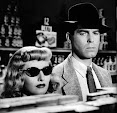
Consider a human shield. How do we evaluate the actions of a such a person even though they may be involuntary? Clearly a human shield is shielding a combatant, the human shield is performing a function even though it may not have been deliberately chosen. In the case of a terrorist advancing behind a human shield, the shield is "protecting" the terrorist and hence is complicit in evil albeit involuntarily. The shield is not innocent, it is inculpable. Armchair moralists please take note.
Now suppose a person is being coerced into an action which is morally wrong, what is the right course of action to take, given that failing to take that action will cost them their life? Traditional moralists have argued that we must not do wrong even at the expense of our careers or our life, we must love the good more than we love life. The proper action of a person finding himself as a human shield is to oppose being one, even if it costs them their life. Now I'm not saying that this is what I would have the courage to do, rather it is what should be done.
From the point of view of the person defending themselves from an attacker hiding behind a human shield, it would appear to be morally permissible to defend oneself from the attacker even though it may injure the human shield. In fact it would appear to be justified to directly attack the human shield in order to get to the attacker. The shield is an involuntary accomplice.
The problem of course is that in attacking the shield, we may be inflicting grievous injury on one that is undeserving and that in itself is an evil.
In choosing the correct course of action we must return back to the principles of double effect. Namely :
1) That our action(defence) is just.
2) That on balance the action will result in more good than evil.
Number (2) of course is the fly in the ointment as it is a prudential judgement and hence open to a wide variety of opinion. Sometimes there are no clear answers and we have to make the best of a bad choice in the fog of war.
Showing posts with label inculpable.. Show all posts
Showing posts with label inculpable.. Show all posts
Thursday, May 29, 2008

Tuesday, May 20, 2008
The innocence of evil.
Several months ago there was a case over here which raised profoundly disturbing questions.
A local convenience store attendant was attacked by a knife wielding schizophrenic. The attacker was in a psychotic state and proceeded to grab the man in a headlock, soon a hostage type of situation ensued. Local bystanders called the police who arrived quickly. Upon their arrival the attacker became more agitated and started to stab the attendant in the neck, the police yelled at him to stop, which he did not do. At risk to themselves from the knife and under pressure to act immediately, the police shot the schizophrenic man who died at the scene. The attendant survived.
How does one morally evaluate the actions of the policemen and the schizophrenic man?
The schizophrenic man was clearly causing evil, He was actuating it. If innocence or guilt refers to responsibility of causation, then the man was guilty. But clearly the man's mind was diseased, so doesn't it offend reason to say that this poor fellow was as guilty of evil in the same sense that a murderer is? Many people would say that the schizophrenic man was an innocent victim. I would disagree.
Traditional morality would have separated guilt from desert. That is, it recognised that a person may not have been totally free to choose the action taken. Traditional moralists would have argued that while the person was guilty of evil he was inculpable. While he did cause harm, he did not know what he was doing, and therefore this person did not deserve to be shot. Causing death to an undeserving man is evil.
The police on the the other hand had an obligation to protect the life of the service station attendant and their own with the practical means available. They were trying to stop the schizophrenic man from stabbing the attendant, their intent was good. Furthermore one is morally justified in using deadly force if the circumstances permit. This was such a circumstance so the actions the police took were morally justifiable. The police performed a good moral action which had a double effect. It saved the life of an innocent service station attendant while it caused the death of an inculpable schizophrenic.
The bottom line is that situations can arise in which we are forced to do good, but that good may result in evil effects to undeserving people. More on this in the next post.
A local convenience store attendant was attacked by a knife wielding schizophrenic. The attacker was in a psychotic state and proceeded to grab the man in a headlock, soon a hostage type of situation ensued. Local bystanders called the police who arrived quickly. Upon their arrival the attacker became more agitated and started to stab the attendant in the neck, the police yelled at him to stop, which he did not do. At risk to themselves from the knife and under pressure to act immediately, the police shot the schizophrenic man who died at the scene. The attendant survived.
How does one morally evaluate the actions of the policemen and the schizophrenic man?
The schizophrenic man was clearly causing evil, He was actuating it. If innocence or guilt refers to responsibility of causation, then the man was guilty. But clearly the man's mind was diseased, so doesn't it offend reason to say that this poor fellow was as guilty of evil in the same sense that a murderer is? Many people would say that the schizophrenic man was an innocent victim. I would disagree.
Traditional morality would have separated guilt from desert. That is, it recognised that a person may not have been totally free to choose the action taken. Traditional moralists would have argued that while the person was guilty of evil he was inculpable. While he did cause harm, he did not know what he was doing, and therefore this person did not deserve to be shot. Causing death to an undeserving man is evil.
The police on the the other hand had an obligation to protect the life of the service station attendant and their own with the practical means available. They were trying to stop the schizophrenic man from stabbing the attendant, their intent was good. Furthermore one is morally justified in using deadly force if the circumstances permit. This was such a circumstance so the actions the police took were morally justifiable. The police performed a good moral action which had a double effect. It saved the life of an innocent service station attendant while it caused the death of an inculpable schizophrenic.
The bottom line is that situations can arise in which we are forced to do good, but that good may result in evil effects to undeserving people. More on this in the next post.
Subscribe to:
Posts (Atom)