Following up on my previous post, it's important to note that while concept development may be hampered by a lack of word to explain a thought, a far more insidious mechanism by which the Cathedral stifles realthink is through word-concept manipulation. Ever wondered why the Cathedral prefers the term "undocumented immigrants" to illegal aliens. ( In Australia the preferred left term is "asylum seekers") or why "tolerance" means being unable to say no to anything you don't like? It isn't an accident.
Advertisers have long known that when it comes making a pitch for their product they have to appeal to the "gut instinct" more than the head. When Ford or GM want to sell a product they try to associate the product with other stimuli that will generate positive feelings. They're doing this because it has long been recognised that a person's emotional state influences their cognitive thought patters and that decisions tend to be congruent with the induced emotional state. The important point to recognise here is that information is is processed at both an instinctive and cognitive level. The automakers want you to "bellyfeel" their product.
"Bellyfeel" is an important concept which modern political science has seemed to avoid (the philosophical implications would destroy democracy) but which most modern dictators have understood implicitly. I've proposed the word autognosis for the phenomenon but I'll use the Orwellian version of it since most people prefer Anglo neologisms. Bellyfeel is not gut-instinct, rather, it sits between gut instinct and rational thought. It is System1 thought.
System 1 "thinking" is not really thinking at all, more like a very high order reflex that seems to be triggered in response to wide range appropriate associated stimuli. The important point here to recognise is that System 1 thinking is emotionally driven and not strictly rational. By manipulating emotions and their associations, System 1 thought can be manipulated. A significant portion of Cathedral resources are devoted to "emotional association management."
One form of emotional association management is euphemism generation. Now, just as images can have emotional associations with them, so can words. The words "Alien", "illegal", 'fat" and "black" conjure up negative emotional associations, The Cathedral's objective is to coin euphemisms which have the affect of disassociating the emotional response from information component. Undocumented immigrant has less of an emotional connotation than illegal Alien and thus a System 1 thinker (common man) is more likely to view the cause of undocumented immigrants more favourably.
A far more devilish Cathedral device is word redefinition. To illustrate just how powerful this effect is, consider the word gay.
The traditional definition was "lighthearted and carefree", but it's
continual association with homosexuality has redefined its meaning to
the extent that one cannot think of "gay event" without homosexual
associations being formed. No one from the Left changed the word officially, the word was changed by a deliberate use of it outside its appropriate context.
Perhaps the most insidious and hence difficult to spot variant of this is word conflation, especially amongst concepts which are closely linked. Take "tolerance" and "acceptance" for example. Intuitively (System 1) the two concepts appear the same. It takes some higher order thought to recognise the difference. Tolerance is putting up with stuff that you don't like. Acceptance, is giving cognitive and moral assent to an action.
Words with closely related meanings are prime targets for Cathedral manipulation. The Cathedral does is by this by effectively (not explicitly) redefining the word through strict control of its practical usage. Uncritical thinkers (Conservatives and most Liberals) don't notice the difference in usage. By continually referring to those who uncritically accept its view as "tolerant", whilst brandishing those who oppose them as "intolerant", the System 1 thinker is conditioned into a new meaning of "tolerance". It never occurs to the System 1 thinker that the "tolerance" of Theodore Roosevelt is totally different to the "tolerance" of Barack Obama. Thus the Left wing agenda of Obama is justified by the Right wing rhetoric of Washington.
It's horrifying to see how a bunch of Newspaper Editors (unelected and unaccountable), influenced by the Left wing arts/media faculties, are able to redefine words and so profoundly influence thought, especially amongst mass-man. Whoever would have thought that dictionaries were so important?
Orwell's Newspeak is around you.
Friday, December 20, 2013
Wednesday, December 18, 2013
Neologisms and Concept Development.
Without an appropriate word for a concept it becomes difficult to communicate the concept accurately, and consequently, difficult to analyse it and cognitively manipulate it appropriately.
For example; the word, proton, is specific for a positively charged particle in an atom's nucleus, as opposed to "that positively charged "thingy" located in the middle of an atom." The cumbersomeness of the second phrase makes thinking about protons difficult and prone to error. It appears that the ability to name things is a precondition to thinking about them properly.
So it was interesting to see to Vox link to this article by an American Professor who spent actual time living amongst Africans. It's interesting to see just how deficient the Africans are in higher order concepts and terminology. It's also interesting to see how this impacts upon the actual practical functioning in society. It's a very good article and worth a read. It's especially worth dwelling over his thoughts about dictionaries.
Secondly, interesting story was run on local television (American readers may not be able to access it.) about a hospital ship that travels around Africa performing lifesaving surgery. It was very moving story but what was quite interesting were the candid comments made by Africans during the show. Firstly, they were all grateful for the service, however, it became apparent during the show that the European/whites were definitely considered as the "other". In fact, several times they spoke of the European stock more as if they were aliens than fellow human beings. One fellow, upon seeing the hospital ship for the first time quite candidly mentioned that "we Africans could never build anything like that".* There was a strong sense of fatalism and lack of personal agency amongst the Africans.
Now, I'm more hopeful than most of the Manosphere with regard to Africa and Africans. Personally, I think there is a lot of low hanging fruit there that could easily utilised improve the material quality of African life with minimal effort. IQ is important, but so is morality. But what's really interesting to see is just how miserable life is, and just how depended men become, where they are stripped, haven't developed or are incapable of higher cognitive thought. Orwell's dumbing down is truly terrifying.
Now, some may argue that the concepts need to be there before they can be named and that Africans lack the ability for concept generation ( I dispute this--with qualifications) but what's important to recognise is that higher order thought appears to be impossible without higher order concept generation and analysis, something that is facilitated by the development of a neologism for the concept.
Which leads me to Conservatism. As I've said before on this blog, the story of Conservatism in the 20th Century is one of continual defeat. Defeat by an enemy that has out thought and maneuvered it. Part of the reason, I believe, is that conservatism has been brain dead for the past two hundred years or so. Even concepts like doublethink and prolefeed came from an author whose intellectual heritage was from the Left.
That's why I think it's important for conservatives to coin neologisms (where appropriate) in order to both describe observed phenomenon and to be able to develop the concept.
For example, take the current observation that most people tend to congregate amongst others of their own race. The standard left take on this is that it is a manifest example of racism (thereby, through frame-shifting, justifying their social engineering projects). Is there another more accurate word for the phenomenon? Well, yes there is, homophily, the empirically observed tendency for people to associate with like. The Right is never going to win a battle (nor it should) based upon a justification for racism, but it may win adherents by arguing a case for a society based upon homophily. Stable societies are built on an accurate understanding of human nature, not a denial of it.
The point is that the Right shouldn't be afraid of coining new words to describe new concepts. Roissy's contribution has been particularly invaluable. The hamster, hypergamy and carousel get an idea across more efficiently than their non-neologisic equivalents. As far as I'm aware, the concept of an "alpha-widow" has no equivalent in the academic press. Consequently, there has been greater development of the ideas of intersexual and socio-sexual dynamics in blogspace than there has been amongst the "formal" academic conservatives. I'm not being hyperbolic here but the ideas have developed to the point where these ideas, if taken up, are a serious threat to feminism. It's the first serious pushback.
*The Japs thought exactly the same thing till this bloke came along.
Wednesday, December 11, 2013
Orwell and Newspeak.
As I mentioned in my previous post, I've gained the impression that Orwell developed his Newspeak dictionary in order to explain the cognitive phenomena he observed about him with regard to those committed to the Left. That's not to say that the same cognitive phenomenon can't be observed amongst the Right, rather, Orwell realised that many mass movement type ideologies are logically contradictory and to sustain themselves their adherents must engage in mental gyrations to maintain their belief in them. Where I feel that Orwell erred in his understanding of Newspeak is in its relation to the human intellect of the average man.
Orwell understood Newspeak as being part of the apparatus of totalitarian control: something forced onto an unwilling and unwitting public. And to a degree it was, but what I don't think Orwell ever grasped was the devilish mechanism by which Newspeak operated.
In 1984, Orwell felt that masses would "wake up" if they had access to Goldstein's revolutionary book. It never occurred to Orwell that the masses wouldn't care as long as their animal pleasures were provided for. The Party, much like Juvenal before them, recognised that public would not care much about higher concepts such as truth or freedom as long as they were provided with bread and circuses; or in the Party's cynical terminology, Prolefeed. The average man, provided with a diet of booze, sports, porn and simple material comforts could be relied upon to never trouble his head with higher concepts such as truth, justice and love. In fact, trying to pry them away from these things in the name of "truth" would likely cause them to support the existing regime. (Note: this means that a capitalist totalitarianism, with its superior ability to provide for material goods, will be harder to dislodge than a socialist one.)
The Party understood the cognitive mechanisms of the average man better than Orwell did. Newspeak was a thought control mechanism aimed primarily at the natural intellectuals of the society, and the way it worked was by forcing intellectuals to think like the common man. Newspeak, was in essence, a mechanism to force thinking people into "prole-mind".
Take, for example, the concept of Doublethink; the idea of keeping two mutually opposing ideas in one's head without noticing the difference. Orwell saw this mode of thought as an aberration with regard to normal thought but never realised that this state of affairs is the common mode of cognition (Cognitive dissonance) of the average man.
Or take for example the sublime concept of "Bellyfeel". Orwell describes the phenomenon better than I can;
Consider, for example, such a typical sentence from a Times leading article as "Oldthinkers unbellyfeel Ingsoc." The shortest rendering one could make of this in Oldspeak would be: "Those whose ideas were formed before the Revolution cannot have a full emotional understanding of the principles of English Socialism." But this is not an adequate translation. ... Only a person thoroughly grounded in Ingsoc could appreciate the full force of the word bellyfeel, which implied a blind, enthusiastic, and casual acceptance difficult to imagine today.Orwell was trying to express what cognitive neuroscience is only now beginning to formalise. In trying to understand the blind enthusiastic support Democrats have for Obama, the statement "Democrats bellyfeel Obama" is a far more accurate understanding of the pseudo-cognitive process involved in their support of the President than, "Democrats give their full and enthusiastic support of the Obama presidency after a careful consideration of his policies". "Gut-instinct", more than reason, is mass-man's mechanism of political orientation. This is why Fascism and Socialism are better understood as appeals to the "gut-brain" rather than logically and empirically justified modes of political thought. Orwell really needs to be recgonised as the father of modern political neuroscience.
Totalitarian regimes cannot solely rely on oppression for their survival, they also need to rely on some measure of co-operation amongst the populace. The way they do this is by exploiting the cognitive miserliness of the average man. The five minutes of "hate", the glorification of Big Brother, the endless propaganda all work by exploiting and conditioning System 1 thought processes. Newspeak was a language which forced those of any intellectual ability to think like the average man thereby rendering them susceptible to the cognitive conditioning techniques. To think in Newspeak is to think like a prole and avoid System 2 thought.
Orwell, like most other left wing intellectuals, never fully appreciated just outside the mindset of the proletariat he was. Though a committed Socialist who felt that he belonged to the "workers", there is plenty enough evidence that he had a hard time mixing with "the people." He just simply wasn't one of them. His understanding of prole stupidity, based upon his won frame of reference, was that Newspeak was "forced" onto the proles, whereas, in reality, it was their natural mode of thought(System 1). Orwell's fundamental misunderstanding of Newspeak lay in the assumption of what I call the rationalist fallacy.
The rationalist fallacy assumes that the average man is "rational" when it counts. The problem is that average man is not, cognitive miserliness is the norm. Therefore any system of thought or organisation which relies on the rationality of Joe Average is going to fail in the long run. The problem is that a lot of mainstream conservative thought is based upon this premise which in turn undermines its own survival and helps feed the leftist beast. Any Conservatism which believe in the right of the cognitive miser to choose is a dead man walking. This criticism of the prole-mind is not based upon any snobbery, rather it is of functional basis. Competency, not class, should be the sole criteria for decision eligibility. The Left needs the stupid to survive.
Monday, December 02, 2013
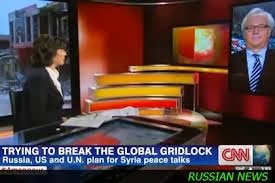
Cathedral Ops: Vitaly Churkin Edition.
One of the early scholars looking at communist "brainwashing" techniques was American psychiatrist was Robert Lifton. As a result of his studies he published a book, Thought Reform and the Psychology of Totalism. Here, he set out to identify the various mechanisms that totalitarian regimes used to manipulate people's thinking.
A powerful mechanism that emerged was that of Milieu Control. Briefly, Milleau control involves the control of information that an individual receives. By controlling factual data and use of language, totalitarian regimes can influence the milieu in which thought occurs. Suppressing information that is not conducive to "the cause" is one such way of exerting control. The other is by painting the accepted cause in a positive light and the negative view in its opposite.
Areas in which Milieu Control is particularly powerful is where the media are the only source of information on the subject. Foreign policy is particularly susceptible to this kind of manipulation.
It's clear that various factions in the community are keen on the West intervening in the war in Syria. My own view, based upon discussions with Syrians is that the situation is far more complex than what we have been shown on the television and whilst Assad has his faults, the opposition aren't much better. It's a choice between bad and worse. Should the West choose to support the anti-Assad forces, they would be in the curious position of fighting the Taliban in Afghanistan and supporting it in Syria! Still there seem to be many "hawks" eager to embroil the West in another war.
Recently CNN invited Vitaly Churkin to discuss the matter. CNN "edited" the interview to such an extent that Churkin had to formally complain about the network's misrepresentation of his position.
Maria Zarkharova a spokesperson from the Ministry of Foreign affairs had this to say about the incident.
"The principal comments made by Russian permanent representative to the UN, Vitaly Churkin, on Syria in his interview on CNN were cut from the screened version of this interview. Actually it is hard to understand why one of the major news channels is not interested in presenting Russia’s position on Syria crisis, especially regarding the upcoming conference Geneva-2. Unfortunately, it is not the first time when Russian diplomats and officials interviews have been censored in western media."
Russia Today however, decided to do a story on the matter. It's worth a look at.
A powerful mechanism that emerged was that of Milieu Control. Briefly, Milleau control involves the control of information that an individual receives. By controlling factual data and use of language, totalitarian regimes can influence the milieu in which thought occurs. Suppressing information that is not conducive to "the cause" is one such way of exerting control. The other is by painting the accepted cause in a positive light and the negative view in its opposite.
Areas in which Milieu Control is particularly powerful is where the media are the only source of information on the subject. Foreign policy is particularly susceptible to this kind of manipulation.
It's clear that various factions in the community are keen on the West intervening in the war in Syria. My own view, based upon discussions with Syrians is that the situation is far more complex than what we have been shown on the television and whilst Assad has his faults, the opposition aren't much better. It's a choice between bad and worse. Should the West choose to support the anti-Assad forces, they would be in the curious position of fighting the Taliban in Afghanistan and supporting it in Syria! Still there seem to be many "hawks" eager to embroil the West in another war.
Recently CNN invited Vitaly Churkin to discuss the matter. CNN "edited" the interview to such an extent that Churkin had to formally complain about the network's misrepresentation of his position.
Maria Zarkharova a spokesperson from the Ministry of Foreign affairs had this to say about the incident.
"The principal comments made by Russian permanent representative to the UN, Vitaly Churkin, on Syria in his interview on CNN were cut from the screened version of this interview. Actually it is hard to understand why one of the major news channels is not interested in presenting Russia’s position on Syria crisis, especially regarding the upcoming conference Geneva-2. Unfortunately, it is not the first time when Russian diplomats and officials interviews have been censored in western media."
The
reasons that the CNN television network "edited" an interview with
Russia's Permanent Representative to the UN, Vitaly Churkin, is beyond
understanding, Maria Zakharova said in statement on Facebook:
"The fact that CNN cut a fundamental assessment on Syria out of the interview with V. Churkin is beyond unprofessionalism, and generally beyond understanding. This Western media’s practice of throwing away passages or assessments from an interview that are “unnecessary” for their audience became not the exception, but the norm, especially in relation to Russian representatives. But, unfortunately, this is not the pinnacle of cynicism. A couple of phrases were cut out, so what? You can always say that the broadcast time did not allow everything to be shown."Maria Zakharova pointed out that Russia’s essential views were not allowed on air at the crucial moment of negotiations ahead of the Geneva-2 peace conference:"Such situations, when a high-ranking Russian representative of a state or business structure is invited to the editorial office of this or that periodical, where ON THE RECORD he talks to journalists for about an hour and answers ALL questions seem inexplicable. As you may have guessed, the next day, to the delight of the press service, nothing is published either in the printed or electronic version of the periodical. The same zero result is repeated one day later, two days later, a week later. To your question “Why?” you receive an astounding answer: “Because he has not said anything interesting”. How about that? Here sits an iron man of Russian politics in a Manhattan office and answers questions for an hour non stop and then it turns out that he's a boring, uninteresting person."
1) Russia's insistence that the people of Syria be allowed to choose their leadership.
2) The fact that aid to the victims of the war was being stopped by the Rebel leadership.
3) Refugess were fleeing the conflict and heading towards areas controlled by the Assad forces.
CNN were basically editing out any information that could be construed as either pro-Assad or anti-Rebel. They were essentially shaping the information milieu of their audience.
Maria Zakhrova seemed also keen to offer some advice on how to deal with the media. (She's been reading this blog.)
1. Always record the interview on a dictaphone and in the presence of a personal camera operator. If the foreign media should say that they do not allow duplicate shooting because the interview is their intellectual property, answer that, first of all, it's the intellectual property of the interviewee, who has absolute freedom to dispose of it after the agreed interview broadcast date.
CNN has refused to comment.2. At the coordination stage, receive written confirmation from the democratic press that the interview will be aired in full, unabridged and any changes should be agreed and another thing, I don't know how CNN will behave, how it will justify and explain it. I don't know, whether M. McFaul, who has a made lot of claims in the RUSSIAN MEDIA, is going to comment on this story with an AMERICAN channel. But I know that Vitaly Ivanovich Churkin is the highest class professional, who speaks perfect English and is a welcome guest with all the world's media. I am speaking competently, as I had the honor to be his press secretary in 2006-2008. So, any and all attempts to say that the interview was edited due to lack of air time or that the edited sections do not seem relevant are groundless.
Russia Today however, decided to do a story on the matter. It's worth a look at.
And on another semi related issue, it appears from reports in the media that the Gay marriage issue is unstoppable. Yet it is. Croatia yesterday had a referendum on the subject and despite all the efforts of the local media and the Left wing government, resoundingly defeated the proposal to legitimise gay marriage. The local media, who have been relentlessly pushing the case for gay marriage, seemed to have missed that event. Another example of milleu control.
I'd never thought I'd see the day where I would be getting more truthful news from RT and Al-Jazeera than from the Western Media. The world is insane.
Friday, November 29, 2013
The Need for Neologisms in Conservatism.
In George Orwell's 1984, Newspeak was a deliberate attempt by controlling totalitarian regime to control thought by limiting the vocabulary of the language. Orwell's genius was in recognising that it was ifficult to form a coherent opposition to any ideology without the appropriate conceptual tools to battle it. Since language was the expression of concepts, a limitation in language would effectively limit the development of concepts or make their expression so clumsy as to open them to misinterpretation. Hence Big Brother's interest in the development of Newspeak as a means of thought control. Orwell reconginsed that words have both meaning and a force to influence ideas. He who controls words also controls thinking and the development of ideas. It's my contention that conservatism has seriously been hampered by a lack of neologisms to explain concepts.
Take, for example, the word, love. Imprecision in its meaning leaves it open to wide misinterpretation. God is Love means different things to different people. To the suffering it means benevolence. To the lonely companionship. To the modern woman of churchianity it means God does not judge me and wants me to be haaaappy. To modern Churchmen it means God is accepting of everything. The wide variety of meaning means that people aren't talking about the same thing. Yet, in Latin the phrase, God is Love, is quite specifically translated to Deus Caritas Est. Love being translated to the specific, Caritas. The precision of the term renders discussion on the subject meaningful as it excludes other misinterpretations. Conflation in meaning permits conflation errors.
Take another Example. In Ortega y Gasset's book, Revolt of the Masses, he takes a whole chapter to explain the baneful effects of specialisation on eduction, which produces a man who is highly trained in his specific occupation but as ignorant as the average prole in other areas of knowledge. There seems to be no word to describe such a man or such a process, even though millions of such men and women are produced with this quality every year. The lack of a suitable word to describe such individuals makes discussion of the phenomenon difficult.
On the other hand, the neologism, hypergamy has considerably facilitated the developed of our understanding of female sexuality. At least in the manosphere, the term is used with a fair degree of precision and its uses saves a considerable amount of expressive effort thus facilitating the development of contingent ideas. The term alpha widow is difficult comprehend without a prior understanding of the hypergamy concept.
The point is that ideas and their development are considerably facilitated by the introductions of neologisms which accurately convey concepts and are stymied by their lack.
I have often thought that Orwell's Newspeak dictionary came about as a result of his efforts to understand the pscychology of the mob in totalitarian regimes. There was simply no phraseology to capture the cognitive pathology he observed and thus had to invent neologisms to convey his ideas across. Though, in doing so, he greatly expanded the conservative cognitive capital and its ability to defend itself from the left. The terms doublethink, thought police, Big Brother, thought-crime and prolefeed are now mainstream words amongst the educated. That a man of the Left was the first to accurately describe this phenomenon is an indictment of the state of conservative thought at the time.
Personally, think several different fields of knowledge have developed to such an extent that neologisms are in order to adequately further develop the ideas, particularly with regard to the observed phenomenon of human cognition. My personal interest is the intersection between genetics, cognitive limitation and politics. So I thought I'd coin a few new words (and revisit some old ones) and explain them a bit.
Genopolitics. The influence of genetics on political orientation. There is a considerable amount of evidence to suggest that personality has strong genetic components and that political ideology is linked to personality type. In my post on alpha socialism what I was trying to get across is that the appeal of fascism lay less in its intellectual pretensions rather more upon its appeal to the "gut" of people with certain personality dispositions. Trying to understand Fascism logically fails because its appeal is not rational but instinctual to the hive mind.
Stenognosis. The state of being a specialist in one are of knowledge only. It is the opposite of being a polymath. Our universities are, every year, producing millions of steongnostics. Proles in everything but their specialty. They are our technocratic elite.
Stenosophism: The human tendency to appreciate the proximate, concrete and immediate to the distant, abstract and temporally separated. It's the here and nowism of the average human mind.
Autognosis: Instinctive "thought". Proportionality generated by gut feeling. The proposition, for instance, that health care should be free automatically produces as sense of approval in most people. The proposition only starts to be viewed negatively once serious thought is devoted to the subject. It's other name is feel good politics and is the predominant mode of political thought in democratic societies. Strongly influenced by genetics.
Biological vote: The voting patterns that are a consequence of genopolitics and autognosis.
Dysrationalia: The capacity to be stupid despite more than adequate IQ.
Pseudorationality: The appearance of rationality despite any rational thought.
Rationalist fallacy: The belief that because people are rational in some things they are rational in all things. Being stenosophistic, people are usually rational when discussion simple, local and obvious concepts but become progressively less rational as the subject matter drifts outside their circle of competence.
Koreogamy: What men desire in women. (biologically determined)
These are just a few and I'm not wedded to the terminally but thought that I would put them out there for discussion.
Take, for example, the word, love. Imprecision in its meaning leaves it open to wide misinterpretation. God is Love means different things to different people. To the suffering it means benevolence. To the lonely companionship. To the modern woman of churchianity it means God does not judge me and wants me to be haaaappy. To modern Churchmen it means God is accepting of everything. The wide variety of meaning means that people aren't talking about the same thing. Yet, in Latin the phrase, God is Love, is quite specifically translated to Deus Caritas Est. Love being translated to the specific, Caritas. The precision of the term renders discussion on the subject meaningful as it excludes other misinterpretations. Conflation in meaning permits conflation errors.
Take another Example. In Ortega y Gasset's book, Revolt of the Masses, he takes a whole chapter to explain the baneful effects of specialisation on eduction, which produces a man who is highly trained in his specific occupation but as ignorant as the average prole in other areas of knowledge. There seems to be no word to describe such a man or such a process, even though millions of such men and women are produced with this quality every year. The lack of a suitable word to describe such individuals makes discussion of the phenomenon difficult.
On the other hand, the neologism, hypergamy has considerably facilitated the developed of our understanding of female sexuality. At least in the manosphere, the term is used with a fair degree of precision and its uses saves a considerable amount of expressive effort thus facilitating the development of contingent ideas. The term alpha widow is difficult comprehend without a prior understanding of the hypergamy concept.
The point is that ideas and their development are considerably facilitated by the introductions of neologisms which accurately convey concepts and are stymied by their lack.
I have often thought that Orwell's Newspeak dictionary came about as a result of his efforts to understand the pscychology of the mob in totalitarian regimes. There was simply no phraseology to capture the cognitive pathology he observed and thus had to invent neologisms to convey his ideas across. Though, in doing so, he greatly expanded the conservative cognitive capital and its ability to defend itself from the left. The terms doublethink, thought police, Big Brother, thought-crime and prolefeed are now mainstream words amongst the educated. That a man of the Left was the first to accurately describe this phenomenon is an indictment of the state of conservative thought at the time.
Personally, think several different fields of knowledge have developed to such an extent that neologisms are in order to adequately further develop the ideas, particularly with regard to the observed phenomenon of human cognition. My personal interest is the intersection between genetics, cognitive limitation and politics. So I thought I'd coin a few new words (and revisit some old ones) and explain them a bit.
Genopolitics. The influence of genetics on political orientation. There is a considerable amount of evidence to suggest that personality has strong genetic components and that political ideology is linked to personality type. In my post on alpha socialism what I was trying to get across is that the appeal of fascism lay less in its intellectual pretensions rather more upon its appeal to the "gut" of people with certain personality dispositions. Trying to understand Fascism logically fails because its appeal is not rational but instinctual to the hive mind.
Stenognosis. The state of being a specialist in one are of knowledge only. It is the opposite of being a polymath. Our universities are, every year, producing millions of steongnostics. Proles in everything but their specialty. They are our technocratic elite.
Stenosophism: The human tendency to appreciate the proximate, concrete and immediate to the distant, abstract and temporally separated. It's the here and nowism of the average human mind.
Autognosis: Instinctive "thought". Proportionality generated by gut feeling. The proposition, for instance, that health care should be free automatically produces as sense of approval in most people. The proposition only starts to be viewed negatively once serious thought is devoted to the subject. It's other name is feel good politics and is the predominant mode of political thought in democratic societies. Strongly influenced by genetics.
Biological vote: The voting patterns that are a consequence of genopolitics and autognosis.
Dysrationalia: The capacity to be stupid despite more than adequate IQ.
Pseudorationality: The appearance of rationality despite any rational thought.
Rationalist fallacy: The belief that because people are rational in some things they are rational in all things. Being stenosophistic, people are usually rational when discussion simple, local and obvious concepts but become progressively less rational as the subject matter drifts outside their circle of competence.
Koreogamy: What men desire in women. (biologically determined)
These are just a few and I'm not wedded to the terminally but thought that I would put them out there for discussion.
Labels:
Cognitive Theory,
Conservatism.,
Orwell
Friday, November 08, 2013
The Failure of Conservatism.
An objective analysis of socio-political history would have to conclude that, in the battle between conservatism and liberalism, liberalism has been the winner. Even today's modern "conservatism" is not the conservatism of 1900. It, too, has been heavily influenced by liberal thought. The dividing line between the two ideologies seems more economic rather than social and on socially corrosive issues like divorce, promiscuity, multiculturalism and moral relativism there appears to little in practice to separate the two mainstream political actors. From this vantage point in time one has to conclude that Conservatism in the 20th Century has failed. In fact, on every issue that Conservatism has taken a position liberalism has trumped it. Some might disagree and argue that conservatives won on economic issues, to which I reply, "Gold standard, anyone?"
The problem with Conservatism is that it has swallowed much of the liberal Kool-Aid and whilst there may be particular factions which espouse a particular truth quite forcefully, for nearly every faction that espouses one conservative truth it does it with an admixture of other liberal errors. Modern American and British Conservatism seem to bee prime examples of this admixture. In fact, it's my opinion that American conservatism could quite easily slide into some form of South American (Not German) Fascism if it is not too careful, so bad is the mixture.
If God were not on our side then I would consider Conservatism a hopeless cause. Surveying the field I see liberalism triumphant in every corner, the persecution of Christians, it's final development, is begining and hard times are about to be on us. Still, God has matched us with this hour and, presumably, thought us up to task. Therefore, our duty is to get our arse into gear and start rebuilding the temple. The question is, where to begin?
I suppose the first task is to work out where we went wrong, where the movement failed, if for no other reason to stop making the same mistakes. An audit of Conservatism is in order.
It's my view that the Conservative movement has made several fundamental errors which are contributing to its destruction. Some of which are due to historical circumstances and some of which are due to poor thinking on core ideology, particularly, with regard to human nature. If I were to issue a Syllabus of modern Conservative Errors I suppose I would want to include the following in the list.
1) The embrace of universal democracy. i.e. One man, one vote. In principle, this is a noble ideal but in practice is toxic to good governance. The average man is a moron, albeit a good natured one who simply lacks the cognitive expertise (or inclination) to contribute meaningfully to good management of society. He is also the soft underbelly of society, whom the Cathedral relies on to implement it social policies. The whole aim of Cathedral ops is to condition not convince Joe Average into acting in accordance with their wishes. Since the stupid and gullible outnumber the wise and prudent it's a no-brainer to see who will win this contest in a universal democracy. When you make the world safe for universal democracy you're making the world safe for liberalism.
Note, this isn't an argument for or against monarchy or oligarchy. Political power should be invested into those who have skin in the game and into those who have the capacity to exercise it wisely. The idea that every man is wise and prudent is a falsehood. T
2) Moral relativism. What this does is making Conservatism a "value lite" form of political governance. The values being filled in by liberalism. Divorce, for instance, is not just a religious question but one with societal and therefore political consequences. A Conservatism which fails to make some value judgements is conservatism that cannot govern properly. It also opens the door to all sorts of other evils. How do you stop multiculturalism when emasculate yourself by refusing to assert the superiority of your own culture?
3) High Anglicanism. Modern conservatism is strongly influenced by English thought and habit. Front loaded into this cultural heritage is the concept of "niceness" or agreeableness. As people like Malcolm Muggeridge have noted, the High English custom is to prefer good mannered evil to coarse mannered good. Anglo-Conservatives tend to be extraordinarily nice people. The problem is that a man needs to be good before he is nice. Sometimes you just have to offend.
4) Tradition. Tradition, in my mind has been both the blessing and bane of Conservatism. The mindless worshiping of it has stymied Conservatism's ability to deal with new realities and allowed the Left to outflank it when it comes to "solving" novel problems. The industrialisation of the West, which bought about brand new social realities, blindsided the Conservative movement and enabled the liberal establishment to become established. Agrarianism, which seems to find a home in conservatism, is one such school of thought which seem to prefer that industrialism went away. The problem is, so do the material conditions of modern life. You need an industrial society to produce MRI machines.
Now tradition is good, insofar as it gives us an accurate understanding of reality. Where tradition is evil is where it proposes something that is contrary to reality. The problem with traditionalists is that they can't make that distinction and this is a real problem, especially given the history of the conservative movement, where the traditionalists have been the ones who have done most of the heavy lifting.
It's got to be admitted that the traditionalists were the only ones keeping the "light on" during the very dark days of the conservative movement in the later half of the 20th Century. This has given them a certain amount of moral authority but the fact remains that the movement slid during their watch. Men like Kirk, Oakshott, Babbit and Buckly did the yeoman work of the time and need to be acknowledged but, ultimately, their strategy failed. The problem with ensconcing these individuals to quasi mythical status is that their take on conservatism becomes the offical line. When some new upstart with ideas proposes something contrary to their vision, their immediately labelled unconservative by being untraditional and categorically trown into the liberal camp. Cue Roissy.
But there does seem to be some flickering of life at least in that old bastion of reactionary conservatism, Catholicism. In a speech heavily critiqued by Anarchopapist, Cardinal Oscar Andres Rodriguez stated:
In this meditation by Pope Francis, which did not get much press in the mainstream media he says;
We have been so fixated by the overt assault by liberal modernism that we've not noticed the covert enemy within.
The problem with Conservatism is that it has swallowed much of the liberal Kool-Aid and whilst there may be particular factions which espouse a particular truth quite forcefully, for nearly every faction that espouses one conservative truth it does it with an admixture of other liberal errors. Modern American and British Conservatism seem to bee prime examples of this admixture. In fact, it's my opinion that American conservatism could quite easily slide into some form of South American (Not German) Fascism if it is not too careful, so bad is the mixture.
If God were not on our side then I would consider Conservatism a hopeless cause. Surveying the field I see liberalism triumphant in every corner, the persecution of Christians, it's final development, is begining and hard times are about to be on us. Still, God has matched us with this hour and, presumably, thought us up to task. Therefore, our duty is to get our arse into gear and start rebuilding the temple. The question is, where to begin?
I suppose the first task is to work out where we went wrong, where the movement failed, if for no other reason to stop making the same mistakes. An audit of Conservatism is in order.
It's my view that the Conservative movement has made several fundamental errors which are contributing to its destruction. Some of which are due to historical circumstances and some of which are due to poor thinking on core ideology, particularly, with regard to human nature. If I were to issue a Syllabus of modern Conservative Errors I suppose I would want to include the following in the list.
1) The embrace of universal democracy. i.e. One man, one vote. In principle, this is a noble ideal but in practice is toxic to good governance. The average man is a moron, albeit a good natured one who simply lacks the cognitive expertise (or inclination) to contribute meaningfully to good management of society. He is also the soft underbelly of society, whom the Cathedral relies on to implement it social policies. The whole aim of Cathedral ops is to condition not convince Joe Average into acting in accordance with their wishes. Since the stupid and gullible outnumber the wise and prudent it's a no-brainer to see who will win this contest in a universal democracy. When you make the world safe for universal democracy you're making the world safe for liberalism.
Note, this isn't an argument for or against monarchy or oligarchy. Political power should be invested into those who have skin in the game and into those who have the capacity to exercise it wisely. The idea that every man is wise and prudent is a falsehood. T
2) Moral relativism. What this does is making Conservatism a "value lite" form of political governance. The values being filled in by liberalism. Divorce, for instance, is not just a religious question but one with societal and therefore political consequences. A Conservatism which fails to make some value judgements is conservatism that cannot govern properly. It also opens the door to all sorts of other evils. How do you stop multiculturalism when emasculate yourself by refusing to assert the superiority of your own culture?
3) High Anglicanism. Modern conservatism is strongly influenced by English thought and habit. Front loaded into this cultural heritage is the concept of "niceness" or agreeableness. As people like Malcolm Muggeridge have noted, the High English custom is to prefer good mannered evil to coarse mannered good. Anglo-Conservatives tend to be extraordinarily nice people. The problem is that a man needs to be good before he is nice. Sometimes you just have to offend.
4) Tradition. Tradition, in my mind has been both the blessing and bane of Conservatism. The mindless worshiping of it has stymied Conservatism's ability to deal with new realities and allowed the Left to outflank it when it comes to "solving" novel problems. The industrialisation of the West, which bought about brand new social realities, blindsided the Conservative movement and enabled the liberal establishment to become established. Agrarianism, which seems to find a home in conservatism, is one such school of thought which seem to prefer that industrialism went away. The problem is, so do the material conditions of modern life. You need an industrial society to produce MRI machines.
Now tradition is good, insofar as it gives us an accurate understanding of reality. Where tradition is evil is where it proposes something that is contrary to reality. The problem with traditionalists is that they can't make that distinction and this is a real problem, especially given the history of the conservative movement, where the traditionalists have been the ones who have done most of the heavy lifting.
It's got to be admitted that the traditionalists were the only ones keeping the "light on" during the very dark days of the conservative movement in the later half of the 20th Century. This has given them a certain amount of moral authority but the fact remains that the movement slid during their watch. Men like Kirk, Oakshott, Babbit and Buckly did the yeoman work of the time and need to be acknowledged but, ultimately, their strategy failed. The problem with ensconcing these individuals to quasi mythical status is that their take on conservatism becomes the offical line. When some new upstart with ideas proposes something contrary to their vision, their immediately labelled unconservative by being untraditional and categorically trown into the liberal camp. Cue Roissy.
But there does seem to be some flickering of life at least in that old bastion of reactionary conservatism, Catholicism. In a speech heavily critiqued by Anarchopapist, Cardinal Oscar Andres Rodriguez stated:
The Second Vatican Council was the main event in the Church in the 20th Century. In principle, it meant an end to the hostilities between the Church and modernism, which was condemned in the First Vatican Council. On the contrary: neither the world is the realm of evil and sin –these are conclusions clearly achieved in Vatican II—nor is the Church the sole refuge of good and virtue. Modernism was, most of the time, a reaction against injustices and abuses that disparaged the dignity and the rights of the person.This is exactly the same line of thought as taken by the giant of American Conservatism in the 20th Century, Whittaker Chambers. He seemed to be the only one doing the deep thinking. The old world had serious problems, which were amped by industrialisation and which the conservative institutions of society were not able to provide any solutions to. The vacuum was filled by modernism which provided even worse solutions. This theme, of rigid old and stupid new, was picked up by another guy who gets a lot of heat from the Traditionalist Right, Pope Francis. (I wonder if he reads this blog)
In this meditation by Pope Francis, which did not get much press in the mainstream media he says;
There are two temptations to face at this moment in the Church’s history: drawing back[Ed:Traditionalism], because we are afraid of the freedom that comes from the law “enacted in the Holy Spirit”; and giving in to an “adolescent progressivism”, namely, the inclination to follow the most captivating values presented by prevailing culture.That's Whittaker Chambers talking.
We have been so fixated by the overt assault by liberal modernism that we've not noticed the covert enemy within.
Sunday, November 03, 2013
Demokraci
Some of you might remember my post on Stenosophism.
A great article in the Washington Times beautifully illustrating the concept.
California resident: ‘I was all for Obamacare’ until I got the bill.
The comments section makes for interesting reading; Quite a bit of Red Pill there. Remember, this isn't about Obamacare but about how democracy really works.
Labels:
Cognitive Miser,
Democracy,
Stenosophism
Friday, November 01, 2013
A Failure of Manhood.
Time to revisit this important speech:
A decline in courage may be the most striking feature that an outside observer notices in the West today. The Western world has lost its civic courage, both as a whole and separately, in each country, in each government, in each political party, and, of course, in the United Nations. Such a decline in courage is particularly noticeable among the ruling and intellectual elites, causing an impression of a loss of courage by the entire society. There are many courageous individuals, but they have no determining influence on public life.Alexander Solzhenitsyn at Harvard.
Political and intellectual functionaries exhibit this depression, passivity, and perplexity in their actions and in their statements, and even more so in their self-serving rationales as to how realistic, reasonable, and intellectually and even morally justified it is to base state policies on weakness and cowardice. And the decline in courage, at times attaining what could be termed a lack of manhood[Ed}, is ironically emphasized by occasional outbursts and inflexibility on the part of those same functionaries when dealing with weak governments and with countries that lack support, or with doomed currents which clearly cannot offer resistance. But they get tongue-tied and paralyzed when they deal with powerful governments and threatening forces, with aggressors and international terrorists.
Wednesday, October 30, 2013
Uneasy Quiet.
This is not a good thing.
The message of the manosphere is at total odds with mindset of our left wing baby boomer overlords and their thought police, the Media, Arts and Learning Establishment, a.k.a The Cathedral. I imagine that the reason they have not directed their energies to this section of the internet is simply because it was too small and too un-influential to matter. Yet the media is quick to pick up on trends and the usage of manosphere terminology in the press would seem to indicate to me that they have been taking notice.
Then there was the saga with the ABC story on the manosphere and its abrupt withdrawal. Firstly, the story seemed to be a typical Cathedral hit job. As expected, they seemed to focus on the MRA groups, the most beta like group associated with the manosphere. What the ABC was trying to do here was classic psych-ops. Pick a loser and make him a representation of your enemy so that concept conflation occurs. i.e manosphere = MRA. The whole idea is to form a psychological association between the loserdom of MRA's and the concept of the manosphere through Pavlovian conditioning.
Next time the average Joe hears about the manosphere, a notion of "loser" is generated in his head and this psychological state makes it easier for the Cathedral to convince Joe that the manosphere is for losers and its ideas are not worthy of consideration.
The fact that they assigned two very junior "journalists" to the task tells me that ABC thinks that the manosphere is of only trivial importance and that a low level hit job was enough. What concerns me however is why they pulled the story. Something's not right.
Factual inaccuracy has never been an impediment to the mainstream media, especially when it comes to small easy targets. So the fact that the reporters got certain facts wrong doesn't sound like a plausible reason to pull the show. People love "battle of the sexes" stories so arguments based on viewer interest are implausible. I suspect that the reason they've pulled the show is because they want to rework it and put a more senior person on the job. I think a lot of heat is coming the manosphere's way.
It interesting to note as to why the media is doing a story on this in the first place. Why should a bunch of guys yakking on some internet forums be of any interest to the media whatsoever? I mean there's plenty of other more interesting stuff out there.
I'm not being hyperbolic here nor do I have any enthusiast delusions but it's my personal belief that Game is the first coherent practical attack on the liberal establishment which has the possibility of reaching out beyond intellectual circles. It places conservative metaphysics (a.k.a the red pill) at the service of the sex drive, essentially linking ideology with reproduction. If it didn't work it would be another intellectual curiosity, the fact that it does makes it unstoppable.
What the liberal establishment hates is the not the sexual hedonism associated with Game but its "red pill-ness" it's this latter feature which undercuts the Cathedral's liberal foundation of lies. Lies about men and women, lies about race, lies about economics, lies about the family, lies about love. Game is essentially the use of truth in pursuit of sex. Just as the experience of abject poverty pushed many a man to the cause of Socialism so does success with Game push men towards Conservatism. "Success with women is more disillusioning than failure" is more a metaphysical statement as much as it is a statement of fact. The "opening of the eyes" to reality is what the liberal Taliban hates.
The other issue which infuriates the Liberals is how Game is spread. They have no control. Whereas traditionally, the Cathedral, by having a monopoly on media control could police what the public got to see, the internet totally bypasses the mechanism. The internet has become a sort of underground press where freedom of speech, both crazy and sane is beyond Cathedral reach and thus dangerous ideas can ferment there.
This is why I think the manosphere is about to get a lot of heat. The preparatory work has already been done. Emily's list (Google it) has stacked the political establishment. Women with second and third rate
Some practical advice:
1) Do not talk to the media. You don't need them. The manosphere is growing and that is why they are talking to you. They can read your blog. If you want to improve your exposure then concentrate on you writing, put up more posts, concentrate on presentation, link to other bloggers. Every blog post can be seen by the whole world. You have a bigger reach than the New York Times.
2) If you're still that stupid and want to talk to the media then make sure you have a recording of the conversation. Video preferably. YouTube and Vimeo are your friends.
3) Do not do interviews. See the recent Gavin McInness interview. Three against one. One of whom just happens to be a professor of a Law School. It was not an interview, it was a set up to take Gavin down.
4) Do not say anything stupid. I know a lot of guys like to make inflammatory comments just to get some controversy and traffic going, but it can and will be used against you. Most people do don't subtlety.
5) Disassociate yourself from obvious nut jobs. It will be guilt by association. Gates of Vienna blog is not my thing, but the poor bastard there was in deep shit because Brevik used to visit the blog and quoted it.
6) The Left is beginning to engage in false flag operations. Beware of any new and extreme members to your blog. Once again, guilt by association. Ban any idiots mercilessly.
7) Roosh V is living overseas. Think about it.
8) Should you get libeled by the Cathedral. Sue. Sue mercilessly and vindictively. Bleed the bastards for every cent they have and they have a lot. A retraction is not enough, since once the shit is thrown some of it always sticks. You may be innocent but your employer may not want the attention.
Good Luck.
Thursday, October 24, 2013
Some More Thoughts on the Pill.
On the other hand, the Church does not consider at all illicit the use of those therapeutic means necessary to cure bodily diseases, even if a foreseeable impediment to procreation should result there from—provided such impediment is not directly intended for any motive whatsoever.
Humanae Vitae.
The oral contraceptive pill is used for a wide variety of reasons. In my practice, its use as a contraceptive comes about fourth on the list of reasons why I prescribe it. I mainly prescribe the pill for the treatment of endometriosis, dysmenorrhea and acne in that order. Paradoxically, and to my surprise, when used for the treatment of endometriosis it may, in fact, protect fertility! (Go figure!). Now, Catholic moral theology permits the use of the pill for medical reasons where the intention is to use the pill as a therapeutic agent and not as a contraceptive. The moral logic which permits the pill's use in such circumstances is the principle of double effect.
The doctrine of double effect has come about due to the recognition of the fact that sometimes a good action may have unintended bad effects. The classic case being the legitimacy of removing a bleeding fallopian tube in the instance of an ectopic pregnancy, and thereby causing the loss of life of the fetus.
Cynics, looking at the doctrine of double effect, have claimed that it is possible to justify anything by appeal to this doctrine. To protect against such abuse, in order for an action to be considered morally good, it must satisfy the following criteria:
- The nature-of-the-act condition. The action must be either morally good or indifferent.
- The means-end condition. The bad effect must not be the means by which one achieves the good effect.
- The right-intention condition. The intention must be the achieving of only the good effect, with the bad effect being only an unintended side effect.
- The proportionality condition. The good effect must be at least equivalent in importance to the bad effect.
How do I weigh a woman's fertility in relation to a condition like endometriosis? Or acne for the matter? Is suppressing a woman's fertility of the same order of gravity as making her go blind or is it the same order of gravity as an appendectomy?
If, as Humane Vitae asserts, the suppression of fertility is associated with grave sin, then must endometriosis be really-really bad before I can prescribe the pill? How bad is really-really bad? Or make things even more complicated, sometimes the symptoms can be out of all proportion the degree of disease on imaging or laparoscopy? Is badness a measure of the patients discomfort or the actual objective disease load? Where the dividing line is I don't know.
The problem with Humane Vitae lays in its evaluation that the the suppression of fertility is a very grave matter. This has practical implications on the treatment of medical conditions if one is to follow the full letter of the law and thereby be consistent with the principle of double effect. In order to satisfy condition no 4, the only way I could legitimately use the pill, as a therapeutic agent, is if the patient's medical condition is grave. Therefore the pill could only be justified in extreme cases. This, of course, would be a terrible outcome, since the pill is a very effective way to treat many medical conditions with minimal side effects compared to the alternatives. Menorrhagia, a condition which affects many women, would have to be treated with other agents which are less effective and have more complications than the pill. Humanae vitae, strictly applied, effectively removes a whole class of therapeutic agents except for extreme circumstances.
As far as I can see, when it comes to its application, Humanae Vitae is asymmetric in its understanding. When it comes to sexual matters, the suppression of fertility is a grave matter, when it comes to the treatment of medical conditions it is not.
(Note. One of the weirdest things I ever had to do was put a Nun on the Pill for endometriosis!)
Labels:
double effect,
Humanae Vitae,
The Pill
Wednesday, October 09, 2013
A Slow Toxin. Natural Law and Tradition.
Atheist warning. Another religious post.
Natural law is basically law which can be derived by a fair minded and reasoned look at the facts. For example, people usually get very upset when you take stuff from them. A reasonable man would conclude that taking stuff from people is liable to get a lot of people angry, and running a stable society is very difficult where there are a lot of angry people, therefore taking stuff away from people, when considered rationally, is bad. It's an approach with a fair amount of intuitive validity. As C.S. Lewis shows in his Abolition of Man, the rules of morality are rather consistent across vastly different societies and cultures. It seems proof that a rational assessment of the facts of life can lead to a common morality.
The quality of natural law formulations, however, is totally contingent on the data from which it is derived and the intellectual apparatus with which to interpret that data. A deficiency in one or the other may lead to false conceptions of what constitutes the natural order of things. It follows then, that should we get better knowledge of the facts, or a greater understanding of their interrelation through scientific achievement, our conceptions of what constitutes the natural order may change. The state of scientific knowledge and natural law derived morality are intrinsically intertwined. The laws of nature can be only be obeyed to the degree in which they are known.
The real problem arises when an institution starts venerating tradition as a source of infallibility, especially when it comes to natural law matters. For what that institution effectively does is entrench not just prior moral opinions but the contingent scientific understandings upon which they were based. Effectively, what that institution does is set itself against new truths gained through scientific discovery.
Paging Galileo.
Natural law derived morality has the diabolic effect of conflating facts with morals. Mix in a veneration of tradition and you're setting yourself up for failure, especially when taking on the scientific establishment. The traditionalist moral zealot--who is intuitively opposed to change--sets out to protect the faith from moral innovations never realising that he is also defending scientific ignorance. The harder he pushes the dumber he looks and hence the faith vs science struggle is born. Playing the "teaching authority" card only makes things worse since authoritatively teaching error only undermines the authority when teaching the truth. It's a lose/lose situation.
The Devil looks on......amused.
It's not that there is anything wrong with the natural law approach its just that the conclusions of natural law change when the facts about the nature of things do. Tradition stymies the perfection of knowledge by preferring the old to the true. When HV affirmed the "constant teaching of the church" it didn't just make a statement of morality but one of outdated reproductive physiology as well.
The advocates of Humanae Vitae like to paint those who criticise it as either stupid, in that they aren't bright enough to understand natural law, or malign, in that their intentions are evil. But perceptive minds in the 1960's could already see that the the natural law arguments were in a bit of difficulty.
Back in 1964 a certain moral theologian wrote in a letter* to his friend;
First, it is simply a fact that the theologians' teachings on conjugal intimacy during the course of the centuries have undergone very considerable development. So it is legitimate to inquire whether further development is not possible and what direction it might take. Second, in the case of usury we say that changed economic conditions gave interest a new meaning it did not have before, or gave money a new character of fruitfulness. In the case of contraception we must remember that the doctrine of the church was formed and formulated at a time when little was known about the physiology of reproduction. The physiology has not changed but our knowledge of it has. This is one of the reasons why modern theologians have come to permit rhythm, which much of the ancients would undoubtedly have rejected, and which Augustine actually did reject, in strong terms. We now know that many, perhaps most, acts of intercourse are physically incapable of resulting in conception. The difficulties which this fact causes for natural law arguments against contraception have not been satisfactorily solved yet[ED!].-Do not conclude from this that I believe the Church can change her basic teaching on contraception or that she can retreat from the positions established authoritatively by the documents of Pius Xl and Pius XII.The letter is one of the most extraordinary contributions to the subject of contraception and the nature of coitus. Namely, because the person who wrote it was John C Ford, S.J. was one the most respected moral theologians of the 20th Century and the leader of the anti-contraception faction in Pope Paul VI's commission looking into the matter. Ford, in my opinion, was a skilled logician and intellectually thorough. Ed Feser recommends his books. But though Ford was skilled in logic, he venerated authority and tradition more than he did the truth and, thus, opposed any moral innovation when it came to matters sexual. To his credit, he was intellectually honest enough to see that there were serious difficulties with the natural law argument.
Ford's main concern is that the Church remain consistent in its teachings. As Ford logically rationalised, any contradictory inconsistency would be proof that the Church was in error and hence not guided by the Holy Spirit, therefore, it's traditions must be upheld at all costs. But here again I feel that he made a conflation error. Into the his concept of the Church's "traditions" he bundled together the Church's moral principles and their subsequent practical application; two conceptually different things. To be fair, lots of others think exactly the same way. Conflation errors are very, very dangerous.
The natural law tradition which Humanae Vitae sought to uphold was right in upholding the traditional principle that coitus should not be privated but wrong in its understanding of what constituted a privation. In asking men to conform to the laws of nature they were asking men to conform to the understanding of the laws of nature as understood in the medieval period, not the laws of nature as understood by modern science. The document has the remarkable distinction of being right in principle but wrong in application due to an error of fact.
*Fair use quote from the book, John Cuthbert Ford, SJ: Moral Theologian at the End of the Manualist Era. Page 80. Bits of the book can be read on Google Books.
Sunday, September 22, 2013
The Teleology of Coitus.
Note to the Atheists. Advance warning. This is a religious post.
Of all the encyclicals issued by the Church in the Twentieth Century Humanae Vitae was probably the most controversial. From the moment of its promulgation it was immediately met with opposition and controversy. Sociologically, it seems to have split the faithful and adherence to it is teaching being a litmus test of orthodoxy.
The other impression I've gotten from my years of looking at the issue is that while the Church's hierarchy is convinced of the documents "rightness", there does seem to be quite a lot of private consternation at the effect it has produced. There almost seems to be desire for some type of solution to be found. People felt that if only the document could be be "better explained' then the faithful would be drawn back to the fold.
I think this why JP II pushed the phenomenological approach, especially when it came to "contraceptive" matters. Now, maybe because of my retardedness, I've never understood the phenomenological argument against contraceptive sex. The idea that the contraceptive sex was a typed of "reservedness" when it came to love could as just as equally be applied to sex deliberately chosen when a woman is infertile. i.e. NFP. Choosing to have sex when a woman wasn't fully herself (i.e. fertile) could also be construed as a type of "rejection" of a woman's totality and a violation of "true" love. The conflation of sex and love made it all a bit vague as well.
My own view of Humane Vitae, taking a Caritas approach, is that it is fundamentally correct. Any act which violates the telos of sex is a privation of the act and therefore intrinsically wrong. Just to be clear about this matter, this rubs me against my natural inclinations as well but the arguments are clear and convincing. As a servant to the truth I have to submit to them.
But whilst I think Humane Vitae was right in principle, I've had the growing conviction that it was wrong in what it considered contraceptive, much like the Church in the Middle Ages, which regarded all forms for interest bearing lending as usury--the Church may have banned too much.
The problem, I think, lays in the Church's understanding of the telos of sex, which it views as being intrinsically fecund. In other words, the sexual act, when non-privated in any way, shape or form is intrinsically fertile. Or to put it another way, an infertile sexual act is one that is privated in some way, either voluntarily or involuntarily. To put it a third way, the perfect sexual act, considered in itself, always produces babies.
Now, this does not mean that the Church expected every sexual act to be fecund. It understood that privations of various kinds were beyond the control of sexual persons and therefore the sexual act was not illicit when performed under involuntarily privated conditions.(Though there was opposition to this notion) The Church never banned couples from sex whilst a woman was in menopause or after a hysterectomy. They key concept here, though, is that these though the participants in these sexual acts incurred no negative moral imputation, the acts themselves were considered privated and not teleologically complete.
I imagine that this traditional understanding came about because of the primitive understanding of the physiological mechanisms of conception. The Ancients thought thought that the failure conceive following a sexual act was due to a "fault" in the system. Natural lawyers, drawing from animal analogies, determined that the "purpose" of sex was reproduction. Combined with an Augustinian view of sexuality, which saw the "fleshy desires" as corrupting, a view sexuality took hold which saw sex as only legitimate within the context of reproduction. Both veneration for tradition in the Church and its "anti-fleshy" tendencies meant that this view was very difficult to change.
So, it was interesting to see that conundrum that Catholic confessors were put in when the mechanism of ovulation began to become elucidated. Catholics, as they became aware of the fact that women were fertile only for a limited period in their cycle, began to start timing intercourse during the periods when a woman's fertility was least. This put confessors in a bind. The traditional teaching was that sex was for conception and therefore having sex simply for pleasure was morally dubious. According to Noonan, there was a wide range of opinions on the matter ranging from outright condemnation to qualified support of the practice. Confessors, seeking advice, petitioned to the The Sacred Penitentiary who advised them to leave the faithful alone. The Church sat on the fence.
It was not until Castii Connubi that the Church officially declared that it was not sinful to deliberately have sex when a woman was not fertile. I don't think people really realise what a revolution in Church morals and repudiation of 'tradition" that this document represented. Still, the document saw sex as the "secondary" end of coitus and persisted with the notion that the sexual act was intrinsically fecund.
On deeper reflection, however, this view is problematic. A normal woman's menstrual cycle ensures that she alternates between periods of fertility and infertility, the question then needs to be asked: Is a sexual act performed during the infertile phase of a woman's cycle intrinsically privated in itself?
If we assume that God's intention can be revealed through our "design", then the period of fertility privation that occurs during the menstrual cycle would be a feature and not a bug of the system. In other words, did God intend sex to be infertile during a portion of a woman's menstrual cycle? Because, if he did, the telos of sex during this period is not fecundity because by its very nature the act is sterile by divine design. This is at odds with the Church's teaching. The only way you can square the circle between tradition and our understanding of physiology is to assume that the the infertile period of a woman's menstrual cycle is some sort of privation. But that of course leads to the conclusion that God deliberately produced a faulty product. (There's a whole host of theological problems with that.)
Given the coitus is possible during all stages of the menstrual cycle, what the design of the cycle reveals is that coitus can only achieve its telos of conception during a small portion of it. The rest of the time coitus is intrinsically infertile by design. It would appear that the telos of coitus varies with the stages of the menstrual cycle and the Church's insistence that the coitus is intrinsically orientated towards procreation would appear to be at odds with the findings of physiology.
A sexual act performed during this infertile period is meant to be intrinsically infecund by design. The problem with the idea that sexual activity achieves it telos when conception occurs would mean that woman is intrinsically privated during her infertile period. This would mean that God either deliberately designed a fault (mistake)in women or that he deliberately intended sex to be infertile during this period. i.e. a sexual act performed during the infertile period is teleologically complete and not ordered towards procreation.
Then again, there is the issue of menopause. Did God make a mistake? Is menopause a disease or a deliberate state intended by God? If it is intended by God, then intercourse during this period is teleologically complete and intrinsically not orientated towards children.
Then there is the issue of the suppression of ovulation by lactation. Now, this is either an intended or unintended feature of the mechanism. If unintended, it means God made a mistake: if intended, it means coitus is not intrinsically fecund during this period by design. On the other hand, if we assume that coitus is meant to be intrinsically fertile, then the deliberate use of this method to suppress ovulation--a method approved by the Church--is deliberately of malign intent since it aims to private a woman's fertility. The fact that the mechanism is endogenous in no way absolves it of its evil.
The idea that a coitus is meant to be be intrinsically fecund is not just a statement of morals but of physiology as well. It implies that that an infertile woman (either temporarily or permanently) is a privated one. Or, to put it another way, the ideal, non-privated woman (with respect to traditional sexuality) is meant to be fertile all the time: something which our understanding of physiology refutes. The idea that sexual activity is meant to be intrinsically fecund is the "traditional" understanding of physiology being "front-loaded" into morals by Natural Law philosophy.*
FWIW, my own view on the teleology of coitus is that the coital act achieves it telos when sperm is deposited in the vagina. This approach squares up with all the physiological findings and does not result in us thinking of menopause as a disease or the infertile periods of the menstrual cycle as being some form of privatory state. It also squares up with a lot of traditional morality.
Finally a word about NFP. (Natural Family Planning)
Over at Zippy's blog there has been some criticism of the critics of NFP who tend to see similarity with the practitioners of NFP and contraceptors.
Now, an act's morality is determined by the act, the intentions and the circumstances. All it takes is for one of these elements to be morally wrong for the act to assume a negative moral character. If, for the moment, we push circumstances aside, we see that while the NFP crowd and contraceptors clearly act differently their intentions are the same.
If coitus is mean to be intrinsically fecund then the intention of both parties is to instantiate a privated form of it (the desire for the privation of a thing) is morally wrong. The idea that NFPer's are "open to life" is contradicted by the fact that they are timing coitus for periods when the capability of generating life is apparently non-existent. It's like saying you want to go to Church but then deliberately turn up when you know that Mass is not on. This type of cognitive dissonance is usually found amongst the idiotic left who say one thing and do another. The problem of intentionality is solved if the intention to pursue infecund sex as an end (through licit means) is seen as morally legitimate.
Note: Anyone who wants to comment should remember that post is about the telos of sex and not contraception.
*I'm doing exactly the same thing except that my understanding of the telos of sex comes from an updated understanding of the biology of it, not some Galean understanding of sexual physiology.
Of all the encyclicals issued by the Church in the Twentieth Century Humanae Vitae was probably the most controversial. From the moment of its promulgation it was immediately met with opposition and controversy. Sociologically, it seems to have split the faithful and adherence to it is teaching being a litmus test of orthodoxy.
The other impression I've gotten from my years of looking at the issue is that while the Church's hierarchy is convinced of the documents "rightness", there does seem to be quite a lot of private consternation at the effect it has produced. There almost seems to be desire for some type of solution to be found. People felt that if only the document could be be "better explained' then the faithful would be drawn back to the fold.
I think this why JP II pushed the phenomenological approach, especially when it came to "contraceptive" matters. Now, maybe because of my retardedness, I've never understood the phenomenological argument against contraceptive sex. The idea that the contraceptive sex was a typed of "reservedness" when it came to love could as just as equally be applied to sex deliberately chosen when a woman is infertile. i.e. NFP. Choosing to have sex when a woman wasn't fully herself (i.e. fertile) could also be construed as a type of "rejection" of a woman's totality and a violation of "true" love. The conflation of sex and love made it all a bit vague as well.
My own view of Humane Vitae, taking a Caritas approach, is that it is fundamentally correct. Any act which violates the telos of sex is a privation of the act and therefore intrinsically wrong. Just to be clear about this matter, this rubs me against my natural inclinations as well but the arguments are clear and convincing. As a servant to the truth I have to submit to them.
But whilst I think Humane Vitae was right in principle, I've had the growing conviction that it was wrong in what it considered contraceptive, much like the Church in the Middle Ages, which regarded all forms for interest bearing lending as usury--the Church may have banned too much.
The problem, I think, lays in the Church's understanding of the telos of sex, which it views as being intrinsically fecund. In other words, the sexual act, when non-privated in any way, shape or form is intrinsically fertile. Or to put it another way, an infertile sexual act is one that is privated in some way, either voluntarily or involuntarily. To put it a third way, the perfect sexual act, considered in itself, always produces babies.
Now, this does not mean that the Church expected every sexual act to be fecund. It understood that privations of various kinds were beyond the control of sexual persons and therefore the sexual act was not illicit when performed under involuntarily privated conditions.(Though there was opposition to this notion) The Church never banned couples from sex whilst a woman was in menopause or after a hysterectomy. They key concept here, though, is that these though the participants in these sexual acts incurred no negative moral imputation, the acts themselves were considered privated and not teleologically complete.
I imagine that this traditional understanding came about because of the primitive understanding of the physiological mechanisms of conception. The Ancients thought thought that the failure conceive following a sexual act was due to a "fault" in the system. Natural lawyers, drawing from animal analogies, determined that the "purpose" of sex was reproduction. Combined with an Augustinian view of sexuality, which saw the "fleshy desires" as corrupting, a view sexuality took hold which saw sex as only legitimate within the context of reproduction. Both veneration for tradition in the Church and its "anti-fleshy" tendencies meant that this view was very difficult to change.
So, it was interesting to see that conundrum that Catholic confessors were put in when the mechanism of ovulation began to become elucidated. Catholics, as they became aware of the fact that women were fertile only for a limited period in their cycle, began to start timing intercourse during the periods when a woman's fertility was least. This put confessors in a bind. The traditional teaching was that sex was for conception and therefore having sex simply for pleasure was morally dubious. According to Noonan, there was a wide range of opinions on the matter ranging from outright condemnation to qualified support of the practice. Confessors, seeking advice, petitioned to the The Sacred Penitentiary who advised them to leave the faithful alone. The Church sat on the fence.
It was not until Castii Connubi that the Church officially declared that it was not sinful to deliberately have sex when a woman was not fertile. I don't think people really realise what a revolution in Church morals and repudiation of 'tradition" that this document represented. Still, the document saw sex as the "secondary" end of coitus and persisted with the notion that the sexual act was intrinsically fecund.
Nor are those considered as acting against nature who in the married state use their right in the proper manner although on account of natural reasons either of time or of certain defects, new life cannot be brought forth. For in matrimony as well as in the use of the matrimonial rights there are also secondary ends, such as mutual aid, the cultivating of mutual love, and the quieting of concupiscence which husband and wife are not forbidden to consider so long as they are subordinated to the primary end and so long as the intrinsic nature of the act is preserved.
On deeper reflection, however, this view is problematic. A normal woman's menstrual cycle ensures that she alternates between periods of fertility and infertility, the question then needs to be asked: Is a sexual act performed during the infertile phase of a woman's cycle intrinsically privated in itself?
If we assume that God's intention can be revealed through our "design", then the period of fertility privation that occurs during the menstrual cycle would be a feature and not a bug of the system. In other words, did God intend sex to be infertile during a portion of a woman's menstrual cycle? Because, if he did, the telos of sex during this period is not fecundity because by its very nature the act is sterile by divine design. This is at odds with the Church's teaching. The only way you can square the circle between tradition and our understanding of physiology is to assume that the the infertile period of a woman's menstrual cycle is some sort of privation. But that of course leads to the conclusion that God deliberately produced a faulty product. (There's a whole host of theological problems with that.)
Given the coitus is possible during all stages of the menstrual cycle, what the design of the cycle reveals is that coitus can only achieve its telos of conception during a small portion of it. The rest of the time coitus is intrinsically infertile by design. It would appear that the telos of coitus varies with the stages of the menstrual cycle and the Church's insistence that the coitus is intrinsically orientated towards procreation would appear to be at odds with the findings of physiology.
A sexual act performed during this infertile period is meant to be intrinsically infecund by design. The problem with the idea that sexual activity achieves it telos when conception occurs would mean that woman is intrinsically privated during her infertile period. This would mean that God either deliberately designed a fault (mistake)in women or that he deliberately intended sex to be infertile during this period. i.e. a sexual act performed during the infertile period is teleologically complete and not ordered towards procreation.
Then again, there is the issue of menopause. Did God make a mistake? Is menopause a disease or a deliberate state intended by God? If it is intended by God, then intercourse during this period is teleologically complete and intrinsically not orientated towards children.
Then there is the issue of the suppression of ovulation by lactation. Now, this is either an intended or unintended feature of the mechanism. If unintended, it means God made a mistake: if intended, it means coitus is not intrinsically fecund during this period by design. On the other hand, if we assume that coitus is meant to be intrinsically fertile, then the deliberate use of this method to suppress ovulation--a method approved by the Church--is deliberately of malign intent since it aims to private a woman's fertility. The fact that the mechanism is endogenous in no way absolves it of its evil.
The idea that a coitus is meant to be be intrinsically fecund is not just a statement of morals but of physiology as well. It implies that that an infertile woman (either temporarily or permanently) is a privated one. Or, to put it another way, the ideal, non-privated woman (with respect to traditional sexuality) is meant to be fertile all the time: something which our understanding of physiology refutes. The idea that sexual activity is meant to be intrinsically fecund is the "traditional" understanding of physiology being "front-loaded" into morals by Natural Law philosophy.*
FWIW, my own view on the teleology of coitus is that the coital act achieves it telos when sperm is deposited in the vagina. This approach squares up with all the physiological findings and does not result in us thinking of menopause as a disease or the infertile periods of the menstrual cycle as being some form of privatory state. It also squares up with a lot of traditional morality.
Finally a word about NFP. (Natural Family Planning)
Over at Zippy's blog there has been some criticism of the critics of NFP who tend to see similarity with the practitioners of NFP and contraceptors.
Now, an act's morality is determined by the act, the intentions and the circumstances. All it takes is for one of these elements to be morally wrong for the act to assume a negative moral character. If, for the moment, we push circumstances aside, we see that while the NFP crowd and contraceptors clearly act differently their intentions are the same.
If coitus is mean to be intrinsically fecund then the intention of both parties is to instantiate a privated form of it (the desire for the privation of a thing) is morally wrong. The idea that NFPer's are "open to life" is contradicted by the fact that they are timing coitus for periods when the capability of generating life is apparently non-existent. It's like saying you want to go to Church but then deliberately turn up when you know that Mass is not on. This type of cognitive dissonance is usually found amongst the idiotic left who say one thing and do another. The problem of intentionality is solved if the intention to pursue infecund sex as an end (through licit means) is seen as morally legitimate.
Note: Anyone who wants to comment should remember that post is about the telos of sex and not contraception.
*I'm doing exactly the same thing except that my understanding of the telos of sex comes from an updated understanding of the biology of it, not some Galean understanding of sexual physiology.
Wednesday, September 11, 2013
The Gatekeepers.
I don't like writing about Jewish related issues. Not because I don't have any opinions on the matter, rather, it's when a discussion does start on some relevant issue it rapidly degenerates into accusations of philo or antisemitism. The other problem is that the discussions tend to draw in all the crypto-Nazi's and their opposites, the rabid Zionists. Both sides tends to assume that if your not kissing their arse then you must obviously must want to slash their throats. It really isn't a subject that lends itself to objectivity.
For the record I'm Eusemitic, i.e., I'm neither philo or antisemitic. Jews are not the villains that so many paint them nor are they the saints that Zionist element of the Cathedral would like you to think. Not belonging to any one camp seems to make me a traitor to both. Still, I like to think that I'm fair and try to be as objective as possible.
Objectivity, when it comes to Jewish issues, tends to be a rare thing and that's why the movie, The Gatekeepers, is simply extraordinary. Directed by Israeli Dror Moreh and done in the style of Errol Morris's Fog of War, the film deals with the recollections and reflections of six former leaders of the Shin Bet, Israel's equivalent of MI5. From a cinematographic point of view, the film is nothing special but it power lays in the considered testimony of its six subjects.
The first thing that struck me was the "top notch" quality of the men who were speaking. Unlike the blathering goyim politicians and their technocrats, these were men who were clearly intelligent, humane and patriotic to their country. By humane, I mean these men all seemed to want to wage war as "cleanly" as possible. Not that there was some sort of saintly concern for the Palestinians, rather, they all seem to recognise that the use of violence brings its own associated evils and thus should be minimised. The Vietnam war, a close analogue, caused huge damage to the Vietnamese but deeply wounded (and transformed negatively) American society as well.
All the speakers have blood on their hands, in the sense that all have organised the execution of terrorists but what's also apparent is that their actions seem more motivated by a desire to protect Israel rather than a hatred of the Palestinians. In fact, the overall impression I got from watching the movie was that the leaders of the Shin Bet were rather understanding of the Palestinian plight. As one of them wry observed, "One man's freedom fighter was another man's terrorist." What really amazed me was the comment of Avraham Shalom, perhaps the most hawk like and morally "flexible" of them all, who compared the conduct of the state of Israel in the occupied territories to that of the Germans in the Second World War. I kid you not.
Their view is one from the "trenches". Despite their different perspectives and personal histories--they don't even like each other-- the speakers seem to realise that the occupation is having a blow-back affect on the state of Israel and want a deal to be cut with the Palestinians. It's not because they feel some moral duty towards the Palestinians, rather, they see the ongoing occupation as a corrupting influence on the Israeli state, eating it away from the inside. They are all disillusioned with their political masters whom they feel have no real desire to reach a compromise despite all their public pronouncements. I certainly got the impression that their willingness to speak on film came from a desire to have their side of the story heard and a collective feeling that the Israeli state has gone in the wrong direction. All of them feel that if the course doesn't change then the future will be bleak.
The film has had very little publicity here in Australia and is being shown in the smaller cinemas only. I'm not sure what its publicity is like in the rest of the Anglosphere. If you have the opportunity I urge you to see it. Not for the cinematic experience but for the compelling testimonies presented. Outstanding. Note, the film needs to be understood not only as a Israeli-Palestinian thing, but seen in the wider context in terms of the limits of military power and of the corrupting nature of war.
Here is an interview with Droh Moreh about the movie. The really interesting part starts at the 3:00 minute mark.
Regular posters to my blogno know my commenting policy. I will delete at will any comments that misconstrue my position or are idiotic in any way.
For the record I'm Eusemitic, i.e., I'm neither philo or antisemitic. Jews are not the villains that so many paint them nor are they the saints that Zionist element of the Cathedral would like you to think. Not belonging to any one camp seems to make me a traitor to both. Still, I like to think that I'm fair and try to be as objective as possible.
Objectivity, when it comes to Jewish issues, tends to be a rare thing and that's why the movie, The Gatekeepers, is simply extraordinary. Directed by Israeli Dror Moreh and done in the style of Errol Morris's Fog of War, the film deals with the recollections and reflections of six former leaders of the Shin Bet, Israel's equivalent of MI5. From a cinematographic point of view, the film is nothing special but it power lays in the considered testimony of its six subjects.
The first thing that struck me was the "top notch" quality of the men who were speaking. Unlike the blathering goyim politicians and their technocrats, these were men who were clearly intelligent, humane and patriotic to their country. By humane, I mean these men all seemed to want to wage war as "cleanly" as possible. Not that there was some sort of saintly concern for the Palestinians, rather, they all seem to recognise that the use of violence brings its own associated evils and thus should be minimised. The Vietnam war, a close analogue, caused huge damage to the Vietnamese but deeply wounded (and transformed negatively) American society as well.
All the speakers have blood on their hands, in the sense that all have organised the execution of terrorists but what's also apparent is that their actions seem more motivated by a desire to protect Israel rather than a hatred of the Palestinians. In fact, the overall impression I got from watching the movie was that the leaders of the Shin Bet were rather understanding of the Palestinian plight. As one of them wry observed, "One man's freedom fighter was another man's terrorist." What really amazed me was the comment of Avraham Shalom, perhaps the most hawk like and morally "flexible" of them all, who compared the conduct of the state of Israel in the occupied territories to that of the Germans in the Second World War. I kid you not.
Their view is one from the "trenches". Despite their different perspectives and personal histories--they don't even like each other-- the speakers seem to realise that the occupation is having a blow-back affect on the state of Israel and want a deal to be cut with the Palestinians. It's not because they feel some moral duty towards the Palestinians, rather, they see the ongoing occupation as a corrupting influence on the Israeli state, eating it away from the inside. They are all disillusioned with their political masters whom they feel have no real desire to reach a compromise despite all their public pronouncements. I certainly got the impression that their willingness to speak on film came from a desire to have their side of the story heard and a collective feeling that the Israeli state has gone in the wrong direction. All of them feel that if the course doesn't change then the future will be bleak.
The film has had very little publicity here in Australia and is being shown in the smaller cinemas only. I'm not sure what its publicity is like in the rest of the Anglosphere. If you have the opportunity I urge you to see it. Not for the cinematic experience but for the compelling testimonies presented. Outstanding. Note, the film needs to be understood not only as a Israeli-Palestinian thing, but seen in the wider context in terms of the limits of military power and of the corrupting nature of war.
Here is an interview with Droh Moreh about the movie. The really interesting part starts at the 3:00 minute mark.
Regular posters to my blog
Friday, September 06, 2013
Cogntive Miser: I Want to Know What Love Is.
One of the things about cognitive misers not only do they "think" in terms of heuristics but also interpret data through them as well. Incoming data is "simplified" into broad impressions conforming to per-concieved notions rather than precise representations, bypassing System Two thinking. Idea's tend to be grouped according to their similarity and are "best fit" into preconceived categories. The problem with this approach,is that the cognitive miser is apt to make certain predictable types of errors, and one of the most significant type errors is that of conflation.
A conflation error occurs when two or more separate things are categorised as the same on the basis of a superficial semblance. To quote wiki.
As mentioned in my previous post, the Christian notion of love is different to what mainstream notions of love are. Caritas, the specific type of Christian love, is rooted in the will and expressed as a desire to do good to others, irrespective of one's emotional response to the other. Christian love, Caritas, is essentially above emotion. You do good to the other regardless of how you feel about them.
On the other hand; Eros, Agape, Philia and Storge are types of love which are fundamentally hedonic in nature, the nature of the pleasure being contextually dependent upon the perception of the other. It's easy to do good to people we have positive feelings for and this is how the pagans (and moderns) understood love. You did nice stuff for people that you liked and put the hurt on those you didn't. The relevant passages from scripture can be found here.
Where the trouble begins is when your realise that there is actually an overlap between the two concepts. It is possible to express Caritas to people we like, thus it is possible to conflate Caritas with the positive feelings which we associate with sense of love.
The problem is further compounded by the fact that the English language has a rather limited vocabulary when it comes to expressing the different notions of love, they all tend to get lumped together. Eros becomes erotic love, Storge becomes a sort of familial love and so on.
Finally, sloppy translations of the Bible don't help either, where the specific Greek words for types of love are lumped together under the English common word.
Peter Kreeft, in a good essay, explains the problem;
According to the Australian PM, the central tenet of the new Testament is all about "love." Now being a Catholic, I'm allowed a bit more latitude in interpreting the Bible, but even with a very liberal reading I'm hard pressed to find anything less than a condemnation of homosexuality. But you see, it doesn't matter according to our cognitive miser, as long as you "wuv" then you're in God's good books. You've got to admit that he is typical of a lot of modern "Christians".
Christian cognitive misers are prone to conflate the subject of love, because they interpret biblical teaching to their preconceived love heuristic. In their minds, Christian love morphs from a desire to do good (Caritas) to the other into a desire to have benevolent feelings for the other. Jesus is thus transformed from a moral law giver into a "nice feelings type of guy". Nice guy Jesus doesn't make any demands, he doesn't judge, rather, he is accepting non judgmental, he's always helpful and so on. He becomes like a mother who can see no fault in her son because she "loves" him. Our Lord overlooks everything because he wants everyone to be happy.
The conflation error doesn't follow any set pattern rather is influence by the presence of other heuristics. The high Anglicans (Episcopalians) with their traditions of gentlemanly class and behaviour, in the current liberal climate, through cognitive miserliness, will morph Jesus into a type of nice guy with good manners, who would never dream of giving offence. Ergo, modern liberalism. Amongst Catholics, the conflation error is also responsible for the "gospel of life" crowd being against the death penalty and the embrace of militant pacifism and open borders.
Likewise, the conflation error is a strong enabling mechanism for the whole gay marriage push. Amongst the half-wits, their "understanding" of marriage needs to seen not as an understanding but more as an associative heuristic. Hard arsed theologians will point out that marriage is a spiritual union between two people, cognitive misers associate it as an arrangement of two people who love each other living together. Thus marriage becomes morphs from a sacrament into a "loving union" in the hive mind. Love, not the blessing of God, becomes the sole determinant of its validity. In the hive mind as long as it looks like a marriage it is a marriage.
Catholicism is less prone to conflation errors simply because Catholicism does not permit the faithful to think, their job is to follow. Therefore the quality of thinking is better, but this is no guarantee against the clergy being dumb. Where the conflation error has wrecked the most harm is in Protestant countries. In Protestant culture, the cognitive miser is given special privilege because "filled withgenetically influenced intuitive emotion "the Holy Spirit" he is inerrant in his interpretation of the Bible. That's not to say that Protestants are incapable of good theology, rather their system has no check upon the bad.
The point of all this is to show that cognitive errors are more than just objects of academic interest but are powerful forces shaping our culture. Liberalism's malignant variant is a direct product of hive mind that is characterised by the dominance of the cognitive miser. The legitimisation of the opinion of the hive mind brought about by universal democracy has not only brought about a corruption in governance but a corruption in religion and culture as well.
A conflation error occurs when two or more separate things are categorised as the same on the basis of a superficial semblance. To quote wiki.
Conflation occurs when the identities of two or more individuals, concepts, or places, sharing some characteristics of one another, seem to be a single identity — the differences appear to become lost. In logic, it is the practice of treating two distinct concepts as if they were one, which produces errors or misunderstandings as a fusion of distinct subjects tends to obscure analysis of relationships which are emphasized by contrasts. However, if the distinctions between the two concepts appear to be superficial, intentional conflation may be desirable for the sake of conciseness and recall.The conflation error is of particular importance to religious conservatives since it is responsible for a great deal of moral destruction in Christianity. The particular conflation in question is the mixing up of "good" and "nice" and "love".
As mentioned in my previous post, the Christian notion of love is different to what mainstream notions of love are. Caritas, the specific type of Christian love, is rooted in the will and expressed as a desire to do good to others, irrespective of one's emotional response to the other. Christian love, Caritas, is essentially above emotion. You do good to the other regardless of how you feel about them.
On the other hand; Eros, Agape, Philia and Storge are types of love which are fundamentally hedonic in nature, the nature of the pleasure being contextually dependent upon the perception of the other. It's easy to do good to people we have positive feelings for and this is how the pagans (and moderns) understood love. You did nice stuff for people that you liked and put the hurt on those you didn't. The relevant passages from scripture can be found here.
Where the trouble begins is when your realise that there is actually an overlap between the two concepts. It is possible to express Caritas to people we like, thus it is possible to conflate Caritas with the positive feelings which we associate with sense of love.
The problem is further compounded by the fact that the English language has a rather limited vocabulary when it comes to expressing the different notions of love, they all tend to get lumped together. Eros becomes erotic love, Storge becomes a sort of familial love and so on.
Finally, sloppy translations of the Bible don't help either, where the specific Greek words for types of love are lumped together under the English common word.
Peter Kreeft, in a good essay, explains the problem;
The old word for agape in English was charity. Unfortunately, that word now means to most people simply handouts to beggars or to the United Fund. But the word love won't do either. It means to most people either sexual love (eros) or a feeling of affection (storge), or a vague love-in-general. Perhaps it is necessary to insist on the Greek word agape (pronounced ah-gah-pay) even at the risk of sounding snobbish or scholarly, so that we do not confuse this most important thing in the world with something else and miss it, for there is enormous misunderstanding about it in our society.Perceptive readers will see where this is going. Love, in the Christian tradition is a specific thing, and a fair amount of discernment is required when tackling the subject. The problem arises when the subject of love gets tackled by the cognitive miser. Love is likely conflated with its associates. Recently, the Prime Minister of Australia quite spectacularly demonstrated an example of a cognitive miser tackling the subject of the New Testament in the context of gay marriage. (The fun stuff starts at the 3.00 minute mark)
According to the Australian PM, the central tenet of the new Testament is all about "love." Now being a Catholic, I'm allowed a bit more latitude in interpreting the Bible, but even with a very liberal reading I'm hard pressed to find anything less than a condemnation of homosexuality. But you see, it doesn't matter according to our cognitive miser, as long as you "wuv" then you're in God's good books. You've got to admit that he is typical of a lot of modern "Christians".
Christian cognitive misers are prone to conflate the subject of love, because they interpret biblical teaching to their preconceived love heuristic. In their minds, Christian love morphs from a desire to do good (Caritas) to the other into a desire to have benevolent feelings for the other. Jesus is thus transformed from a moral law giver into a "nice feelings type of guy". Nice guy Jesus doesn't make any demands, he doesn't judge, rather, he is accepting non judgmental, he's always helpful and so on. He becomes like a mother who can see no fault in her son because she "loves" him. Our Lord overlooks everything because he wants everyone to be happy.
The conflation error doesn't follow any set pattern rather is influence by the presence of other heuristics. The high Anglicans (Episcopalians) with their traditions of gentlemanly class and behaviour, in the current liberal climate, through cognitive miserliness, will morph Jesus into a type of nice guy with good manners, who would never dream of giving offence. Ergo, modern liberalism. Amongst Catholics, the conflation error is also responsible for the "gospel of life" crowd being against the death penalty and the embrace of militant pacifism and open borders.
Likewise, the conflation error is a strong enabling mechanism for the whole gay marriage push. Amongst the half-wits, their "understanding" of marriage needs to seen not as an understanding but more as an associative heuristic. Hard arsed theologians will point out that marriage is a spiritual union between two people, cognitive misers associate it as an arrangement of two people who love each other living together. Thus marriage becomes morphs from a sacrament into a "loving union" in the hive mind. Love, not the blessing of God, becomes the sole determinant of its validity. In the hive mind as long as it looks like a marriage it is a marriage.
Catholicism is less prone to conflation errors simply because Catholicism does not permit the faithful to think, their job is to follow. Therefore the quality of thinking is better, but this is no guarantee against the clergy being dumb. Where the conflation error has wrecked the most harm is in Protestant countries. In Protestant culture, the cognitive miser is given special privilege because "filled with
The point of all this is to show that cognitive errors are more than just objects of academic interest but are powerful forces shaping our culture. Liberalism's malignant variant is a direct product of hive mind that is characterised by the dominance of the cognitive miser. The legitimisation of the opinion of the hive mind brought about by universal democracy has not only brought about a corruption in governance but a corruption in religion and culture as well.
Labels:
Caritas,
Cognitive Miser,
Love,
Religion
Wednesday, September 04, 2013
Conservatism and the Cognitive Miser.
Back to regular programming.
One of the concepts I've been trying to get across to my readership over the last few posts is that of the "cognitive miser" or mass man. I really can't emphasise enough just how important this concept is, since in my opinion, the phenomenon of the cognitive miser goes a long way to explaining the societal uptake of ideologies which are ultimately destructive.
Indeed, one of the great omissions with regard to sociological analysis of the 20th Century has been the failure recognise the cognitive limitations of the average man and the subsequent consequence of this fact on sociological events. One of the reasons why Fascism, Socialism and modern Materialism have been so triumphant is because the ideas they espouse are so easily grasped by the weak mind, and in an age of "democracy", its no surprise that these stupid ideologies would find such fertile ground amongst "the people".
The point I'm trying to make is that the trajectory of the 20th Century makes a lot of sense when you look at it from the perspective of the cognitive miser. Simply by weight of numbers, it is he who determined the course of 20th Century history and has been its motor. Nazism, Socialism and Liberalism were harmless ideologies as long as they were confined to the parlor discussions of the philosophers. Cultured people saw the ideas for what they were and rejected them, their fertile ground, however, was amongst the cognitive misers, i.e the people.
Historians still wonder, how a civilised and advanced nation such as Germany could fall under the spell of the Nazi's. William Shirer, writing in the Rise and Fall of the Third Reich wondered how could the people that produced Beethoven, Goethe and Planck embrace Hitler? It's a difficult fact to reconcile until you realise that the in the age of Beethoven the average German had no say in public affairs, but in the age of "democracy" stewardship of the nation was passed to the cognitive misers of Germany. Hitler would have been impossible in the Kaiser's Germany, but he is possible in a modern Democracy. I think it is the neglect of this fact that has seriously hampered historical understanding of the rise of such poisonous ideologies. Societies change not only through the uptake of new ideas, but also upon the mob's perverted understanding of them. Note, I'm not having a swipe at the Germans here. I imagine that under different circumstances Americans and Australians would have behaved in the same manner.
Historians tend to think that the average man is swayed by ideas when in reality he is swayed by emotion. Fascism and Socialism appealed less to the mind than to the blood. Ideas which resonated with an individual's disposition and prejudices are far more powerful to the mob than reasoned discussion and factual evidence. Less taxes ( no matter how inappropriate) initiate just as Pavlovian a response amongst the unthinking right as do calls for "social justice" on the Left. The point is that democracy elevates the unthinking man into a position of power. It is therefore no surprise that when the wise and considered are pushed aside, governance ceases to be a considered subject but becomes an exercise in mob power in pursuit of the satiation of its hindbrain appetites.
In a democracy, the intellectual "center of gravity" drifts from a society's best and brightest and, instead, finds its home amongst in the mind of the cognitive miser, who forms the bulk of humanity. The net effect is that there is an inevitable "prole drift', not only of political debate, but of culture and morals, everything eventually gets vetted by the people (within their cognitive limitations) But there is another factor that needs to be considered here, namely economic democracy, i.e the free market. In a free democracy, cognitive misers do not just exert their malign effect through political power, but through economic power as well. Elitist activities--activities which represent the high point of civilisation-- such as opera, classical music and and art, esoteric academic disciplines, and libraries struggle to survive economically in a market where the proles do not appreciate their intrinsic worth. The is not an argument against the free market, but an argument against the notion that everything has to pay for itself, it's this latter notion that ensures that prole economies of scale overwhelm everything which eludes their comprehension.
The Victorian critics of democracy were acutely cogniscant of the incompatibility between universal democracy and the notions of virtue, good governance and liberty. They also recognised the the notion of universal democracy itself was profoundly anti-conservative. They based their criticism on the observed fact that the average man's mind is incapable of the complex cognition necessary for good governance. I think one of the reasons why mainstream western conservatism (particularly its American variant) has been so completely sideswiped by the left is that it has lost sight of this fact. Instead, modern political conservatism has internalised one of liberalism's enabling principles and proclaimed it as a core value. Modern conservatism is, in effect, sawing away at the branch it is sitting on by supporting one of the enabling principles of liberalism. The liberal infection is deeply seated.
One of the concepts I've been trying to get across to my readership over the last few posts is that of the "cognitive miser" or mass man. I really can't emphasise enough just how important this concept is, since in my opinion, the phenomenon of the cognitive miser goes a long way to explaining the societal uptake of ideologies which are ultimately destructive.
Indeed, one of the great omissions with regard to sociological analysis of the 20th Century has been the failure recognise the cognitive limitations of the average man and the subsequent consequence of this fact on sociological events. One of the reasons why Fascism, Socialism and modern Materialism have been so triumphant is because the ideas they espouse are so easily grasped by the weak mind, and in an age of "democracy", its no surprise that these stupid ideologies would find such fertile ground amongst "the people".
The point I'm trying to make is that the trajectory of the 20th Century makes a lot of sense when you look at it from the perspective of the cognitive miser. Simply by weight of numbers, it is he who determined the course of 20th Century history and has been its motor. Nazism, Socialism and Liberalism were harmless ideologies as long as they were confined to the parlor discussions of the philosophers. Cultured people saw the ideas for what they were and rejected them, their fertile ground, however, was amongst the cognitive misers, i.e the people.
Historians still wonder, how a civilised and advanced nation such as Germany could fall under the spell of the Nazi's. William Shirer, writing in the Rise and Fall of the Third Reich wondered how could the people that produced Beethoven, Goethe and Planck embrace Hitler? It's a difficult fact to reconcile until you realise that the in the age of Beethoven the average German had no say in public affairs, but in the age of "democracy" stewardship of the nation was passed to the cognitive misers of Germany. Hitler would have been impossible in the Kaiser's Germany, but he is possible in a modern Democracy. I think it is the neglect of this fact that has seriously hampered historical understanding of the rise of such poisonous ideologies. Societies change not only through the uptake of new ideas, but also upon the mob's perverted understanding of them. Note, I'm not having a swipe at the Germans here. I imagine that under different circumstances Americans and Australians would have behaved in the same manner.
Historians tend to think that the average man is swayed by ideas when in reality he is swayed by emotion. Fascism and Socialism appealed less to the mind than to the blood. Ideas which resonated with an individual's disposition and prejudices are far more powerful to the mob than reasoned discussion and factual evidence. Less taxes ( no matter how inappropriate) initiate just as Pavlovian a response amongst the unthinking right as do calls for "social justice" on the Left. The point is that democracy elevates the unthinking man into a position of power. It is therefore no surprise that when the wise and considered are pushed aside, governance ceases to be a considered subject but becomes an exercise in mob power in pursuit of the satiation of its hindbrain appetites.
In a democracy, the intellectual "center of gravity" drifts from a society's best and brightest and, instead, finds its home amongst in the mind of the cognitive miser, who forms the bulk of humanity. The net effect is that there is an inevitable "prole drift', not only of political debate, but of culture and morals, everything eventually gets vetted by the people (within their cognitive limitations) But there is another factor that needs to be considered here, namely economic democracy, i.e the free market. In a free democracy, cognitive misers do not just exert their malign effect through political power, but through economic power as well. Elitist activities--activities which represent the high point of civilisation-- such as opera, classical music and and art, esoteric academic disciplines, and libraries struggle to survive economically in a market where the proles do not appreciate their intrinsic worth. The is not an argument against the free market, but an argument against the notion that everything has to pay for itself, it's this latter notion that ensures that prole economies of scale overwhelm everything which eludes their comprehension.
The Victorian critics of democracy were acutely cogniscant of the incompatibility between universal democracy and the notions of virtue, good governance and liberty. They also recognised the the notion of universal democracy itself was profoundly anti-conservative. They based their criticism on the observed fact that the average man's mind is incapable of the complex cognition necessary for good governance. I think one of the reasons why mainstream western conservatism (particularly its American variant) has been so completely sideswiped by the left is that it has lost sight of this fact. Instead, modern political conservatism has internalised one of liberalism's enabling principles and proclaimed it as a core value. Modern conservatism is, in effect, sawing away at the branch it is sitting on by supporting one of the enabling principles of liberalism. The liberal infection is deeply seated.
Subscribe to:
Posts (Atom)